Hindi
Dubai fest to celebrate Indian cinema this year

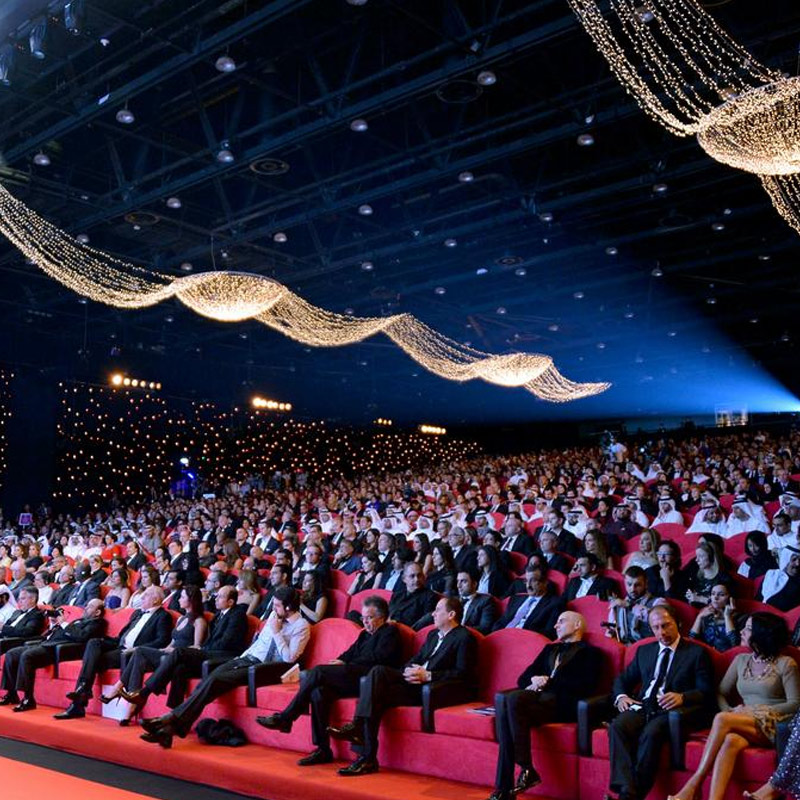
MUMBAI: The eighth Dubai International Film Festival (DIFF), to be held from 7-14 December, will, in its ‘Celebration of Indian Cinema‘ programme, will feature three world premieres, two international premieres and several first-ever regional screenings of films in Hindi, Tamil, Malayalam and Bengali.
“With our selection this year, we wanted to bring the true diversity of Indian cinema to DIFF,” said DIFF consultant for the subcontinent programme Dorothee Wenner.
The celebration will flag off with the premiere of Yash Raj Films‘ Ladies vs Ricky Bahl on 8 December. The film, directed by Maneesh Sharma depicts the story of suave and charismatic conman Ricky Bahl (Ranveer Singh) who makes a living by deceiving women until he meets his match in the form of Anushka Sharma‘s character.

Also making its world premiere will be Shalini Usha Nair‘s Palas In Bloom (Akam), based on renowned author Malayattoor Ramakrishnan‘s celebrated Malayalam novel Yakshi. Debutant director Muthusamy Sakthivel‘s Tamil film Life is a Game (Maithanam) will also make its international premiere at the festival.
Srijit Mukherji‘s 7th August (Baishe Srabon), that will also making its international premiere, explores the dark underbelly of Kolkata. On the other hand, Karan Gour‘s Corrode (Kshay), that makes its Middle East premiere, is a psycho drama based on the story of a woman‘s need for an unfinished sculpture that blossoms into an obsession.
Competing in DIFF‘s Muhr AsiaAfrica Awards for feature films will be Kaushik Ganguly‘s Laptop that shows how a single commodity – a laptop – connects several lives and narratives as it changes hands to change lives. The film will make its international premiere at DIFF.
Also, making its world premiere and contending in the Muhr Asia Africa Awards for short films would be Rohit Pandey‘s Safe (Mehfuz) that depicts the story of a city shaken by violence, a man who looks after its dead, and a woman wandering its empty streets.
Vying for honours in DIFF‘s Muhr AsiaAfrica Awards for documentary films will be Sandeep Ray‘s Sound of Old Rooms (Kokkho-Poth) and Anand Patwardhan‘s Jai Bhim Comrade which follows the music and the tradition of Vilas Ghogre, a leftist poet and singer, who hung himself in protest against the deseceration of Dr Babasheb Ambedkar‘s statue. Both films will be screened in the Middle East for the first time at DIFF.



Hindi
Remembering Gyan Sahay, the lens behind film, television and advertising
From a puppet rabbit selling poppadums to Hindi cinema, he framed it all.
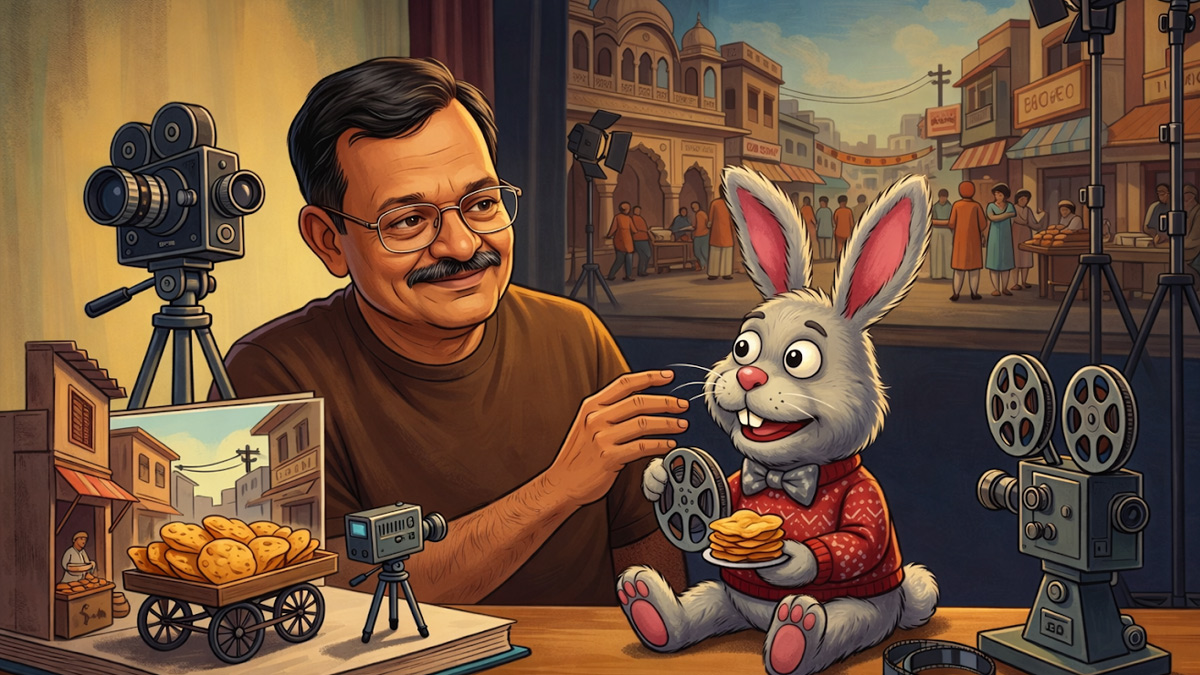
MUMBAI: There are careers, and then there are canvases. Gyan Sahay, the veteran cinematographer, director, and producer who passed away on 10 March 2026 in Mumbai, had one of the latter. Over several decades in the Indian film and television industry, he turned lenses, lights, and the occasional puppet rabbit into something approaching art.
A graduate of the Film and Television Institute of India (FTII) in Pune, Sahay built his reputation as a director of photography across a career that stretched from the early 1970s all the way to the digital age. He was the kind of craftsman who understood that a well-composed shot is not merely a technical achievement but a quiet act of storytelling.
For most Indians of a certain age, however, Sahay will forever be the man behind the rabbit. His direction of the iconic long-running television commercial for Lijjat Papad, featuring its now-legendary puppet bunny, gave the country one of its most cheerfully persistent advertising images. It was the sort of work that sneaks into the national subconscious and takes up permanent residence.
His big-screen credits as cinematographer include Anokhi Pehchan (1972), Pagli (1974), Pas de Deux (1981), and Hum Farishte Nahin (1988). In 1999, he stepped behind a different kind of camera altogether, making his directorial debut with Sar Ankhon Par, a drama that featured Vikas Bhalla and Shruti Ulfat, with a cameo by Shah Rukh Khan for good measure.
On television, Sahay was particularly prized for his command of multi-camera production setups, a skill that made him a go-to technician for large-scale shows and reality programmes. In an industry that has never been especially patient with complexity, he was the calm hand on the rig.
In later life, Sahay turned teacher. He participated regularly in masterclasses and Digi-Talks, often hosted by organisations such as Bharatiya Chitra Sadhna, sharing hard-won wisdom on cinematography, the comedy of timing in a shot, and the sweeping changes brought by the shift from celluloid to digital. He was also said to have been involved in a project concerning a biographical film on Infosys co-founder N.R. Narayana Murthy.
Tributes from the film industry poured in following the news of his passing, with colleagues remembering him as a senior cameraman who served as a rare bridge between two entirely different eras of Indian cinema. That is, perhaps, the finest thing one can say of any craftsman: he kept up, and he brought others along with him.