DTH
DTH service providers say STB interoperability unlikely to succeed in current conditions

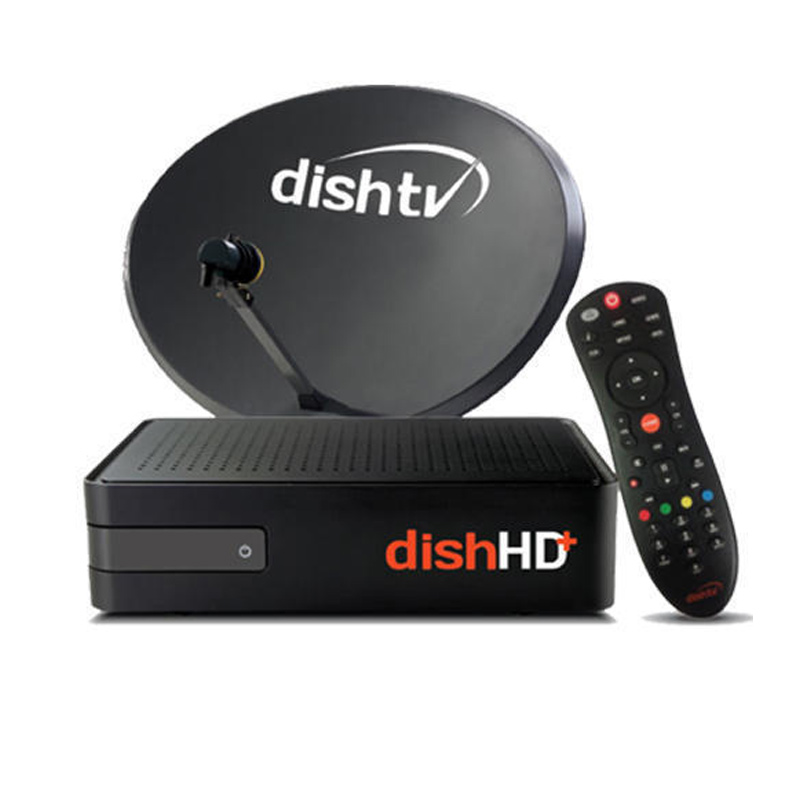
MUMBAI: Tata Sky, Dish TV and Hathway – Indian direct to home (DTH) service providers have provided their inputs to Telecom Regulatory Authority of India (TRAI)’s consultation paper on the issue related to interoperability of set-top-boxes (STB).
According to Tata Sky’s response, having interoperable STBs will not be desirable due to commercial, technical, security and service-related reasons. The response stated that interoperability will only be viable if the new design of STB will have a reasonable cost with highest standards of quality, but not have any detrimental impact on the STB’s security and privacy features. The current STB ecosystem allows operators to provide secure solutions like HDCP, water-marking, fingerprint, among others at an optimum cost. The serious concern is, will third party manufacturers, developers be able to maintain the same security standards in the interoperable STB?
As different operators keep entering the market at different points of time, operators use different compressions standards like MPEG2, MPEG4, HEVC, among others. The presence of multiple compression standards comes in the way of interoperability. As the STB model, functionality, processor speed, memory, software configuration, encryption and transmission standards are different with different operators, this will lead to serious compatibility issues if interoperability is attempted.

The interoperable STB would soon get outdated and obsolete as a requirement would arise for operators to upgrade their STBs. The operator would get stifled by the slow pace of upgrade.
The BIS standardisation process of various STB features would require significant cost and long gestation period. In the current scenario of the sector, with aggressive and unregulated competition coming in from OTT and mobile operators, STB interoperability is not feasible.
According to Dish TV’s response, TRAI envisaged that it is not desirable to roll out interoperable STBs for a number of reasons, apart from the technical factors elaborated by Dish TV. The response states that the dynamics of the STB industry are very rapid and will enable new product cycles at relatively low cost and advanced features which will get impeded, if an elaborated mechanism of interoperability including that of digital video broadcast (DVB)-C and DVB-T will be gone through. It will increase the cost at the same time disproportionately.
TRAI should not ignore the devices including the STBs the come with broadband and OTT delivery, which are the rapidly gaining segments, having their own technologies of DRM and content protection, based on two way interconnectivity rather than one way DSA and key transfer algorithms.
The structure of STBs vary in the cable and DTH segments, which does not warrant any interoperability to be mandated between them. DTH STBs have multiple functions that become redundant in cable-based STBs and vice versa.
Hathway believes that there should be a provision for interoperability of STBs because with the rapid technological advancement, it will provide lot of options to subscribers. The concept is in a preliminary stage and there are not any known examples of STB interoperability available in any other country. The concept could proceed in India methodically but also need to think about various aspects and interests of all the stakeholders involved in the broadcast service value chain.
At present, the STB architecture is designed in a way which meets the requirements of conditional access system (CAS). STB needs to be tightly bound with the CAS system for content security, which requires some parts of the CAS software to be hardcoded in the STB chipset during the manufacturing process, because of which not all chipsets support all available CAS systems. CAS is a very important component in the eco system of digital TV service. It defines the content security, specifies minimum requirement of STB’s CPU, RAM and FLASH memory, operating system and the requirement of a critical head end component – Multiplexer (MUX).
MUX is used to encrypt channels based on ECMs generated by the CAS systems. All CAS systems have different methods of generating ECMs, that depends on various parameters like service ID, transport stream ID, source channel, session ID, among others. The length of ECMs varies in different CAS systems, which makes it difficult for MUX vendors to support all available CAS systems.
The benefits of interoperability cannot be passed on to the subscribers in the case of an MSO, since its functioning is restricted to a specific area. The infrastructure and the set up for provision of services with a MSO and a DTH operator are completely different. The provision of service with a DTH operator is a wireless infrastructure, while with a MSO is a wired set up and depends on a local cable operator for end mile connectivity. A DTH operator can have a boundless reach, but MSO will have a limitation of reach due to infrastructure and geographical conditions.
Due to the disparity in re-transmission infrastructure of a DTH operator and MSO, the DTH operator will not be in a position to give access to subscribers or customers of a MSO. Hence, STB interoperability for MSO and DTH operators should not be allowed.





DTH
Prasar Bharati’s WAVES earns Rs 2.9 crore in first year
Platform scales content, users but monetisation gaps limit revenue growth.
MUMBAI: Big waves, small ripples at least for now. When Prasar Bharati launched its OTT platform WAVES at the 55th International Film Festival of India in November 2024, it pitched a bold vision: a homegrown rival to global and domestic streaming giants, blending video, audio, gaming and commerce into a single digital ecosystem. Five months into FY2024–25, however, the platform’s revenue stands at just Rs 2.90 crore, a figure that underscores the gap between ambition and monetisation.
On paper, WAVES looks anything but modest. The platform has ingested 13,608 titles, totalling 9,495 hours of content, with over 13,000 titles already live. It has streamed more than 575 live events from the Mahakumbh Amrit Snan and the 76th Republic Day parade to the Hockey India League, Kabaddi World Cup and Mann Ki Baat while offering 74 live TV channels and 12 radio channels. With over 10 lakh registered users and more than 200 content partners onboarded, the scale resembles that of a fully operational streaming service rather than a pilot project.
The architecture supporting this scale is equally robust. Built under Prasar Bharati’s Central Archives vertical, WAVES runs on a cloud-based infrastructure with DRM, encryption and an integrated analytics dashboard. It includes dedicated units for content ingestion, quality control, publishing, graphics, marketing and billing, and is distributed across platforms such as OTTplay, Tata Play and BSNL. The offering extends beyond video to include audio-on-demand, e-games and even e-commerce via ONDC integration.
Yet, the numbers reveal a core disconnect. Despite its scale, WAVES generated just Rs 2.90 crore in a market where India’s OTT industry crossed Rs 23,000 crore in 2024. A key bottleneck lies in monetisation infrastructure: subscriptions cannot currently be purchased within the app and must be completed via an external website. In a mobile-first country where over 95 per cent of OTT consumption happens on smartphones, this extra step creates friction that most users are unlikely to overcome.
Ironically, content is not the problem, it is the platform’s biggest strength. Prasar Bharati holds one of the world’s richest broadcast archives, including 45,154 hours of digitised Akashvani programming and 35,723 hours from Doordarshan. For WAVES alone, over 3,800 hours of archival content have been made OTT-ready, including classics such as Ramayan and Shaktimaan, alongside rare cultural recordings and historical broadcasts.
There are early signs that this library holds commercial potential. Revenue from archival content licensing rose sharply to Rs 3.38 crore in FY24, up from Rs 67 lakh the previous year. Meanwhile, free digital platforms continue to drive massive reach, the PB Archives Youtube channel clocked 119.78 million views and added 4,02,000 subscribers in FY2024–25, crossing 1.7 million in total, while DD News has over 5.84 million subscribers.
That, however, presents a strategic dilemma. While free distribution builds scale, it also conditions audiences to expect content at zero cost making it harder to transition to paid models. WAVES, designed as a hybrid AVOD-SVOD platform with advertising and subscription layers, is yet to fully crack this balance.
The broader challenge is not technological but strategic. In an ecosystem dominated by platforms offering seamless payments, aggressive pricing and high-budget originals, WAVES is still bridging the gap between being a content repository and a commercially viable product.
For now, the platform reflects both promise and paradox. It has the scale, the content and the infrastructure but until monetisation catches up, WAVES remains less a revenue engine and more a digital showcase of what India’s public broadcaster could become.






