GECs
DTH could push HD penetration in next one year: MPA


MUMBAI: As the year comes to an end, the multi system operators (MSOs) have finally come out with their packages and the pricing module for the Star India channels, after the broadcaster decided to give its channels only on Reference Interconnect Offer (RIO) basis.
But according to Media Partners Asia (MPA) while Star has the right intent, it has to remain flexible on the incentives offered for better ground adoption. From the operator’s viewpoint, the Star scheme needs to address the following issues:

1. Despite availing of the maximum discount on the scheme, the content cost for operators remains higher than previous CPS deals, exacerbated as operators are not receiving any carriage fees.
2. The scheme does not factor in volume discounts on the basis of an absolute number of subscribers offered through a given operator network.
3. Channel pricing is based on filed RIO rates. These are not reflective of consumer preferences. For instance, Star Plus which enjoys 2x the viewership of Life OK, has a lower price than Life OK.
4. To generate higher discounts, the scheme demands carrying maximum channels with 90 per cent penetration. This will result in a rich basic pack offering which will disincentivise future upselling to an operator’s high value packages.
5. Even if operators are able to pass through content costs to subscribers, MSOs face the risk of paying more and collecting less as the current backend systems for operators are not robust and transparent enough to collect and pass on revenues for channels on an a-la carte basis.
6. The scheme does not factor in HD channels. MSO action plan and execution risk Star has been transparent on rates and discounts for its channels. Some national MSOs have accordingly started to work on their blueprint of tiering channels through a broad revenue share arrangement with local cable operators (LCOs). On the backend, according to MPA, the operators now critically need to have their technology systems in sync with consumer preferences, collected through KYC (Know Your Customer) forms. They will also need to decentralise control by extending their consumer databases to respective LCOs to enable the upgrading and downgrading of packages as per consumer choice. As backend systems get re-engineered, MSOs will need to concurrently conduct roadshows and training programmes for LCOs. MSOs will also need to undertake marketing campaigns to create awareness on a consumer’s need to make choices on revised cable packages.
MPA also feels that MSOs intend to pass their increase in net content cost to consumers by undertaking an average price hike of Rs 40-60 ($0.7-1) per month. Even if consumers accept the price increase, the risk to MSOs lies in collecting their legitimate share of incremental revenues from LCOs. In order to offset this, MSOs plan to shift to trade prepaid services, which should have positive consequences.
Long term implications for the Pay TV industry
Broadcasters: Currently, all broadcasters are looking to reduce carriage fees and bring it to parity with DTH in terms of total payout. A number of broadcast networks are taking a wait-and-see approach. Having already eliminated carriage in DAS markets, if Star manages to obtain reasonable viewership for its driver channels with a nominal growth in subscription revenues, MPA believes that others too will broadly follow Star’s approach.
According to MPA, non-carriage discounted rate schemes could become the template for future content deals. This will have direct implications on several advertisement-skewed and reach-dependent genres, such as news and music. Channels in such genres might then remain feasible by converting to free-to-air. Launching new channels will become difficult and as a result, the industry could see rebranding and a frequent change in the programming mix of existing channels.
MSOs: As carriage and placement revenues start to dry up, the priority for MSOs for the next 12 months will be to shift to establishing robust back-end systems for better subscription monetisation in phases I and II. Consequently, voluntary digitisation and reach expansion in phases III and IV could take a back seat. MPA in its report also points out that national MSOs have already invested and outsourced backend systems to renowned IT vendors, which need to now streamline the secondary point network in order to attain authenticated customer information and deliver strong customer support services.
“Critical is the increasingly important need to successfully rollout trade prepaid services and rationalising content cost by identifying active paying subscribers which will address the current cash flow crisis and determine the future feasibility of an MSOs business model.
As the industry shifts gears, we may see more consolidation of cable players which fail to invest and execute on establishing B2C processes,” says MPA.
DTH: Over the last 30 months, the DTH industry had implemented a 53 per cent increase in its base pack pricing. Just when it seemed that rate hikes on base packs had hit a ceiling, the price hikes implemented by MSOs provided the DTH industry with additional headroom to undertake further price increases. In addition, with tiering of channels on cable, the value gap in the form of realisation per channel between cable and DTH operators will narrow, feels MPA.
As per MPA, a lighter base pack for both cable and DTH will gradually result in the upselling of subscribers to high value packs, thereby boosting ARPU growth.
Moreover, Star’s entertainment and sports channels have been key drivers for HD in India.
MPA in its concluding remarks points out that acquiring Star’s HD channels on RIO makes it unfeasible for cable and thus enables DTH operators to push HD penetration aggressively for the next one year. Through attractive pricing and marketing, DTH operators could leverage HD to win some subscribers from cable.





GECs
Asianet Television Awards 2026 celebrates women power in Malayalam TV
“She is the Colour” theme honours icons as ceremony airs on March 14 and 15 at 7 PM.
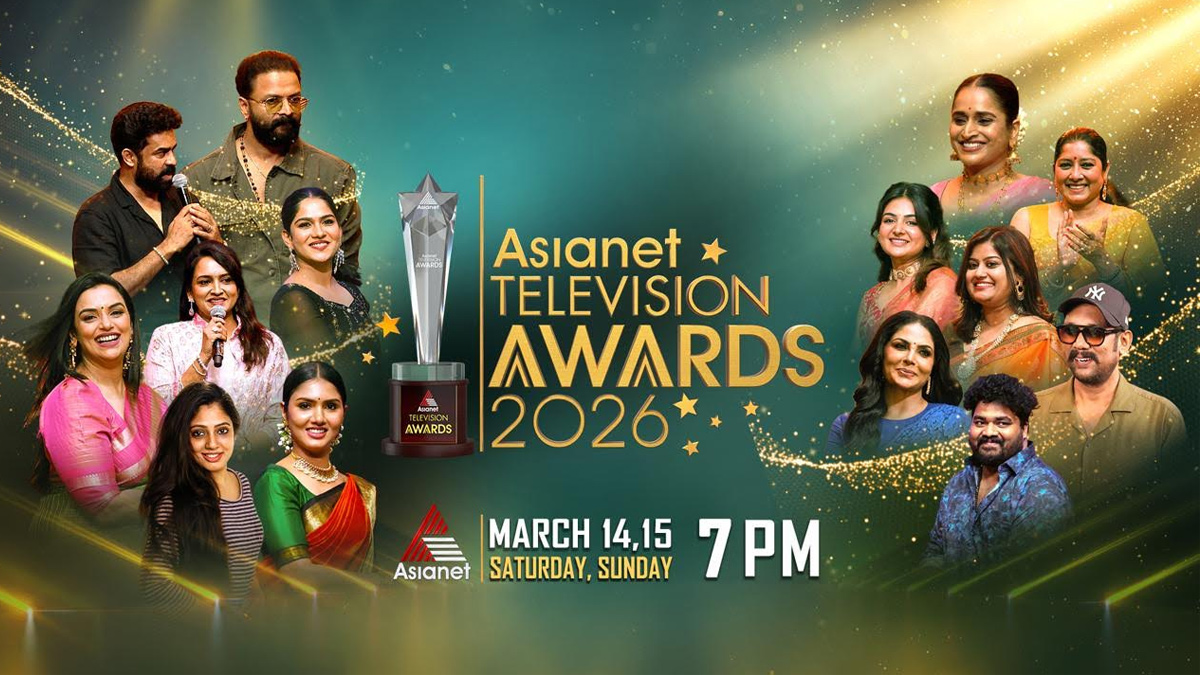
MUMBAI: If television lights up living rooms, this year Asianet decided to let women provide the colour. The Asianet Television Awards 2026 turned the spotlight firmly on women empowerment with the theme “She is the Colour”, celebrating the strength, resilience and achievements of women who continue to shape society and the Malayalam entertainment industry.
The ceremony honoured several distinguished personalities whose journeys have left a lasting cultural imprint. Among them was legendary playback singer Vimala Varma, widely recognised as the first Malayalam playback singer. The evening also paid tribute to Padma Shri awardees Devaki Amma and Vimala Menon for their exceptional contributions in their respective fields.
Leading women from the Malayalam film industry were also recognised during the event, including actor Shweta Menon, who currently serves as president of the Association of Malayalam Movie Artists, and National Award winning actor Surabhi Lakshmi.
The awards ceremony brought together a glittering lineup of actors and industry figures, including Jayasurya, Vijay Babu, Asha Sarath, Lena, Esther Anil, Anumol, Akhila Bhargavan, Sarayu Mohan, Prajod Kalabhavan, Gayathri Suresh, Sabumon Abdusamad, Swasika, Tini Tom, Sijoy Varghese, Kailash, Veena Nandakumar, Sabareesh Varma, Ansiba Hassan and Dinesh Prabhakar. Kishan Kumar, executive vice president Malayalam at JioStar, was also present at the event.
Beyond individual recognitions, the awards celebrated excellence across Malayalam television, acknowledging artists and technicians whose work continues to drive the industry forward.
The evening also offered plenty of spectacle, with elaborate dance performances, stunt acts and comedy skits performed by popular television and film personalities, turning the ceremony into a full fledged entertainment showcase.
Viewers will get to watch the celebrations when the Asianet Television Awards 2026 air on Asianet on March 14 and 15, Saturday and Sunday, from 7 pm onwards, bringing the star studded tribute to homes across Kerala and beyond.








