DTH
DTH companies against changes to KYC norms for STBs

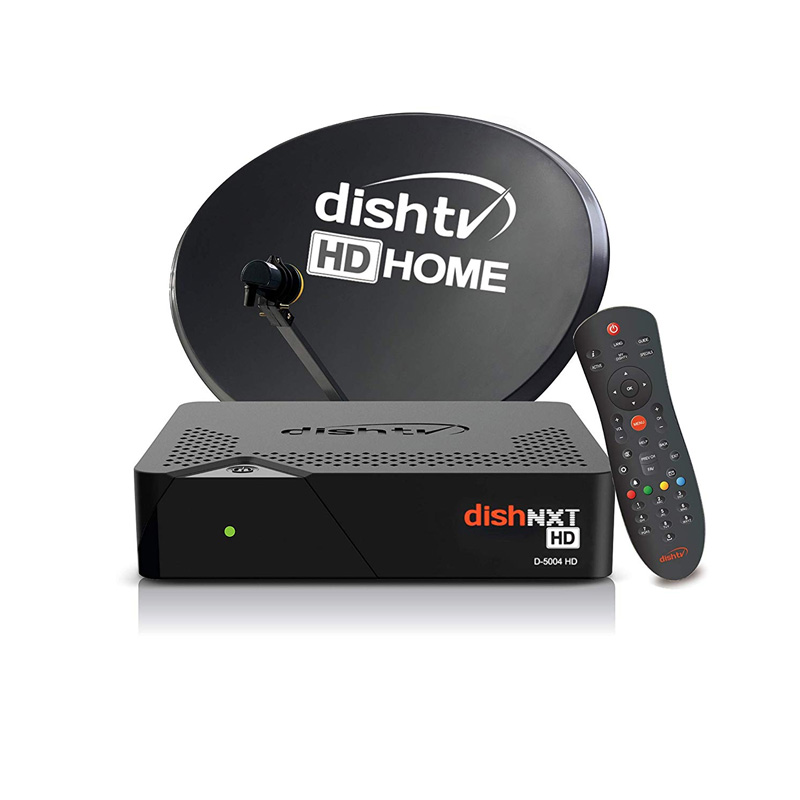
MUMBAI: DTH operators believe that there is no need to change the KYC process for set top boxes (STBs) as the current process is well-equipped to meet the requirements and the DTH industry is already adhering to a comprehensive KYC process, which has been working effectively till date.
The DTH operators have commented on TRAI’s consultation paper on ‘KYC and e-KYC of DTH Set Top Boxes’. Dish TV commented, “We are of the strong opinion that initial KYC done by the company is adequate enough and no further KYC is required thereafter.”
“Broadcasting of channels through DTH involves unidirectional communication only i.e. broadcast through satellites and does not involve any inherent risk or misuse by the customers. In view of the same, introducing any additional measures for KYC other than what is being currently followed, would only aggravate the financial stress on the industry and will consequently lead to higher prices for the consumer, without yielding any benefits,” Bharti Telemedia commented.

It further explained that during the provisioning of a new connection, a CAF is filled by the customer which captures details like registered telephone number of the subscriber, Name And Address for installation etc. These details are then entered into the systems. Only after these processes are completed, an engineer is assigned, who visits the customer premises for installation and demonstration. Thus, in any case, the present system already meets the KYC requirement of capturing the customer’s identity and address.
One of the objectives stated by the Ministry of Information and Broadcasting, in its reference to TRAI, is to stop the illegal smuggling of set top boxes to other countries. The operators believe that even this objective cannot be met by introducing additional KYC requirements.
“Collecting proof of identity (Pol) and Proof Of address (PoA) documents, as an alternate to Aadhaar, will add to the inconvenience and cost of approximately 100 million subscribers (includes private DTH and DD Free Dish) and potentially another 100 million future subscribers. Conducting such a massive exercise for weeding out a miniscule set of smuggled boxes would be an unfair burden for all stakeholders,” said Tata Sky.
On the question of whether location-based services (LBS) needs to be incorporated in the DTH set top boxes to track its location, Dish TV replied, “This issue has been dealt at length and for the stated reason we strongly oppose this suggestion.”
“We submit that there is no need to introduce the LBS requirement for the DTH set top boxes. To the best of our knowledge, there is no such implementation of LBS for DTH services anywhere in the world,” opined Bharti Telemedia.
Tata Sky believes that location-based services (LBS) – developing and deploying STBs fitted with a LBS solution would make the box expensive and would add to the cost borne by the subscriber. “Also, there would be several cases of non-receipt of signals on account of equipment malfunction or other reasons and not necessarily due to the STB having been smuggled out,” the company said.
Replying to TRAI’s question on whether one-time KYC is enough at the time of installation or verification is required to be done on periodic basis to ensure its actual location? Bharti Telemedia commented, “We firmly believe that the current one-time KYC at the time of installation is more than adequate as it duly meets the essence of any KYC process. Therefore, there is no need to introduce a system of re-verification.”
Further it said, “At the cost of repetition, periodic verification in case of DTH industry has no relevance as the services provided over DTH platforms pose no threats or risks as these services are unidirectional and are made available transparently to the customer. When the verification activity yields no productive outcome, there is no rationale in terms of mandating a periodic re-verification exercise as the same will simply translate into a sizeable financial burden on the DTH industry as well as wastage of resources for a non-productive exercise.”
According to Bharti Telemedia, re-verification will be a daunting and insurmountable task due to the complexities involved in taking customer consent and appointment or unavailability of customer due to various reasons. “It should be considered that it will cause huge inconvenience to users and may raise their apprehensions about the services. Therefore, we recommend that there should not be any change in the existing processes and the system of re-verification should not be introduced,” the company said.






DTH
Prasar Bharati’s WAVES earns Rs 2.9 crore in first year
Platform scales content, users but monetisation gaps limit revenue growth.
MUMBAI: Big waves, small ripples at least for now. When Prasar Bharati launched its OTT platform WAVES at the 55th International Film Festival of India in November 2024, it pitched a bold vision: a homegrown rival to global and domestic streaming giants, blending video, audio, gaming and commerce into a single digital ecosystem. Five months into FY2024–25, however, the platform’s revenue stands at just Rs 2.90 crore, a figure that underscores the gap between ambition and monetisation.
On paper, WAVES looks anything but modest. The platform has ingested 13,608 titles, totalling 9,495 hours of content, with over 13,000 titles already live. It has streamed more than 575 live events from the Mahakumbh Amrit Snan and the 76th Republic Day parade to the Hockey India League, Kabaddi World Cup and Mann Ki Baat while offering 74 live TV channels and 12 radio channels. With over 10 lakh registered users and more than 200 content partners onboarded, the scale resembles that of a fully operational streaming service rather than a pilot project.
The architecture supporting this scale is equally robust. Built under Prasar Bharati’s Central Archives vertical, WAVES runs on a cloud-based infrastructure with DRM, encryption and an integrated analytics dashboard. It includes dedicated units for content ingestion, quality control, publishing, graphics, marketing and billing, and is distributed across platforms such as OTTplay, Tata Play and BSNL. The offering extends beyond video to include audio-on-demand, e-games and even e-commerce via ONDC integration.
Yet, the numbers reveal a core disconnect. Despite its scale, WAVES generated just Rs 2.90 crore in a market where India’s OTT industry crossed Rs 23,000 crore in 2024. A key bottleneck lies in monetisation infrastructure: subscriptions cannot currently be purchased within the app and must be completed via an external website. In a mobile-first country where over 95 per cent of OTT consumption happens on smartphones, this extra step creates friction that most users are unlikely to overcome.
Ironically, content is not the problem, it is the platform’s biggest strength. Prasar Bharati holds one of the world’s richest broadcast archives, including 45,154 hours of digitised Akashvani programming and 35,723 hours from Doordarshan. For WAVES alone, over 3,800 hours of archival content have been made OTT-ready, including classics such as Ramayan and Shaktimaan, alongside rare cultural recordings and historical broadcasts.
There are early signs that this library holds commercial potential. Revenue from archival content licensing rose sharply to Rs 3.38 crore in FY24, up from Rs 67 lakh the previous year. Meanwhile, free digital platforms continue to drive massive reach, the PB Archives Youtube channel clocked 119.78 million views and added 4,02,000 subscribers in FY2024–25, crossing 1.7 million in total, while DD News has over 5.84 million subscribers.
That, however, presents a strategic dilemma. While free distribution builds scale, it also conditions audiences to expect content at zero cost making it harder to transition to paid models. WAVES, designed as a hybrid AVOD-SVOD platform with advertising and subscription layers, is yet to fully crack this balance.
The broader challenge is not technological but strategic. In an ecosystem dominated by platforms offering seamless payments, aggressive pricing and high-budget originals, WAVES is still bridging the gap between being a content repository and a commercially viable product.
For now, the platform reflects both promise and paradox. It has the scale, the content and the infrastructure but until monetisation catches up, WAVES remains less a revenue engine and more a digital showcase of what India’s public broadcaster could become.






