News Headline
DTH bringing the second wireless revolution in India – Bharti Airtel Director and CEO digital TV services Ajai Puri

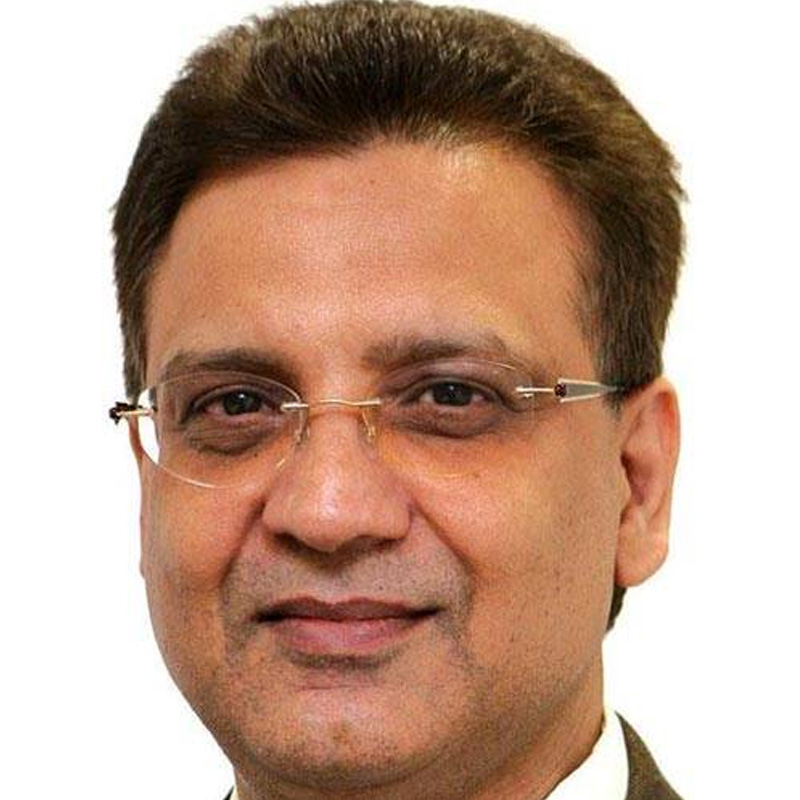
Launched in 2003, DTH revitalised India’s journey to media digitisation. Being wireless in nature, DTH has truly brought the power of affordable home entertainment to rural households.
2010 has proved to be a remarkable year for the DTH industry in India. It was an action packed year that saw the market expanding to six private players, acting as the catalyst in speeding up India’s journey to digitalisation.
The year saw many innovative interventions in the area of both hardware and interactive services by players, with festive occasions and sporting events being the major inflection points for the industry. The industry added 10 million customers in FY 2009-10 taking its tally to over 20 million, thereby adding as many as it did in its first five years, exemplifying the fact that the Indian consumer ‘wants’ to be at par with globally evolving entertainment standards. The industry is expected to add another 13-14 million customers in 2010-11.

In moving away from the industry norm of treating DTH as a mere replacement to cable, newer entrants like Airtel see a huge potential market of 100 million households that have no access to cable or terrestrial TV. This has helped expand the category and enabled affordable home entertainment on wireless to reach markets hitherto beyond reach of incumbent distribution platforms.
In growing at the phenomenal pace that it has, DTH has made India the largest buyer of set-top boxes and it’s set to soon become the largest DTH market in the world. Though the increased demand of STBs has brought down the hardware cost that forms a major chunk of operators cost, the industry is still beset with many structural challenges.
The absence of a level- playing field on content cost versus analogue cable, due rampant non-transparency / under-declaration by cable industry for years and the high incidence of taxes, make it a steep climb to profitability for DTH operators. Tax incidence of over 35 per cent is amongst the highest for any industry which plays such a critical role in fulfilling the Government agenda of reaching ‘infotainment‘ to the remotest parts of India. In particular, entertainment tax levied by states has no logical reasoning and custom duty imposed on STBs needs to be withdrawn. Also the license fee of 10 per cent is only levied on the DTH platform, amongst all other forms of distribution – an anomaly that needs to be corrected soon.
At present wholesale tariffs from broadcasters, cost of all channels put together, comes to nearly Rs 14 billion for cable operators and 50 per cent of that is levied on DTH operators, while the Indian customer is willing to pay at best between Rs 150-250. It seems that the incumbent cable industry has taken recourse to under-declaration to correct this anomaly of high content cost. DTH though being a completely transparent addressable system has no such recourse.
DTH today is less then 20 per cent of the total C&S households in India, but contributes over 50 per cent of broadcasters subscription revenue, thereby ending up subsidising the incumbent analogue cable industry.
We believe that DTH has the potential to repeat the success story of telecom, where all the stakeholders – consumers, broadcasters, operators and government – will gain immensely. As DTH is already enabling many in rural India buy their first TV, every single household of the current 240 million homes across India deserves to have a TV. Just like mobile, DTH has shown that wireless is the way to go if world class home entertainment is to go mass in India.
Apart from the width of availability of linear, regional content, DTH for many has become the means to catch up with latest movie releases that otherwise would probably have taken months or some quarters to be released beyond the top few towns. This will go a long way in helping fight piracy and protect the interests of the rightful producers of content.
Advertising too has become a very rewarding, effective option on DTH. It furnishes better return on investment for advertisers by paving the way for authentic measurement of viewership compared to myriad forms of media. Also, it renders a new vehicle for localised advertising, tapping the targeted audience in an effective way.
Being the largest integrated telco that has a presence across all screens– Mobile, PC and TV – Airtel finds itself uniquely positioned to participate in the next wave of growth for DTH-broadband hybrid models. The advent of new wireless access technologies like 3G & BWA will make it possible for customers to experience the true power of two-way interactivity even on DTH. With movies on pay-per-view (PPV) platforms already gaining growing acceptance and innovative solutions by Airtel such as its mobile recording & mobile self care feature that make convergence of screens a reality, superior viewing experience through better picture quality and Dolby digital sound output will redefine customer’s expectation out of the idiot box in a big way.
With customers clearly opting for the newer, more advanced platforms like MPEG4 DVBS 2, HD, the industry is looking forward to start the New Year in a positive note. The need to be entertained coupled with diversity of broadcast channels, gaming & interactive services will be big growth drivers for DTH in 2011.
Clearly, technological superiority and quality of customer service have emerged as the new differentiators for the industry and the DTH platform is leading the way in helping India digitalise faster.







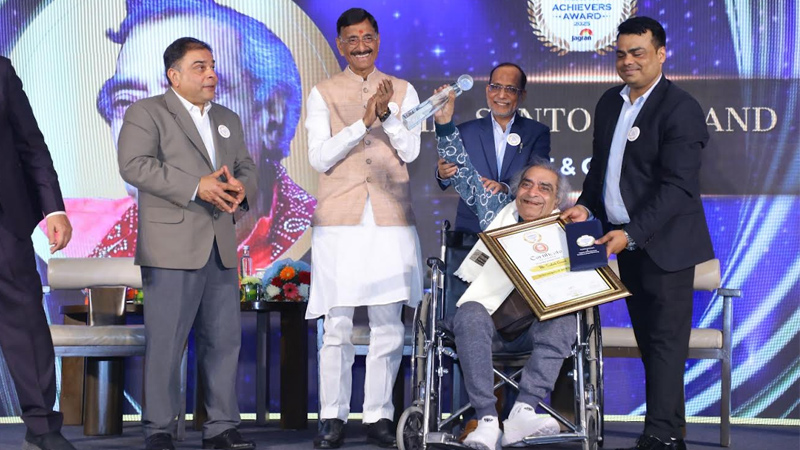
NEW DELHI: Hamdard Laboratories gathered a cross-section of India’s achievers in New Delhi on Friday, handing out the Hakeem Abdul Hameed Excellence Awards to figures who have left their mark across healthcare, education, sport, public service and the arts.
The ceremony, attended by minister of state for defence Sanjay Seth and senior officials from the ministry of Ayush, celebrated individuals whose work blends professional success with a sense of public purpose. It was as much a roll call of achievement as it was a reminder that influence is not measured only in profits or podiums, but in people reached and lives improved.
Among the headline awardees was Alakh Pandey, founder and chief executive of PhysicsWallah, recognised for turning affordable digital learning into a mass movement. On the sporting front, Arjuna Awardee and kabaddi player Sakshi Puniya was honoured for her contribution to the game and for pushing women’s participation onto bigger stages.
The cultural spotlight fell on veteran lyricist and poet Santosh Anand, whose songs have echoed across generations of Hindi cinema. At 97, Anand accepted the honour with characteristic humility, reflecting on a life shaped by perseverance and hope.
Healthcare honours spanned both modern and traditional systems. Manoj N. Nesari was recognised for strengthening Ayurveda’s place in national and global health frameworks. Padma shri Mohammed Abdul Waheed was honoured for his research-backed work in Unani medicine, while padma shri Mohsin Wali received recognition for his long-standing contribution to patient-centred care.
Education and social development also featured prominently. Padma shri Zahir Ishaq Kazi was honoured for decades of work in education, while former Meghalaya superintendent of Police T. C. Chacko was recognised for public service. Goonj founder Anshu Gupta received an award for his dignity-centred rural development initiatives, and the Hunar Shakti Foundation was honoured for empowering women and young girls through skill development.
The Lifetime Achievement Award went to former IAS officer Shailaja Chandra for her long career in public healthcare and governance, particularly in the traditional systems under Ayush.
Speaking at the event, Hamdard chairman Abdul Majeed said the awards were a tribute to those who combine excellence with empathy. “These awardees reflect Hakeem Sahib’s belief that healthcare, education and public service must ultimately serve humanity,” he said.
Minister Seth struck a forward-looking note, saying India’s young population gives the country a unique opportunity to become a global destination for learning, health and wellness by 2047.
The ceremony also featured the trailer launch of Unani Ki Kahaani, an upcoming documentary starring actor Jim Sarbh, set to premiere on Discovery on 11 February.
Instituted in memory of Unani scholar and educationist Hakeem Abdul Hameed, the awards have grown into a national platform that celebrates those building a more inclusive and resilient India. For one evening at least, the spotlight was not just on success, but on service with substance.