e-commerce
Drawer to dollar Cashify unlocks India’s 219.7 billion dollar resale boom

MUMBAI: Phones that gather dust in drawers may soon gather dollars instead. With the refurbished smartphone market pegged to hit a staggering 219.7 billion dollars by 2033, India is powering up to become the world’s recycling and recommerce hub and Cashify’s Great Indian Upgrade 2025 whitepaper shows just how big this reboot really is.
Drawing insights from 10,000 survey respondents, proprietary marketplace data, and reports from IDC, Counterpoint and Canalys, the study maps how resale culture has shifted from hush-hush grey channels to an increasingly mainstream movement. Yet, the so-called “Drawer Economy” remains a colossal untapped treasure chest 70 per cent of Indians admit to hoarding two to three unused phones at home, signalling billions of rupees in locked-up value.
The shift in behaviour is undeniable: 33 per cent of consumers now sell old phones to fund upgrades, 40 per cent are lured by competitive buyback offers, and 63 per cent dispose of devices within six months of upgrading. But the grey market still dominates, with 77 per cent of resale happening informally, Cashify argues this highlights the urgent need for trusted, transparent platforms.

India shipped 151 million smartphones in 2024, up 4 per cent year-on-year, with the average selling price climbing to Rs 22,100. While Apple’s shipments surged 35 per cent, making India its fourth-largest global market, the brand also dominates resale: it commanded 64.5 per cent of refurbished sales in 2024 and 62.9 per cent in the first half of 2025. Three in five refurbished buyers picked Iphones driven by steady demand for the iPhone 14 Pro, iPhone 13 Pro Max and iPhone 12 Pro in the premium Rs 60,000-plus bracket, which itself grew 33 per cent YoY.
Following Apple are Oneplus (10.2 per cent), Xiaomi (9.7 per cent), Samsung (6.1 per cent) and Vivo, which is showing the fastest growth, rising from 2.1 per cent in 2024 to 3.2 per cent in H1 2025. Oppo and Realme follow at 2.4 per cent and 1.9 per cent respectively.
While Delhi, Bangalore and Mumbai remain the epicentres of trade-ins and refurbished sales, tier-2 and tier-3 cities are catching up fast, signalling that circular tech culture is spreading beyond metros.
Cashify has also unveiled India’s first Repairability Index, ranking brands on spare-part availability and repair scores addressing one of the biggest barriers to longer device lifecycles. A solid 57.9 per cent of consumers say they prefer repair over replacement, though cost (53.2 per cent) and part shortages remain major hurdles.
Backing this push is Cashify’s “repair-first, recycle-always” ecosystem, powered by 200 plus physical stores, a 10,000 plus retailer network, and an AI-driven 80,000 sq. ft. refurbishment facility.
Awareness is on the rise: 76 per cent of respondents could correctly define “refurbished” as “like new tested and repaired by experts.” Of all refurbished buyers, 60 per cent chose Apple, with purchasing patterns shifting upwards: 32.4 per cent spent Rs 21,000–35,000, while 17.1 per cent spent over Rs 50,000. The top drivers? “Like new at lower cost” (50.8 per cent), “budget fit” (32.4 per cent) and sustainability (8 per cent).
What builds trust? A 12-month warranty tops the list (52.5 per cent), followed by detailed device reports (16.9 per cent) and “try before you buy” options (16.9 per cent).
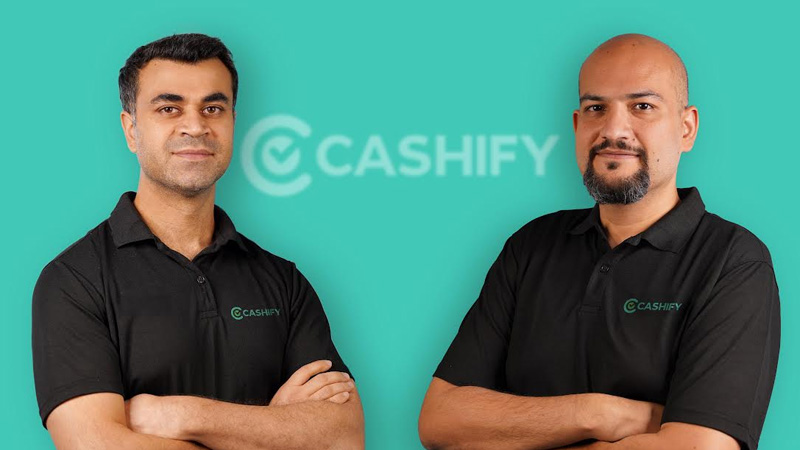
“India’s 219B dollars resale revolution isn’t just a market opportunity, it’s a chance to redefine how technology is consumed,” said Cashify co-founder & CEO Mandeep Manocha. “Our findings clearly show consumers are embracing resale, yet the untapped ‘Drawer Economy’ highlights the urgent need for trusted platforms.”
Cashify co-founder & CMO Nakul Kumar added: “For too long, old phones have been treated as clutter rather than capital. India’s upgrade culture is shifting from impulsive consumption to mindful circulation. Repairability is key when fixing devices becomes easier, sustainability becomes everyday action.”
The whitepaper also calls for supportive policy frameworks, from easing customs on refurbished imports to tax incentives for sustainable recycling and digital traceability for e-waste.
As India transitions from hoarding to habit, Cashify’s data-rich report positions recommerce not just as a market disruptor but as a mainstream economic force, one that puts forgotten phones back in play, turns drawers into goldmines, and powers India’s leap towards a greener digital future.







e-commerce
Instamart and Duolingo launch street spell check campaign for Instaprint
Duo the owl fixes signboard typos across cities to showcase instant printing.
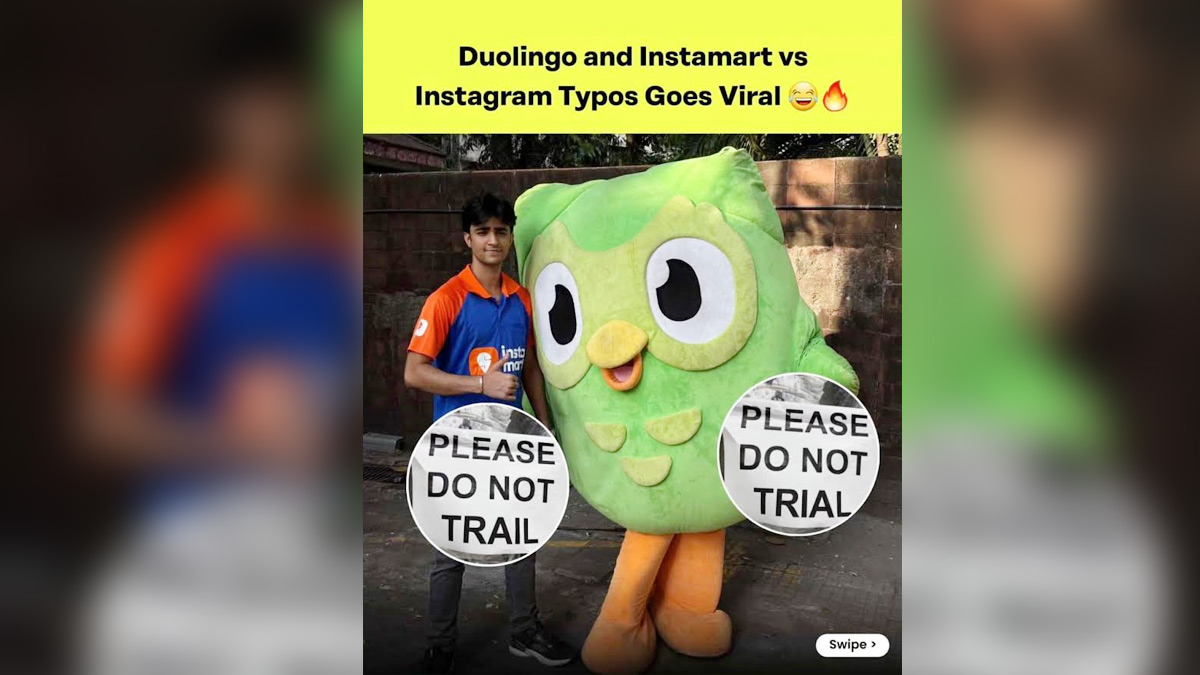
MUMBAI: If spelling mistakes had a sworn enemy, it might just be a bright green owl with a printer. Instamart has teamed up with language learning platform Duolingo for a quirky nationwide campaign that turns everyday spelling errors into a public spectacle while promoting its instant printing service, InstaPrint. The playful activation takes aim at the many misspelled shop boards and public signs scattered across Indian streets. From “saloons” that promise haircuts rather than drinks to menus and posters peppered with punctuation mishaps, the campaign sends Duolingo’s mascot Duo on a mission to restore linguistic order.
Armed with Instamart’s instant printing feature, Duo prints corrected versions of the mistakes on the spot and pastes them over the originals. The result is a series of humorous street interventions that have quickly begun circulating on social media.
Photos and videos of the grammar correcting owl have been widely shared online, with amused users reacting to the unexpected spell check patrol. One user joked, “Ab ayega na maza bhidu,” capturing the internet’s delight at the unusual campaign.
Behind the humour lies a practical message. The activation is designed to showcase the capabilities of Instaprint, Instamart’s printing service that allows users to print documents and posters almost instantly.
The company says the feature is meant for everyday needs such as printing resumes, visa documents or last minute posters without the usual scramble to locate a print shop.
Instamart introduced Instaprint in 2025 across select metropolitan cities including Bengaluru, Mumbai and Delhi. The service allows users to order printed materials directly through the platform, extending the quick commerce model beyond groceries and household essentials.
By combining Duolingo’s famously persistent owl with India’s street level spelling quirks, the campaign taps into the internet’s long running fascination with grammar mistakes while demonstrating a real world use case for instant printing.
After all, in a world full of typos, sometimes what you really need is a quick printer and a very determined language teacher.