GECs
Does ‘finite’ spell death for long sagas?

MUMBAI: Once upon a time, there was only Doordarshan and viewers lapped up whatever it served without complaint. Then came the satellite and cable TV explosion, giving DD a run for its TRPs. That’s when daily soaps like Kyunki Saas Bhi Kabhi Bahu Thi and Kahani Ghar Ghar Ki and KumKum became popular, carrying on for years at a stretch, without audiences, especially women, tiring of them.
However, viewers today are an altogether different breed and broadcasters cannot engage them in the same manner, given their restlessness and constant need for new, fresh content.

A common tactic fast gaining traction among broadcasters is opting for limited episodes not just in non-fiction but also in the fiction space. Does this mean death for the long sagas of yore? Indiantelevision.com spoke to a cross-section of industry to find out.
Given that Star India is all set to launch three finite shows Airlines, Hospital and Everest next month, we asked Star India senior vice president programming Ashish Golwalkar whether finite shows had already become a trend?
“Trends are formed on the basis of consumers. Our consumers are our viewers. It is not yet a trend, because people have to come and see success. By the nature of content, non-fiction always had limited episode series, but in fiction, that wasn’t happening and we thought if we could offer something fresh and different. Currently, we all are experimenting,” he replied. “At Star Plus, we constantly endeavour to give something fresh to our viewers. In order to do that, we think there is a set of talent that works for television.”
Recalling the good old DD days when legends like Shyam Benegal penned finite series for the channel, Golwalkar said, “Legends used to work for television and all of a sudden, they all disappeared. And we realised that television is very tiring. To produce for six days a week is very tough, but we are happy that we have cracked it and there is where the numbers are coming.”
Stressing that there was a need for people who could bring a fresh new perspective to storytelling, he said, “But all those creative people and creative talent, they will never be able to do a show that will last for two to three or five years. The other reason is that while there are shows which keep going on and on, there are other shows which just have a finite story.”
Speaking of Channel V which believes in doing bi-weeklies and has been fairly successful at that, Golwalkar said, “When we at Channel V select those stories, we realize that at the end of the day, our selection has to be based on the story and not on our convenience. We do not want to unnecessarily stretch shows. If there is a show which can go beyond 10 years, let it be. But if there is a show which needs to close in 25 episodes, then let that be.”
“When you know it is a finite show, the net of story selection widens. So now, you have more number of stories to tell. Technically, in a traditional conventional way, we wouldn’t select those stories, here we can,” Golwalkar added.
He expressed the view that if the shows being launched in the coming months get a good response, they would definitely introduce more finite series in future. “Because of the change in the content of ecosystem, if we can get fresher and different talent and different stories which are limited in nature and if viewers respond well to it, maybe later on, we will think of doing all our shows like that,” he said.
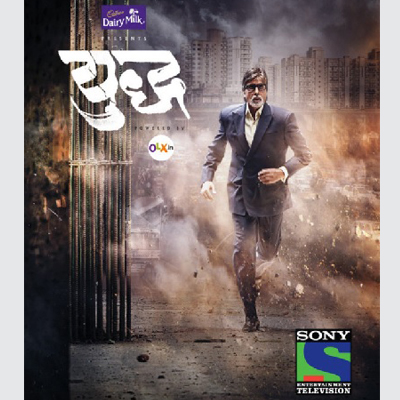
Shows like 24 on Colors and Encounter on Sony demonstrated the rise of finite in the non-fiction space. At the same time, Sony Entertainment Television’s big bet with Amitabh Bachchan’s Yudh saw the rise of finite fiction as well.
Sudhir Sharma of Sunshine Productions said broadcasters and viewers were becoming more quality- and content- conscious day by day and keeping that in mind, limited episode series were definitely coming in a big way. “Almost all broadcasters are doing this. The reason behind this is better control on content and it’s very sharp and worked out content so your quality definitely goes up,” he said.
With this move however, the challenge would be to attract viewership in a big way. “Now, the task for broadcasters is how to attract new viewers, because viewership is getting stale from the last two to three years and the numbers are dipping day-by-day for all Hindi GECs. However, it doesn’t mean that daily soaps will vanish. They are here to stay because there is a large number of viewers and their staple TV diet continues to be soaps,” Sharma said.
Beyond Dreams producer Yash Patnaik said that finite fiction was not a new trend but a trend that had made a comeback recently. “The advantages of finite series are you can pack the story, you know the beginning till the end. So, drama can be created at a different level,” he said.
According to Patnaik, thrillers would work best in the finite fiction space. “It is another variety of entertainment where you don’t need a commitment to watch for a longer time… particularly in a finite series, a thriller falls into this category better… because you can’t drag a thriller for long.”
Patnaik said finite series would do well for broadcasters and would have their own set of audiences. “It all depends on the slots the channels are planning to put and the kind of audience they want to create for finite series. They will have their own set of viewership and good finite series on a good platform will definitely work,” he concluded.





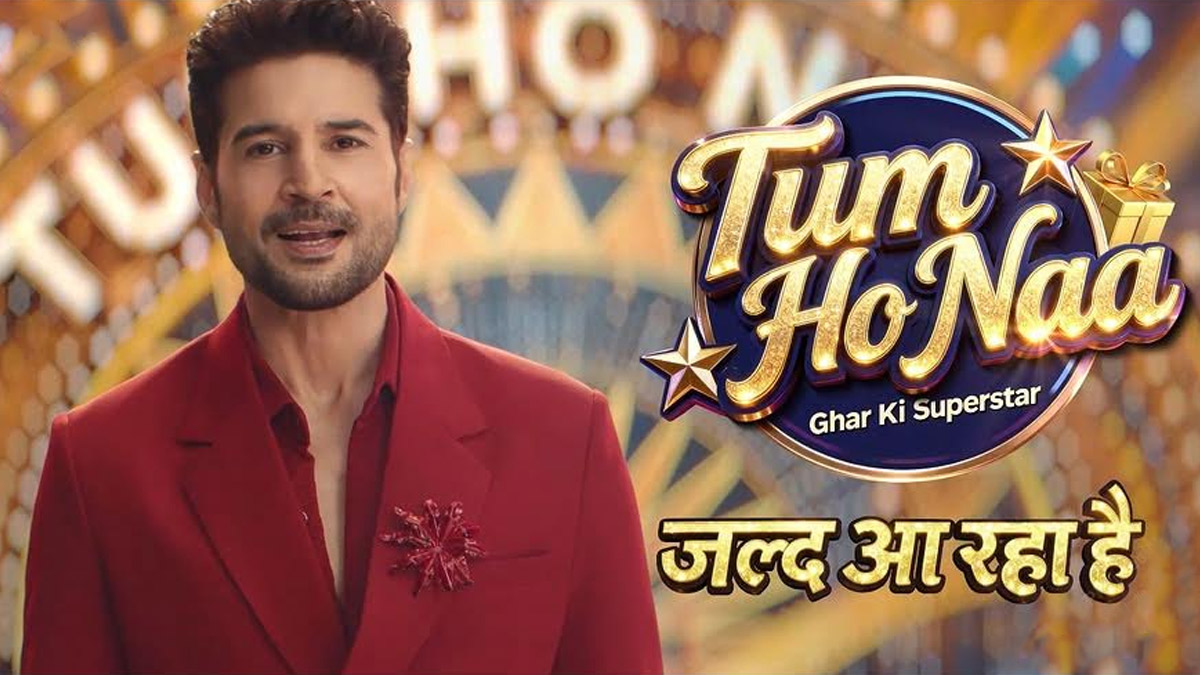
MUMBAI: Lights, camera… connection because this time, the game isn’t just about winning, it’s about who’s with you. Sony Pictures Networks India is gearing up to launch a new reality game show, Tum Ho Naa, expanding its unscripted slate with a format that promises both emotion and engagement.
The show will premiere soon on Sony Entertainment Television and stream on Sony LIV, with Rajeev Khandelwal stepping in as host. Known for his measured screen presence and selective choices, Khandelwal’s return to television adds a layer of familiarity and credibility to the upcoming format.
While specific details of the gameplay remain under wraps, the positioning suggests a reality format that leans as much on emotional resonance as it does on competition, an increasingly popular blend in Indian television, where audiences are gravitating towards content that offers both stakes and storytelling.
Khandelwal, reflecting on his return, noted that his choices have often been guided by instinct rather than convention, describing Tum Ho Naa as a project that feels “close to the heart”. His association also signals Sony’s continued focus on anchoring new formats with recognisable faces who bring both relatability and depth.
The launch comes at a time when broadcasters are doubling down on original non-fiction formats to drive appointment viewing, even as digital platforms expand parallel reach. By placing the show across both linear television and OTT, Sony appears to be aiming for a dual-audience strategy capturing traditional viewers while engaging digital-first consumers.
As the countdown to premiere begins, Tum Ho Naa positions itself not just as another game show, but as a reminder that sometimes, the biggest prize on screen isn’t the jackpot, it’s the journey shared along the way.







