News Broadcasting
‘Disturbing’ comments from Lankan government, even as one more scribe disappears


NEW DELHI: Following reports of the disappearance of another journalist, the International Federation of Journalists (IFJ) has expressed its growing concern over the worsening situation in Sri Lanka, particularly in view of the ‘disturbing statements on the state of the media’ by the government.
According to IFJ affiliate the Free Media Movement (FMM), Subramaniam Ramachandran, a correspondent for the dailies Yarl Thinakkural and Valampuri, has been missing from the disturbed northern peninsula Jaffna since 15 February, when he did not return home from work.
“The IFJ has grave fears for the safety of Ramachandran, who has been missing now for more than 11 days, especially in the light of the shocking situation in Jaffna where abductions and retaliatory killings occur all too regularly,” IFJ President Christopher Warren said. The IFJ represents 500,000 journalists in more than 115 countries.

According to the FMM, 802 persons have disappeared in Jaffna peninsula since January 2005, and 15 people have been gunned down by unknown assailants and nine have been abducted in February alone.
The IFJ has joined the FMM and four other journalists’ organisations – the Sri Lanka Working Journalists Association, the Federation of Media Employees Trade Union, the Sri Lanka Muslim Media Foundation and the Sri Lanka Tamil Journalists Alliance – in condemning statements from the Sri Lankan Environment and Natural Resources Minister Champika Ranawaka, which basically advocated brutal suppression of democratic dissent, and the use of extra-judicial methods if necessary.
According to the journalists’ organisations, the Minister in a statement in Sinhala to the Ravaya newspaper on the February 18 said: “People will die, what can we do about it. Are you asking us to leave those alive? Those bastards are traitors. We can’t do any thing because of wild donkey freedom in this country, if those can’t be dealt with existing laws we know how to do it. If we can’t suppress those bastards with the law we need to use any other ways and means.”
The IFJ president said: “We are frankly speechless that a minister of government, who reportedly is in close contact with the president, could publicly show such total disrespect for human rights and blatantly disown all democratic principles.”
According to the five organisations, the minister has identified many prominent human rights activists, journalists and civil society leaders as terrorists in the past.
“This is really going too far. We echo the demands from the Sri Lankan journalists’ organisations, for clarification from the government on what is essentially hate speech from a member of parliament,” Warren said.
Furthermore, the IFJ is shocked by comments from President Mahinda Rajapaksa to the Executive Committee of Sri Lanka Freedom Party (SLFP) on 10 February, indicating he provided television and radio licenses to the JVP (People’s Liberation Front) to recognise the support they provided during his election campaign.
“For a head of state to say something as irresponsible and compromising as this, is a further indication of the Sri Lankan government’s retreat from democracy,” Warren said.
The FMM has written to the Ministry of Defence demanding an amendment to an article published on its website on 9 February which gave false and misleading information about the journalists’ organisation.
The FMM first contacted the Ministry on 12 February asking for their immediate action, and again on 19 February, regarding a story written by Walter Jayawardhana, which incorrectly indicated the organisation had requested the release of three arrested journalists, who worked for the trade union publication Akuna, and were organising a protest campaign for their freedom.
The website also contained an archived photo which bore no relation to the article and portrayed the FMM in a misleading manner.
“The IFJ supports the FMM in its attempts to gain a retraction from the ministry; the article is incorrect and could potentially be used to disparage the organisation and its members,” Warren said.

News Broadcasting
CNN-News18 to host Fury in the Gulf conclave on West Asia crisis
Three-hour summit to unpack geopolitical fallout and impact on India
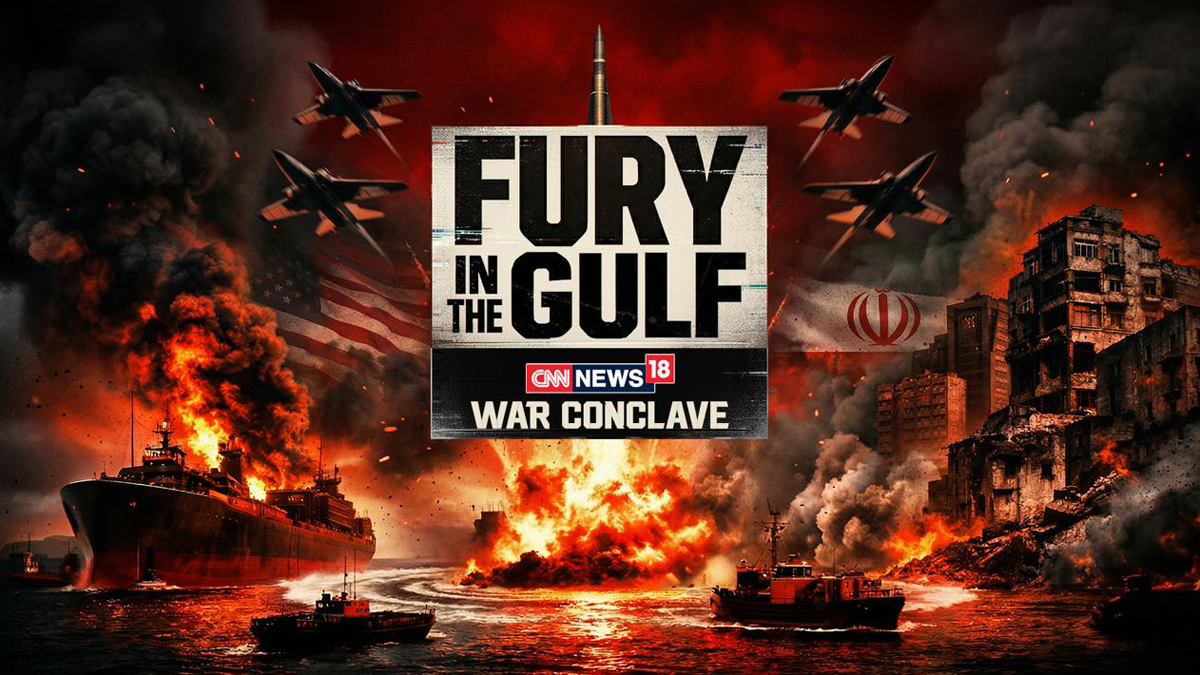
MUMBAI: CNN-News18 is set to host a special three-hour broadcast, Fury in the Gulf – War Conclave, on April 7, aiming to decode the escalating West Asia crisis and its far-reaching implications for India.
Scheduled from 4:00 PM to 7:00 PM, the conclave comes at a time when tensions between Iran and the United States are reshaping global geopolitics and triggering economic uncertainty. With India’s deep energy ties, trade links and large diaspora in the Gulf, the developments carry significant domestic relevance.
Built around the theme ‘Conflict, Consequences, and The Future,’ the programme will feature six curated sessions combining one-on-one interviews and panel discussions. The focus is to cut through the clutter and offer viewers a clearer understanding of the fast-evolving situation.
Key sessions include ‘Diplomacy in Times of War’ featuring Shashi Tharoor, and ‘World After the Iran Conflict’ with voices such as Ram Madhav, Reuven Azar, representatives from the European Union and the Iranian Deputy Envoy. Another session titled ‘Another Dunkirk?’ will bring together K. J. S. Dhillon and Jitin Prasada among others.
CNN-News18 editorial affairs director Rahul Shivshankar said, “In times of war, clarity becomes the most powerful tool. Fury in the Gulf – War Conclave brings together credible voices to address the questions and confusion that arise amid an overwhelming influx of information.”
He added that the initiative is aimed at delivering “facts, perspective, and insight” at a time when misinformation can easily cloud public understanding.
Echoing the sentiment, CNN-News18 CEO– English and business news Smriti Mehra said the conflict marks a defining global moment, with consequences that extend well beyond the region. She noted that the conclave seeks to present the crisis with “depth, nuance and responsibility” so audiences can better grasp its real-world impact.
As geopolitical tensions continue to dominate headlines, the conclave positions itself as an attempt to bring order to the noise, offering viewers a structured, insight-led look at a complex and rapidly shifting global situation.






