News Headline
Distributors cannot charge more than Rs 130 per month for 100 SD channels: TRAI order

MUMBAI: Consumers will now be able to receive 100 standard definition channels at Rs 130 a month plus taxes, according to the new TRAI tariff order issued last Friday. This will ensure reasonable rate of return to the DPOs on investments in the existing distribution networks as well as incentivise them for additional investment to ensure better network quality for providing value added services and broadband to subscribers. It is hoped that new framework will bring transparency, level playing field, encourage consumer choice and growth of the sector.
The regulator stated that no separate charges other than this Network Capacity Fee (NCF) would be paid by the subscribers for opting Free-to-Air channels or bouquet of Free-to-Air channels.
In order to provide choice to the subscribers and to curb skewed prices of a-la-carte channels as compared to bouquets, the Authority has mandated that a broadcaster can offer a maximum discount of 15 per cent while offering its bouquet of pay channels over the sum of MRPs of all the of pay channels in that bouquet. The restriction of maximum discount of 15 per cent on formation of bouquet is to ensure that a subscriber is not forced to take a channel which he doesn’t want. Forcing of non-driver channels to subscribers not only reduces choice of subscribers but also eats away bandwidth of distributors of television channels restricting entry of new and more competitive channels.

Digtal addressable television distribution platforms, TRAI stated, are envisaged to provide several benefits to consumers of broadcasting services including better quality of signals, choice of channels, availability of multimedia services etc. With the completion of first three phases of digitization to a large extent, though the addressability, capacity and quality of signal have improved, issues relatéd to consumer choice, transparency and non-discrimination.
Broadcasters want freedom to price their channels. Their contention is that since pricing at retail level is with distributors of television channels, the flexibility to maximise the revenue through advertisement and subscription fee has been compromised. News broadcasters, who primarily provide free-to- air (FTA) channels and have advertisements as only source of revenue, claim that many a time their channels at retail level are priced in such a manner that even pay channels are cheaper than their FTA channels. In the present framework distributors of television channels feel that they are totally dependent on effective negotiations with broadcasters for monetisation of their investment and due to non-transparency in the system, they end up at a loss while bargaining with the broadcasters.
According to TRAI, subscribers feel that the pricing of channels is skewed resulting effectively in no choice of individual channels. They feel lack of transparency. Questions are raised time and again as to why same channel is priced so differently by different distribution platform operators.
While prescribing the new regulatory framework, the TRAI has kept in mind the discussions in the Parliament on the motion for consideration of the Cable Television Networks (Regulation) Amendment Bill, 20 11, wherein the then Minister of Information and Broadcasting stated that TRAI would establish a system wherein consumers would be free to choose a-la- carte channels of choice and they would not be required to subscribe to bouquets.
While framing this Tariff Order, the emphasis of the Authority has been to ensure transparency, non-discrimination, consumer protection and create an enabling environment for orderly growth of the sector. The new framework attempts to address all the issues raised by broadcasters, distributors of television channels and subscribers. The broadcasters will have to declare their channels as ‘Pay’ or Tree-to-Air’ (FTA). Broadcasters have been given complete flexibility to declare maximum retail price (MRP) of their pay channels to subscribers with no restrictions as long as such channels are provided to consumers individually. However, if a pay channel is provided as part of a bouquet, MRP of such pay channel cannot be more than Rs. 19/-. This is to ensure protection of interests of consumers as bouquet deals are oblique to individual channel prices. The new framework in no way restricts or curtails the freedom of broadcasters to price their channels. Provisions have also been made to ensure that no additional charges are levied for subscribing to FTA channels.
The salient features of the Tariff Order are:
• Broadcasters to declare maximum retail price (MRP) (excluding taxes) ), per month, of their a-la-carte pay channels for subscribers.
• A broadcaster can also offer bouquets of its pay channels and declare MRP (excluding taxes) of bouquets for subscribers. However, MRP of such bouquets of pay channels will not be less than 85% of the sum of maximum retail price of the a-la-carte pay channels forming part of that bouquet.
• Separate bouquet for pay channels and free-to-air channels.
• Charges payable by a subscriber for distribution network capacity and channels have been separated.
• The distribution network capacity required for initial one hundred Standard Definition (SD) channels can be availed by a subscriber by paying an amount, not exceeding, Rs. 130/- (excluding taxes) per month to the distributor of TV channels.
• Within the capacity of 100 SD channels, apart from the channels to be mandatorily provided to subscribers as notified by the Central Government, a subscriber will be free to choose any free-to-air channel, pay channel, or bouquet of pay channels offered by the broadcasters or bouquet of pay channels offered by the distributor of television channels or bouquet of free-to-air channels offered by the distributor of television channels or a combination thereof.
• No separate charges, other than the Network Capacity Fee, to be paid by the subscribers for subscribing to free-to-air channels or bouquet of free-to-air channels.
• The additional capacity, beyond initial one hundred channels capacity, can be availed by a subscriber in the slabs of 25 SD channels each, by paying an amount not exceeding Rs. 20/- per such slab, excluding taxes, per month.
• Every distributor of television channels shall offer all channels available on its network to all subscribers on a-la-carte basis.
• Every distributor of television channels shall declare distributor retail price of each pay channel and bouquet of pay channels payable by a subscriber:
• A subscriber can choose a-la-carte channels of its choice.
• Distributors of television channels are permitted to. form bouquets from a-la-carte pay channels and bouquet of pay channels of broadcasters. However, distributor retail price of such bouquets of pay channels shall not be less than 85 per cent of the sum of distributor retail prices of the a-la-carte pay channels and bouquets of pay channels of broadcasters forming part of that bouquet.
• A subscriber has to pay separate charges, other than the Network Capacity Fee, for subscribing to pay channels or bouquet of pay channels.
• Distributors of television channels have to offer at least one bouquet, referred to as basic service tier, of 100 free-to-air channels including all the mandatorily channels to be provided to the subscribers as notified by the Central Government. This bouquet will be one of the options available for subscription to customers. It will be the subscriber Who will be free to exercise his option.
• Any pay channel having a-la-carte MRP of more than Rs 19/- per month (Excluding Taxes) shall not form part of any bouquet.
Also Read:
We believe the new cable TV tariff order will benefit everyone – Hathway Cable video CEO TS Panesar
TRAI gets support from Subhash Chandra on inter-connect guidelines
TRAI free to issue TV tariff, Star HC case disposal in 60 days





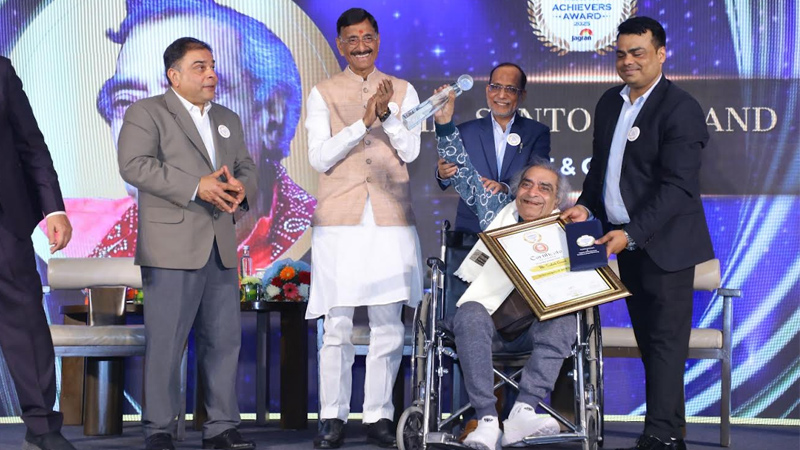
NEW DELHI: Hamdard Laboratories gathered a cross-section of India’s achievers in New Delhi on Friday, handing out the Hakeem Abdul Hameed Excellence Awards to figures who have left their mark across healthcare, education, sport, public service and the arts.
The ceremony, attended by minister of state for defence Sanjay Seth and senior officials from the ministry of Ayush, celebrated individuals whose work blends professional success with a sense of public purpose. It was as much a roll call of achievement as it was a reminder that influence is not measured only in profits or podiums, but in people reached and lives improved.
Among the headline awardees was Alakh Pandey, founder and chief executive of PhysicsWallah, recognised for turning affordable digital learning into a mass movement. On the sporting front, Arjuna Awardee and kabaddi player Sakshi Puniya was honoured for her contribution to the game and for pushing women’s participation onto bigger stages.
The cultural spotlight fell on veteran lyricist and poet Santosh Anand, whose songs have echoed across generations of Hindi cinema. At 97, Anand accepted the honour with characteristic humility, reflecting on a life shaped by perseverance and hope.
Healthcare honours spanned both modern and traditional systems. Manoj N. Nesari was recognised for strengthening Ayurveda’s place in national and global health frameworks. Padma shri Mohammed Abdul Waheed was honoured for his research-backed work in Unani medicine, while padma shri Mohsin Wali received recognition for his long-standing contribution to patient-centred care.
Education and social development also featured prominently. Padma shri Zahir Ishaq Kazi was honoured for decades of work in education, while former Meghalaya superintendent of Police T. C. Chacko was recognised for public service. Goonj founder Anshu Gupta received an award for his dignity-centred rural development initiatives, and the Hunar Shakti Foundation was honoured for empowering women and young girls through skill development.
The Lifetime Achievement Award went to former IAS officer Shailaja Chandra for her long career in public healthcare and governance, particularly in the traditional systems under Ayush.
Speaking at the event, Hamdard chairman Abdul Majeed said the awards were a tribute to those who combine excellence with empathy. “These awardees reflect Hakeem Sahib’s belief that healthcare, education and public service must ultimately serve humanity,” he said.
Minister Seth struck a forward-looking note, saying India’s young population gives the country a unique opportunity to become a global destination for learning, health and wellness by 2047.
The ceremony also featured the trailer launch of Unani Ki Kahaani, an upcoming documentary starring actor Jim Sarbh, set to premiere on Discovery on 11 February.
Instituted in memory of Unani scholar and educationist Hakeem Abdul Hameed, the awards have grown into a national platform that celebrates those building a more inclusive and resilient India. For one evening at least, the spotlight was not just on success, but on service with substance.






