News Broadcasting
Distressed, news channels seek rescue in digitisation


NEW DELHI: Stung by high carriage costs and a slump in advertising rates, television news channels are looking at tapping subscription revenues to drive growth.
The subscription income of news channels is pegged at around Rs 2 billion, but is restricted to only a few players like CNBC TV18, NDTV, TV Today Network and Zee News.
“We have to open up subscription revenues. There is a future there,” said TV Today Network CEO and executive director G Krishnan, while speaking at the 4th News Television Summit organised by Indiantelevision.com.

News channels are struggling, as they depend heavily on advertising revenues, and media buying agencies do not give them a fair ad price commensurate to their reach.
“We are not given a premium for the impact that we have. We are treated like commodities by the media buying agencies,” Krishnan said.
Madison Media CEO Basab Datta Chowdhury, however, did not agree. “The news channels deliver a genre share of 7 per cent while they command a revenue share of 11 per cent. So there is a premium that is given to them. The problem is that there is a plethora of news channels and it is very difficult to differentiate. News is commoditised today,” she said.
The rise in advertising revenue, though, has come from more inventory utilisation than an increase in ad rates.
“The 10-second rates have come down. Ad revenue is growing because news channels have flooded the market with inventory. That’s a mistake we have done,” said Krishnan.
News channels have as high as 20-22 minutes of commercial time per hour of telecast, a path they do not prefer to follow, but are led to by a softening of ad rates.
MCCS (which owns and operates Star News, Star Ananda and Star Majha) CEO Ashok Venkatramani said the value of the content of news channels does not get realised by the agencies. “Media buyers do not look at the profile of audiences. On the cable TV front also, we do not have transparency. There is no proper mechanism at all,” he added.
BAG Films & Media CMD Anurradha Prasad urged the news broadcasters to get together to fight against “unreasonable carriage fees” demanded by the multi-system operators (MSOs).
“It is a rat race out there and broadcasters should collectively fight against high carriage fees. And on the advertising front, we are not paid for the reach that we have. We are not getting the kind of revenues that we had anticipated,” Prasad said.
Media Network and Distribution (India) Ltd (a joint venture with Bennett, Coleman & Co Ltd) Yogesh Radhakrishnan believed at the crux of the problem was the rapid growth of the media industry in a short span of time. “The Indian TV market had grown too fast too soon. But post digitisation, news channels can drive subscription revenues and up ad rates as they create differentiated content,” he said.
Krishnan, however, is bullish about the TV news industry. “Currently the ability to grow is limited. But five years down the line, we will see strong growth. Digitisation will lower our carriage fees and we can fetch more pay-TV revenues,” he said.
The challenge for the news broadcasting industry, thus, is to cap ad inventory, aggressively chase subscription revenues and create value for advertisers.



News Broadcasting
Rajesh Sundaram joins NDTV Profit as senior editor, assignment
The 32-year newsroom veteran has launched channels on three continents and covered everything from 9/11 to South African television
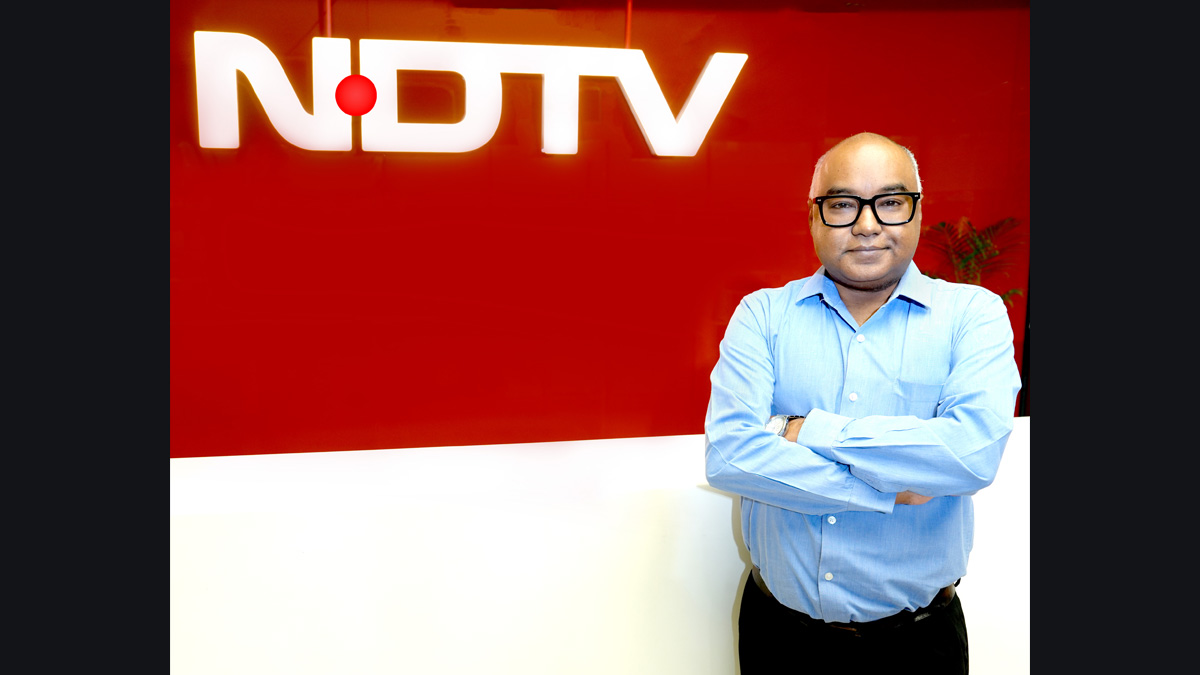
MUMBAI: NDTV Profit has bolstered its newsroom with a hire who has done rather more than most. Rajesh Sundaram, a journalist with over three decades of editorial, managerial and consultative experience across India and international markets, joins as senior editor, assignment, tasked with sharpening the network’s newsgathering and real-time response.
Sundaram’s career reads like a tour of Indian media’s most formative moments. He began at Businessworld in 1994, moved to Zee News as bureau chief across Mumbai and Chennai, then joined NDTV in 2002 as part of its political bureau during a particularly febrile period in Indian politics. A stint as India correspondent for Al Jazeera International followed, where he covered key geopolitical developments and got his first serious taste of the global newsroom.
What sets Sundaram apart, however, is his serial channel-launching habit. At NewsX, he helped get the operation off the ground. At Headlines Today, part of the India Today Group, he served as editor. At News Nation, he helped launch the Hindi news channel and its digital ecosystem. He then crossed continents to lead the launch of ANN7 in South Africa as editor-in-chief, overseeing both television and digital. Back in India, he launched Tamil news channels News7 Tamil and Cauvery News, and later served as principal consultant for the launch of Marathi channel Lokshahi. Most recently, he helped build and lead the Press Trust of India’s video service and content studio, before stints consulting for Business Today and The Himalayan Times.
Rahul Kanwal, chief executive and editor-in-chief of NDTV, left little doubt about what Sundaram is expected to deliver. “The assignment desk is where a newsroom’s intent becomes action,” he said. “Rajesh brings a rare combination of field experience and leadership in building news operations at scale.”
Sundaram has reported from across India and the world, covering elections, civil conflicts, the aftermath of the 9/11 attacks and the 2008 US presidential election.
At NDTV Profit, he will lead the assignment desk, driving editorial coordination and real-time response across markets and breaking developments. For a business news network sharpening its focus on speed and multi-platform delivery, it has hired a man who has built newsrooms from scratch on three continents. The assignment desk is in good hands.







