I&B Ministry
Dist. National Informatics Centres to be of international standards

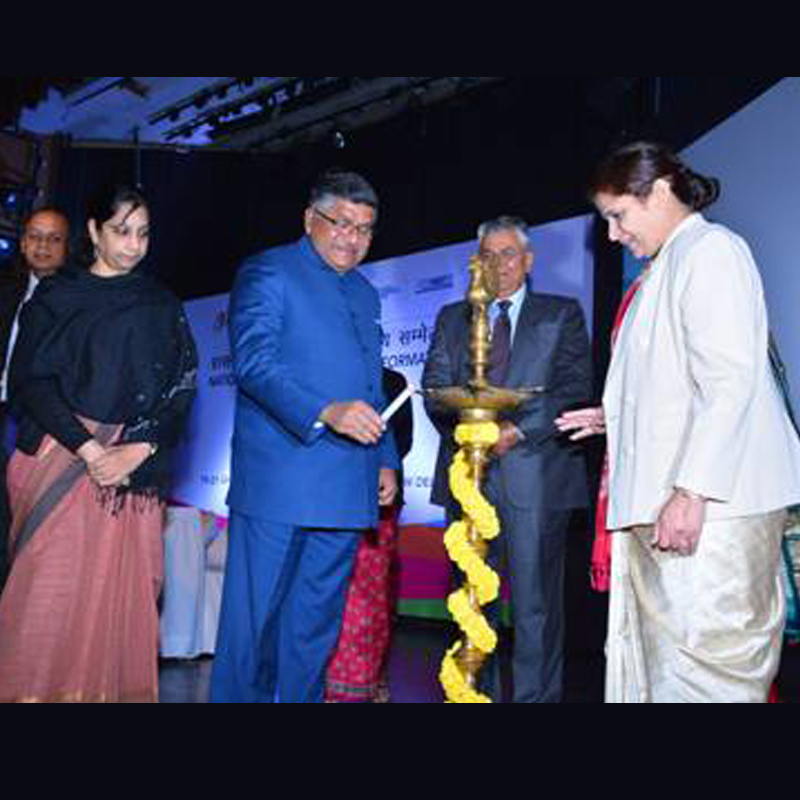
NEW DELHI: Electronics and Information and Technology Minister Ravi Shankar Prasad has said the National Informatics Centre is the “technological bridge of India and is best placed to lead the way for a Digital India”
He urged the District Information Officers (DIOs) to be innovative and proactive. NIC must adopt a transformative approach to make a difference at the grassroots level. He appealed to the NIC to connect with the Common Service Centres (CSCs), who have successfully provided training on digital payment systems to over 19.6 million of rural citizens and 6,15,000 merchants.”
He was speaking at an event where the NIC kicked off the National Meet on Grassroot Informatics – VIVID: Weaving a Digital India here.

The inauguration of the three-day event was also attended Minister of State P P Chaudhary, Secretary Ms Aruna Sundararajan, Additional Secretary Ajay Kumar, NIC DG Ms Neeta Verma, and Deputy DG Ms Rama Nagpal.
Prasad announced the Government’s plan to set up a Government Security Operation Centre and a Data Centre for Cloud in Bhopal. He also announced that the Government is going to enhance the infrastructure of district NIC offices to international standards. As a pilot project, 150 District NIC offices would be upgraded during the period 2017-18, while rest will follow soon.
He instructed the ministry to develop a training module for the NIC officials to keep pace with the ever evolving technologies. He also announced the introduction of annual awards for the DIOs of the NIC for taking up exemplary innovative approach in their respective districts. The top three best innovators will get a reward of Rs 2,00,000, Rs 1,00,000 and Rs 50,000 respectively.
Chaudhary said, “The threshold of the year 2017 will always be remembered for heralding in several transformative changes to benefit the economy as well to the citizens, amongst them the Digital India initiative has been the most significant one. I must congratulate NIC and DIOs for playing a pivotal role in preparing the country for a successful Digital transformation of our ecosystem.
NIC also introduced two new portals – District Collector’s Dashboard and NIC Service Desk, which were launched by Prasad and Chaudhary respectively.
The National Meet on Grassroots Informatics is aimed at showcasing the various initiatives of NIC in creating and enhancing the Digital Infrastructure in the country. Some of these are – setting up of ICT infrastructure, developing state of the art products to enable the government and empower the citizens, its initiatives at state and district level along the lines of Digital India initiatives along with the various awareness campaigns on Digital Payment Systems encompassing DBT, PFMS, Cashless Payment, Aadhaar etc.
The individual sessions during these three days would throw lights on NIC’s journey so far, the best practices it follows, the Digital India programme, Digital India initiatives from NIC State Units, success stories from the districts, Financial Inclusion, its technology awareness programmes and ICT Infrastructure being provided by NIC.


I&B Ministry
Doordarshan, ICCR sign MoU to boost global reach of Indian culture
Pact taps TV, radio and digital platforms to take cultural content worldwide
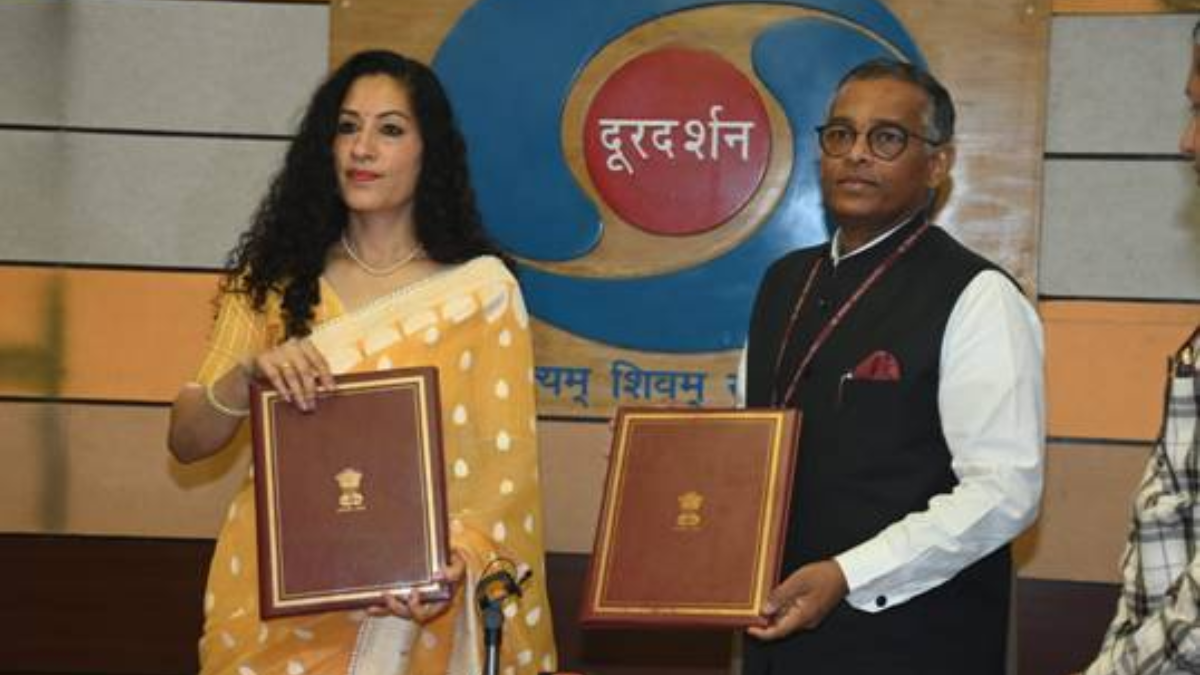
NEW DELHI: In a move aimed at taking India’s cultural story further across borders, Doordarshan under Prasar Bharati has signed a memorandum of understanding with the Indian Council for Cultural Relations to expand the global reach of Indian cultural content.
The agreement, signed on April 7 at Doordarshan Bhawan, brings together the content strength of ICCR and the wide broadcast network of Doordarshan, spanning television, radio and digital platforms.
Under the partnership, ICCR will provide a steady stream of cultural programming, including performances and events organised by Indian missions abroad such as embassies, consulates and cultural centres. Doordarshan will handle production, coverage and distribution, ensuring that these programmes find audiences not just in India but across the world.
The collaboration also opens the door for recorded cultural content from overseas missions to be aired across multiple platforms, including OTT and social media, making Indian art, music and heritage more accessible to global viewers.
A notable feature of the MoU is joint ownership of content rights in perpetuity, including digital rights. This allows both organisations to archive and reuse material over time, building a long-term cultural repository while maximising reach. Doordarshan will also support pre-event promotion and cross-platform visibility to drive engagement.
Speaking at the signing, Doordarshan director general K. Satish Nambudiripad and Indian Council for Cultural Relations director general K. Nandini Singla highlighted the potential of the partnership to strengthen India’s cultural diplomacy through modern media channels.
The agreement, initially valid for three years, also allows Doordarshan to explore monetisation opportunities from the content generated, adding a commercial layer to cultural broadcasting.
As India looks to blend tradition with technology, this partnership signals a clear intent to make its cultural voice not just heard, but seen and streamed across the globe.







