News Broadcasting
Dish TV, Tata Sky lock horns over DVRs

NEW DELHI: Existing DTH player Dish TV has locked horns with Tata Sky over interoperability — or its waiver — of digital video recorders to be made available to consumers of a DTH service in India.
DTH license holder ASC Enterprises, which operates the Dish TV brand, has told the broadcast regulator that if digital video recorders (DVRs) are not interoperable, as mandated in DTH guidelines, it would “compromise” consumer interest.
On the other hand, Tata Sky and technology company NDS (controlled by Rupert Murdoch) have said that “interoperability is not feasible on high end devices” like DVRs.
“The technical specifications vary with the (DVR) models that are introduced and these were not envisaged when BIS (Bureau of Indian Standards) drew up STB specifications,” Tata Sky has said in its submission to the regulator.

ASC Enterprises has counter-punched by saying that existing clauses on interoperability of boxes protect the “consumer interests by ensuring they switch over their service providers for the basic functionality of watching the broadcast channels as per their option and choice.”
If that was not enough, Tata Sky and residents’ welfare associations (RWAs) have come out in support of multi-dwelling unit (MDU) technology, which has been strongly opposed by all sections of the cable industry, including Cable Operators’ Federation of India (COFI), which feels cable ops stand to become redundant.
MDU technology, being tested by Tata Sky for its proposed DTH service in a few cities, envisages making available a DTH service to multiple homes through a common dish antenna, but separate set-top boxes.
The technology is being touted by its supporters as cost effective for consumers and as a safeguard for “aesthetic” senses in concrete jungles that Indian cities are turning into.
Telecom Regulatory Authority of India (Trai) had asked for comments on various issues related to DTH, including whether certain clauses in the DTH guidelines need to be amended to exclude DVRs from being interoperable.
Fifteen individuals/organizations, including a clutch of RWAs, have submitted their feedback, baring the fact there isn’t consensus on matters like DVRs and MDU technology, which have the potential of changing the way people consume television fare in India.
Even a company like Anil Ambani’s Reliance Infocomm, whose DTH license application hasn’t been processed by the government, feels that DVRs should be kept interoperable.
“The clauses 7.1 & 7.2 of DTH license conditions need not be amended to exclude digital video recorders. All set top boxes whether simple STB or personal video recorder/ DVR-enabled set top boxes should be interoperable,” Reliance has stated
The full text of feedback, peppered with technical jargons and occasional innuendoes hitting at opponents, can be seen on the regulator’s website, www.trai.gov.in.





News Broadcasting
CNN-News18 to host Fury in the Gulf conclave on West Asia crisis
Three-hour summit to unpack geopolitical fallout and impact on India
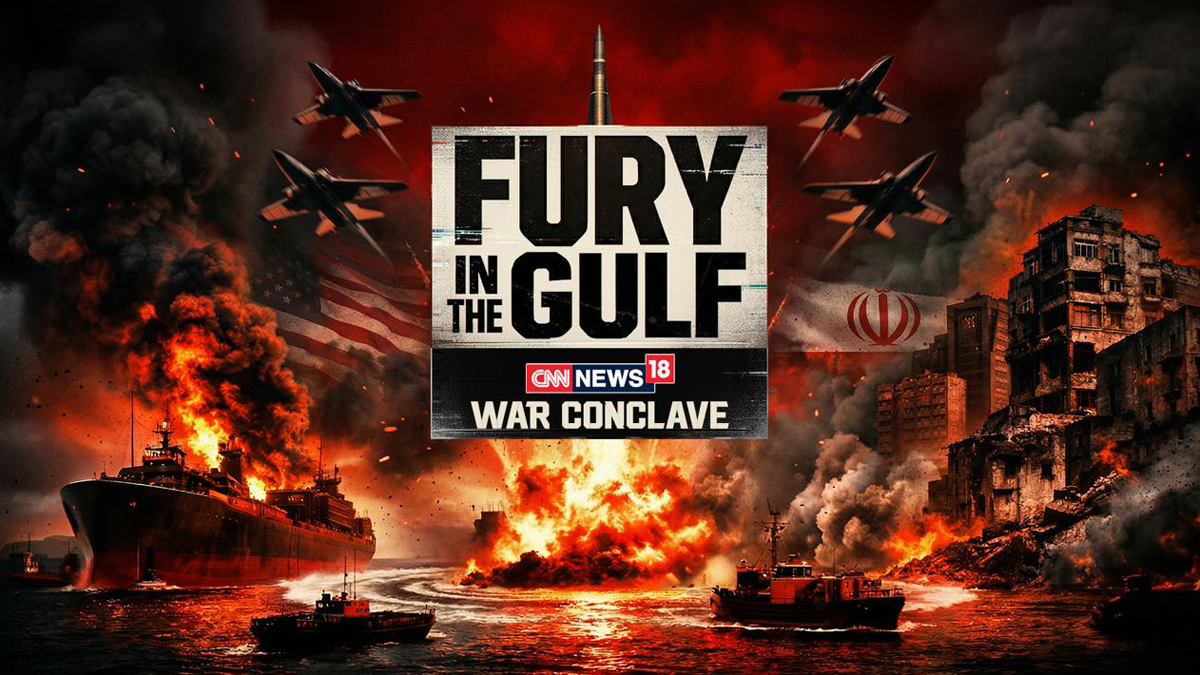
MUMBAI: CNN-News18 is set to host a special three-hour broadcast, Fury in the Gulf – War Conclave, on April 7, aiming to decode the escalating West Asia crisis and its far-reaching implications for India.
Scheduled from 4:00 PM to 7:00 PM, the conclave comes at a time when tensions between Iran and the United States are reshaping global geopolitics and triggering economic uncertainty. With India’s deep energy ties, trade links and large diaspora in the Gulf, the developments carry significant domestic relevance.
Built around the theme ‘Conflict, Consequences, and The Future,’ the programme will feature six curated sessions combining one-on-one interviews and panel discussions. The focus is to cut through the clutter and offer viewers a clearer understanding of the fast-evolving situation.
Key sessions include ‘Diplomacy in Times of War’ featuring Shashi Tharoor, and ‘World After the Iran Conflict’ with voices such as Ram Madhav, Reuven Azar, representatives from the European Union and the Iranian Deputy Envoy. Another session titled ‘Another Dunkirk?’ will bring together K. J. S. Dhillon and Jitin Prasada among others.
CNN-News18 editorial affairs director Rahul Shivshankar said, “In times of war, clarity becomes the most powerful tool. Fury in the Gulf – War Conclave brings together credible voices to address the questions and confusion that arise amid an overwhelming influx of information.”
He added that the initiative is aimed at delivering “facts, perspective, and insight” at a time when misinformation can easily cloud public understanding.
Echoing the sentiment, CNN-News18 CEO– English and business news Smriti Mehra said the conflict marks a defining global moment, with consequences that extend well beyond the region. She noted that the conclave seeks to present the crisis with “depth, nuance and responsibility” so audiences can better grasp its real-world impact.
As geopolitical tensions continue to dominate headlines, the conclave positions itself as an attempt to bring order to the noise, offering viewers a structured, insight-led look at a complex and rapidly shifting global situation.






