English Entertainment
Discovery unveils programming lineup for ‘Shark Week 2021’

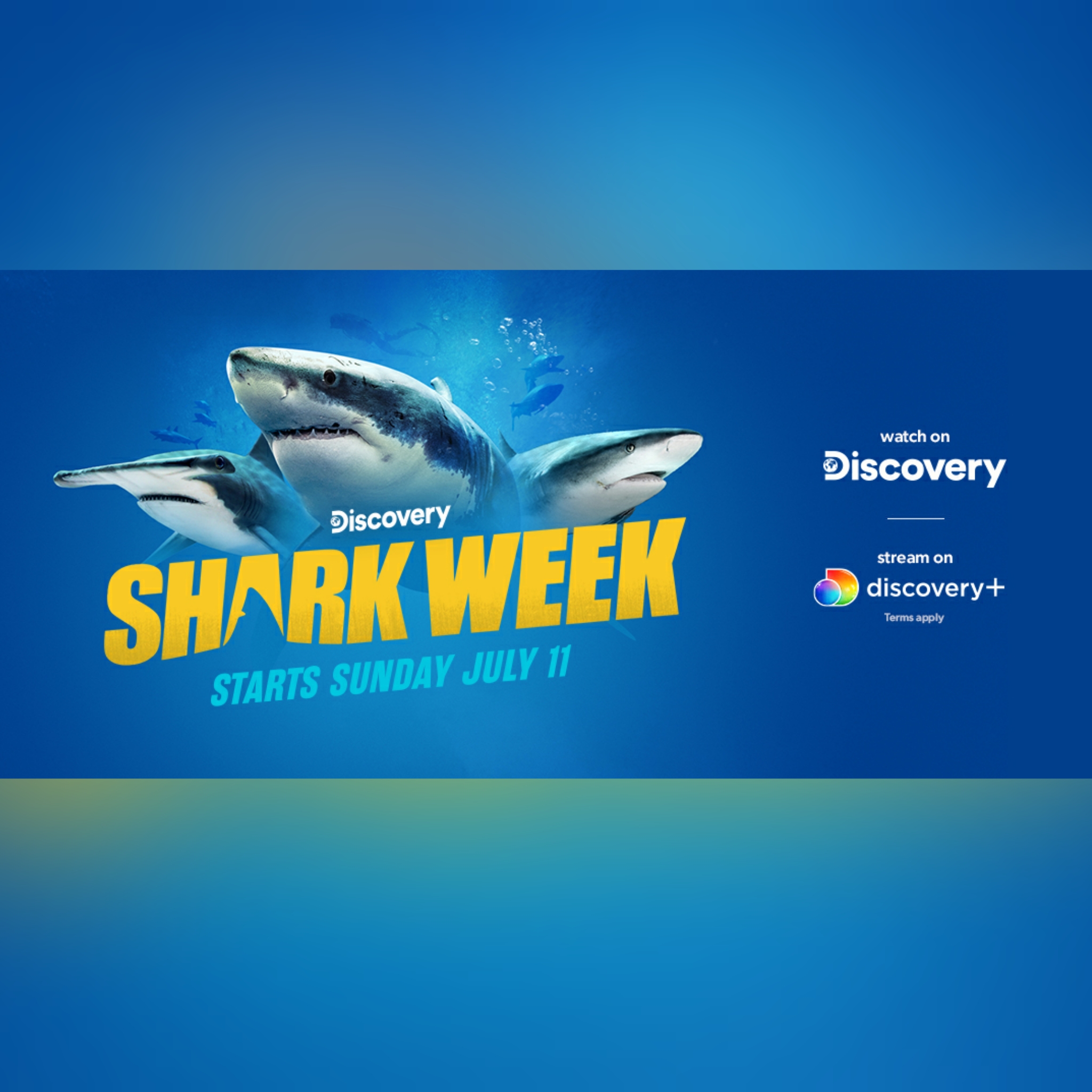
Mumbai: Discovery channel on Thursday announced the full programming lineup for its successful IP “Shark Week 2021” ahead of its 10 July premiere on discovery+.
The show which returns for its 33rd year will have more hours of shark programming than ever before and feature celebrity co-stars including Tiffany Haddish, Brad Paisley, JB Smoove, William Shatner, Eli Roth, the cast of “Jackass”, Noah Schnapp, Robert Irwin, Ian Ziering, Tara Reid, Dr Sandra Lee, Josh Gates, Snoop Dogg, Mark Rober, Chris Rose, David Dobrik and Kinga Philipps, the channel said in a statement.
Leading up to Shark Week, Animal Planet, Discovery Channel and discovery+ will celebrate with a shark movie festival across three platforms with titles like “Crickey! It’s Shark Week”, “Expedition Unknown”, “Sharkadelic Summer 2 ft. Snoop Dogg”, “Extinct or Alive: The Lost Shark”, “Shark Week Best in Show”, “Alien Sharks: First Contact”, amongst others.
The show will take viewers to new locations to study and record new shark behaviours including Bull shark hunting patterns and new heights – capturing the highest breach ever recorded as Discovery celebrates these brilliant creatures, it added.

Check out Shark Week ’21 lineup below:
Return To Headstone Hell – Streaming 10 July exclusively on discovery+
Dr Riley Elliott returns to Australia’s Norfolk Island with underwater cinematographer Kina Scollay to see what happens when the island’s tiger sharks go head-to-head with migrating great whites over an unusual food source: cow carcasses.
Crikey! It’s Shark Week – Streaming 11 July exclusively on discovery+
Robert Irwin comes face to face with a Great White Shark for the first time ever with shark conservationists Paul de Gelder and Madison Stewart. Following his father’s footsteps, he will get as close as possible to these incredible creatures to determine which apex predator reigns supreme – Crocs or Great Whites? Produced by Eureka Productions. It will also be airing 23 August at 8pm on Animal Planet.
Expedition Unknown: Shark Trek – Streaming 12 July exclusively on discovery+
Josh Gates links up with his childhood hero, William Shatner, to boldly go where Shark Week has never gone before. The mission: enter shark-infested waters to understand the nature of fear and come face to face with an apex predator. This is Shark Trek. Produced by Ping Pong Productions. It will also be airing 23 August at 7pm on Discovery Channel.
Stranger Sharks- Streaming 13 July exclusively on discovery+
Mark Rober and Noah Schnapp from Stranger Things are teaming up for the ultimate Shark Week adventure…exploring abandoned undersea ruins and man-made artificial reefs searching for the strangest sharks in the ocean. Produced by Spoke Studios.
Great White Comeback – Streaming 14 July exclusively on discovery+
In 2017 one of the strangest ocean mysteries occurred in South Africa when an entire Great White population disappeared overnight. Alison Towner and her team, Enrico Gennari and Andy Casagrande head out on an epic investigation to find the missing Great Whites of Seal Island. Produced by Hazmat Productions.
Shark Academy – Streaming 15 July exclusively on discovery+
Shark Academy follows eight men and women on an intense six-week crash course to secure a coveted crew spot on shark scientist Dr Riley Elliott’s next great shark diving expedition. It’s an opportunity of a lifetime for these shark enthusiasts with non-traditional backgrounds to leap ahead in the competitive world of shark research, embarking on the adventure of a lifetime in hopes of making their dreams a reality. Produced by Double Act.
Sharkadelic Summer 2 ft. Snoop Dogg – Streaming 16 July exclusively on discovery+
Sharkadelic is back to find out if this summer will be the sharkiest on record. Snoop Dogg breaks down the craziest encounters, the wildest and most unpredictable reactions to discover if America is once again ground zero for the shark superstorm. Produced by Anomaly Entertainment. It will also be airing 27 August at 7 pm on Discovery Channel.
The Real Sharknado- Streaming 17 July exclusively on discovery+
We have all seen the movies, sharks jumping into boats, circling in tornados, and risking their lives to attack humans. Could these shark feasts happen? Ian Ziering and Tara Reid pick up their chainsaws once again – this time with the help of Dr. Tristan Guttridge and to see if a real Sharknado could happen. Produced by Ping Pong Productions.
Extinct or Alive: Jaws of Alaska- Airing 24 August at 8pm on Animal Planet
Wildlife biologist Forrest Galante travels the world in search of rare and elusive wildlife, including those lost to science, and cold-water sharks.
Extinct or Alive: The Lost Shark- Airing 25 August at 8pm on Animal Planet
Wildlife biologist, Forrest Galante, is in the Maldives in search of a supposedly extinct shark. Unidentified sharks in the area have led many to believe the Pondicherry is alive.
Extinct or Alive: Land of The Lost Sharks- Airing August 26 at 8 pm on Animal Planet
Biologist Forrest Galante dives into treacherous, shark-infested waters in the southern hemisphere to rediscover three unique sharks lost to science for as long as 100 years.
Alien Sharks: First Contact- Airing August 27 at 8 pm on Animal Planet
Researchers try to make contact with bizarre alien sharks lurking in the deep. Pursuing the frilled shark, sleeper shark and cookie-cutter shark brings unexpected encounters.
Tiffany Haddish Does Shark Week (Special) – Airing 24 August at 7 pm on Discovery Channel
Tiffany Haddish hosts Shark Week! While her fantasy was to uncover the secrets of shark sex sailing on the fanciest yachts surrounded by friendly sea creatures and pampered by a handsome merman, she’s joined by Dr. Toby Daly-Engel, Dr. Craig O’Connell, Alannah Vellacott for a very sharky wake-up call. Produced by Will Packer Will Packer Media and Anomaly Entertainment.
Brad Paisley’s Shark Country- Airing 25 August at 7 pm on Discovery Channel
Country star Brad Paisley and comedian JB Smoove meet in the Bahamas to attract new fans, Sharks! With Dr. Austin Gallagher’s help, they put Brad’s musical talents to the test in shark-infested waters to see how sound can attract or repel sharks. Produced by Critical Content.
Shark Week Best in Show – Airing 26 August at 7 pm on Discovery Channel
Discover everything that has happened in the world of sharks this year including unbelievable viral videos, big news stories and the latest in cutting-edge shark science. Produced by Main Event Media.






English Entertainment
ZEE5 UK partners Narrative Entertainment to add UK channels
Six FAST channels added as platform sharpens hybrid play in Britain
LONDON: ZEE5 UK struck a first-of-its-kind deal with Narrative Entertainment, bringing mainstream UK television channels onto an Indian streaming platform as it pushes to deepen its footprint in a crowded, mature market.
The partnership adds six of Narrative’s FAST channels to the service, including Great! Movies, Great! Romance, Great! Mystery and kids brands POP, Tiny Pop and POP UP, widening ZEE5 UK’s appeal across genres and age groups.
The move reflects a clear shift in strategy. ZEE5 UK is betting on a hybrid model that blends on-demand content with curated, always-on channels to drive discovery and increase time spent on the platform.
“This partnership represents a meaningful evolution in how we serve audiences in mature markets like the UK, where viewers are defined by habits, convenience and choice rather than geography or language alone,” said Parul Goel, territory head, Europe, Zee Entertainment. “By bringing trusted mainstream UK channels together with our premium originals, movies and kids’ content, we are building a more consumer-centric platform that simplifies viewing while increasing depth and relevance.”
Fateha Begum, commercial director, Narrative Entertainment, said the tie-up would fuel growth for both sides. “Our portfolio of quality programming, with such wide and enduring appeal, is a perfect complement to ZEE5 UK. This is a strong partnership that will support growth for both parties, and we share Zee Entertainment’s vision of an increasingly partnership-led future for the industry.”
ZEE5’s global library spans over 4,000 films and more than 500 originals, with over 130 new titles added annually. The addition of Narrative’s channels strengthens its kids offering and introduces genre-led linear experiences alongside its on-demand catalogue.
The deal also gives Narrative access to ZEE5 UK’s fast-growing user base, extending reach without diluting brand identity, while reinforcing ZEE5 UK’s network of more than 40 live channels.
As streaming wars intensify, ZEE5 UK is widening its playbook, blending content, convenience and partnerships in a bid to win screen time in one of the world’s toughest markets.







