News Broadcasting
Discovery Travel & Living unveils 1st local production The Great Indian Wedding


UDAIPUR: Discovery Networks India’s first production The Great Indian Wedding to be aired on Discovery Travel & Living (DTL) was screened for a select media gathering last night. With this, the lifestyle channel has pioneered the lifestyle genre delivering style and luxury to the discerning upscale SEC AB audience of males, females and couples in the 18-45 years age group.
Produced by Delhi based Blue Mango films, it debuts with the episode of Priya Sachdev and Vikram Chatwal’s wedding. It is a one of a kind series, allowing the viewer to experience the wedding as an insider. The focus clearly is on weddings with a difference and have a twist to them: opulence, glam quotient, location and theme. The pilot episode premiers on 20 August at 8 pm.
The programme captures the glamorous theme parties extending from exotic locations like Jag Mandir in Udaipur to premium hotels in Delhi, the striking performances by Indian and international artists and the romantic and religious wedding ceremony.

The host, Natasha Mago presents an insiders view, chatting up the bride, groom, guests, the challenges and frustrations of the wedding planner and the actual wedding ceremony.
The regal Oberoi Udaivilas at Udaipur was the venue where Discovery Networks India executive vice president and managing director Deepak Shourie and the Lifestyle Networks VP Aditya Tripathi gave details on the commissioning of India centric series and spoke of the bouquet of locally produced shows to go on air from this month.
Shourie in his brief welcome speech said that having successfully reinvented documentary and real world television, Discovery brings the same vision and experience to DTL’s locally produced series. He stated that India will be highlighted on the channel.
“Discovery Travel and Living has created and established the lifestyle genre in Indian television. To further our growth goals and to satisfy the incessant demand from both Indian and foreign viewers for more India-centric content, we have commissioned programmes that capture the contemporary India through a variety of themes. These productions will be up to international standards and will be the next step in successfully establishing our lifestyle expertise,” Shourie said.
On The Great Indian Wedding, Tripathi said, “When we decided on the wedding theme, it so happened that the Sachdev/Chatwal wedding was also being planned and we took it from there. During the ad break of this pilot episode, a banner will be streamed asking viewers if they know of similar weddings that can be featured . And, so based on the responses and our research, the 13 part series will be made. The remaining episodes will go into production in the 2006-2007 wedding season,” said Tripathi.
The next series in India centric shows which is almost in its final stages of production is Indian Rendezvous where six hosts from 6 cities take the viewers on a journey of their native cities; famous spots, to do’s and must visits, besides revealing secret trails and hidden treasure troves in the city of their choice. The series has Sushma Reddy on Mumbai, Ayaan Ali Bangash on Delhi, Konkane Sen Sharma on Kolkatta, Meera Vasudevan on Chennai, Nagesh Kukonoor on Hyderabad and Vasundhara Das on Bangalore as hosts.
Another show under production is Matter Of Taste, hosted by epicurean Vir Sanghvi. This is a journey around the Indian palate and takes a peek at origins of Indian food, tradition and culture and rare insights. Singhvi travels around the country for this show.
Other series under production which cover hotels, fashion and style, interiors. “But, this the first of many and surely the first of a regular supply,”assures Tripathi.
But the way forward for DTL, Tripathi stressed was that it was essentially an international channel and India productions will be a small but, significant part of the repertoire of programmes. Said he, “The Indian programming will never dominate the channel as we clearly make it with the intention of airing it in other parts of the world. So, maybe 10-15 per cent of the programming will be Indian.”
Speaking to Indiantelevision.com on Discovery producing programs in India, Tripathi made it clear that it is not for Indian audiences. “The way the Discovery format is used, we make a program on one part of the world and we show it in other parts of the world. That is the nature of our programming and all the shows on the three channels Discovery, DTL and Animal Planet are on global interest. Similarly, we know our channel here is an international channel that provides high quality entertainment for a global audience.
“India’s relevance on the world map is increasing, there are more people around the world interested in India, coming to India to work and travel so therefore DTL is producing programming on Indian audiences but this will go to our channels across the world. The programming will show India in a positive light and and in turn we get eyeballs from other regions who see these programs and maybe plan to visit India seeing it.”
Since its launch in November 2004, DTL has striven to make its positioning distinct from that of factual channels. “Our strategy has been to offer varied non fictional content as it is our strength. But we don’t need to be factual, we can be factual as well as be in lifestyle group and our positioning in the lifestyle group is aspirational, yet attainable. It’s not enjoying life, it is about celebrating life. It is good looking entertainment, said Tripathi.
Tripathi also spoke of how the concept of a lifestyle channel came about. He said, “Some years ago we took stock of the international TV landscape and we identified that a number genres across the world had international leaders like news had CNN, BBC and sports was ESPN, movies was HBO, factual will be Discovery and among all this we identified a niche in the lifestyle space. There was no global brand and given that we had some experience in lifestyle and travel genres, we felt that this was an area we could occupy and dominate in the years to come. And, hence India was the first country to launch lifestyle networks.”
Currently available in 22 million homes across the country, DTL is also now available on the DTH platform. It attracts 120 advertisers from across product categories, further cementing the channel’s unique value proposition.







News Broadcasting
CNN-News18 to host Fury in the Gulf conclave on West Asia crisis
Three-hour summit to unpack geopolitical fallout and impact on India
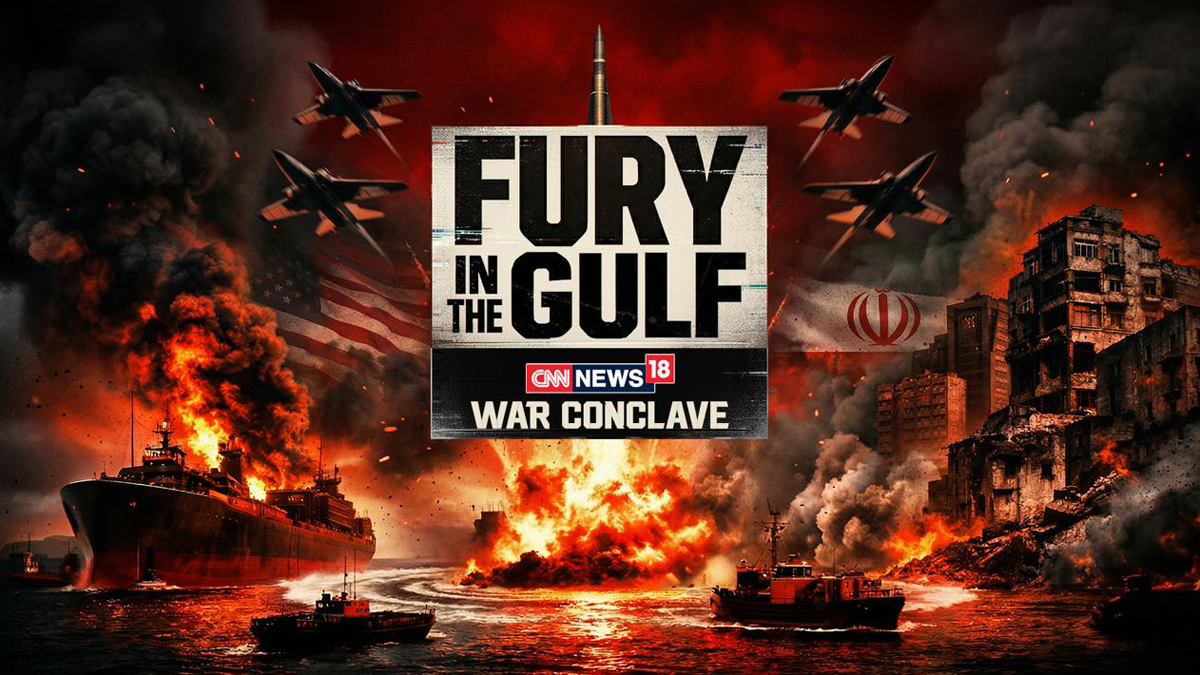
MUMBAI: CNN-News18 is set to host a special three-hour broadcast, Fury in the Gulf – War Conclave, on April 7, aiming to decode the escalating West Asia crisis and its far-reaching implications for India.
Scheduled from 4:00 PM to 7:00 PM, the conclave comes at a time when tensions between Iran and the United States are reshaping global geopolitics and triggering economic uncertainty. With India’s deep energy ties, trade links and large diaspora in the Gulf, the developments carry significant domestic relevance.
Built around the theme ‘Conflict, Consequences, and The Future,’ the programme will feature six curated sessions combining one-on-one interviews and panel discussions. The focus is to cut through the clutter and offer viewers a clearer understanding of the fast-evolving situation.
Key sessions include ‘Diplomacy in Times of War’ featuring Shashi Tharoor, and ‘World After the Iran Conflict’ with voices such as Ram Madhav, Reuven Azar, representatives from the European Union and the Iranian Deputy Envoy. Another session titled ‘Another Dunkirk?’ will bring together K. J. S. Dhillon and Jitin Prasada among others.
CNN-News18 editorial affairs director Rahul Shivshankar said, “In times of war, clarity becomes the most powerful tool. Fury in the Gulf – War Conclave brings together credible voices to address the questions and confusion that arise amid an overwhelming influx of information.”
He added that the initiative is aimed at delivering “facts, perspective, and insight” at a time when misinformation can easily cloud public understanding.
Echoing the sentiment, CNN-News18 CEO– English and business news Smriti Mehra said the conflict marks a defining global moment, with consequences that extend well beyond the region. She noted that the conclave seeks to present the crisis with “depth, nuance and responsibility” so audiences can better grasp its real-world impact.
As geopolitical tensions continue to dominate headlines, the conclave positions itself as an attempt to bring order to the noise, offering viewers a structured, insight-led look at a complex and rapidly shifting global situation.






