News Broadcasting
Discovery to showcase a Cartier masterpiece: The Patiala Necklace

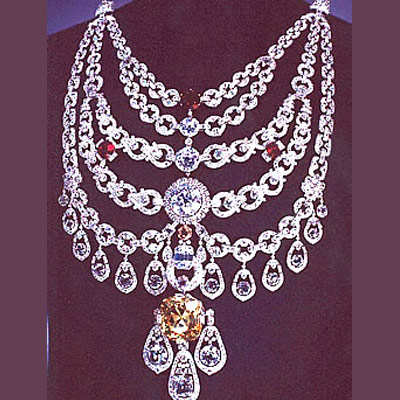
MUMBAI: Discovery has gems in its eyes this month. The infotainment channel will be airing a programme about about Cartier’s exquisite masterpiece, The Patiala Neclace, once the proud possession of Patiala’s royal family
The Patiala Necklace reveals the fascinating story behind one of Cartier’s most impressive creations. The film will premiere on Discovery Channel on Saturday, 21 February 2004 at 9 pm.
Airing as part of the Discover India series, the film showcases the colourful and romantic ambience of the Indian royal families, who led a lifestyle of unparalled luxury and opulence, says a company release.

According to Discovery Communications India, director – marketing Aditya P Tripathi, “The Patiala Necklace is part of our endeavour to provide a fresh perspective and highlight India’s lesser known facets. The film pays a tribute to our rich cultural heritage and traces the extraordinary journey of the necklace, from Patiala’s treasury to London’s showrooms.”
The film captures three generations of the royal family of Patiala, from Maharaja Bhupinder Singh, his son Yadavindra Singh, to Capt Amarinder Singh, the Chief Minister of Punjab.
Says Attaché Audio Visual, Embassy of France’s Patrick Madeline,”The Patiala Necklace artistically blends the story of the necklace created by the House of Cartier, with that of the royal family of Patiala. This film shows the interest of French filmmakers in the glorious past of India and programmes such as these will help develop a better understanding between the two countries.”
Created by the House of Cartier for Maharaja Sir Bhupinder Singh of Patiala in 1928, the necklace is one of the most expensive pieces of jewellery ever made. Famous for its unmatched brilliance and extraordinary design, the necklace has five rows of diamond encrusted platinum chains, says the release. When it was created, it had 2,930 diamonds embedded in it, including the world’s seventh largest DeBeers diamond.
It took Cartier almost three years to make the necklace, which looked so exquisite that they sought the Maharaja’s permission to display it before sending it to India. But in April 1948, this $25 million necklace mysteriously disappeared from the treasury of the royal family and was recovered almost half a century later by Eric Nussbaum, a Cartier representative in London. Cartier immediately bought it and set about restoring the Art Deco period piece to its original glory.
According to the release, the Patiala Necklace is a metaphor of the lifestyle that the Maharajas led. The film is created using rare archival footage and through interviews with members of the royal family of Patiala including Capt Amarinder Singh, the film beautifully brings the past and the present together.
The film also shows how the magnificent necklace was restored to its original glory. In 1998 when the necklace was recovered, what was left were just the chains and some original stones; the Burmese rubies and the real De Beers diamond that made the necklace rare and exquisite were all gone. Cartier has tried to recreate the necklace using old techniques and by replacing the original stones, informs the release.
Says producer of The Patiala Necklace Françoise Gazio, “We were fascinated by the magnificence of the necklace and the mystery surrounding its disappearance and sudden recovery in 1998. The fact that it belonged to one of the royal families of India convinced us all the more to make the film.”







News Broadcasting
News TV viewership jumps 33 per cent as West Asia war draws audiences
BARC Week 8 data shows news share rising to 8 per cent despite T20 World Cup

NEW DELHI: Even as individual television news channel ratings remain under a temporary pause, the genre itself is seeing a clear surge in audience attention.
According to the latest data from Broadcast Audience Research Council India, television news recorded a 33 per cent jump in genre share in Week 8 of 2026, covering February 28 to March 6.
The news genre accounted for 8 per cent of total television viewership during the week, up from 6 per cent the previous week. The spike in attention coincided with escalating geopolitical tensions involving the United States, Israel and Iran, which have kept global headlines firmly fixed on West Asia.
The rise is notable because it came at a time when cricket was dominating television screens. The high-stakes stages of the ICC Men’s T20 World Cup, including the Super 8 fixtures and semi-finals, were being broadcast during the same period.
Despite the cricket frenzy, viewers appeared to be toggling between sport and global affairs, boosting the overall share of news programming.
The surge in genre share comes even as the government has enforced a one-month pause on publishing ratings for individual news channels. The move followed regulatory scrutiny of the television ratings ecosystem.
While channel-level rankings remain temporarily out of sight, the genre-level data suggests that when global tensions escalate, audiences continue to turn to television news for real-time updates.