GECs
Discovery takes an in-depth look at the video gaming industry


MUMBAI: The video game revolution, underway for decades, has progressed from simple amusements created in the 1950s to an all-pervasive force in today’s popular culture that rivals films and television. What began as a sub-culture pastime has evolved and transcended genres to become a e form of expression impacting everything from modern warfare to interpersonal relationships. Discovery will give viewers an insight at this successful multi-billion dollar behemoth in the show I, Videogame.
The show will air eevry Thursday at 10 pm from 1 March 2007.
The show will explore the past, present and future of video games and video gamers. Featuring interviews with giants in the gaming industry of yesterday and today, this five-part series examines the evolution of the videogame and its cultural impact on the world of entertainment today.

From the early days of Pong to today’s ever-popular Halo 2 and from Atari 2600 to Nintendo and PlayStation, the show narrates the story of the people, their ideologies, the technology behind video games and how it exploded into a cultural phenomenon.
The first episode shows how the concept of the video game came into being. In the 1950s, the Cold War quickly evolved between the world super powers of the United States and the Soviet Union. Mutually assured destruction enforced an uneasy stalemate, yet also drove computer technology to create missile simulations in order to predict the results of a nuclear war.
This same computer technology was used to develop the first computer game in 1958 – Tennis for Two. The space race and Vietnam coincided with Steve Russell’s game Space War and the emergence of the first true giants in the video game business – Nolan Bushnell and Atari. Space Invaders and Pac-Man soon followed, and the Golden Age of videogames was born. Video games emerged as a form of entertainment where the player was in control, as opposed to the more passive diversion of watching television.
The second episode looks at the scene in the late 1970s, 1980s and 1990s. Instead of controlling things like spaceships and tennis rackets, video game technology let players command recognisable characters with real faces and back stories. Game developers were liberated to create more complex videogames with heroic journeys – and Japanese creators like Shigeru Miyamoto rose to prominence with star characters Mario, Donkey Kong and Zelda.
But in the 1990s, Generation X emerged and the games of their childhood couldn’t satisfy the new teen angst that now permeated pop culture. With Sega’s Genesis and Sony’s PlayStation, gamers dismissed cute cartoon characters in favour of grittier heroes like Sonic the Hedgehog and anti-heroes in games like Grand Theft Auto III. This episode features interviews with Trip Hawkins (Silicon Valley entrepreneur and co-founder of Electronic Arts), Al Lowe (creator of Leisure Suit Larry), Tim Schafer (creator of Full Throttle) and other figures in the gaming industry.






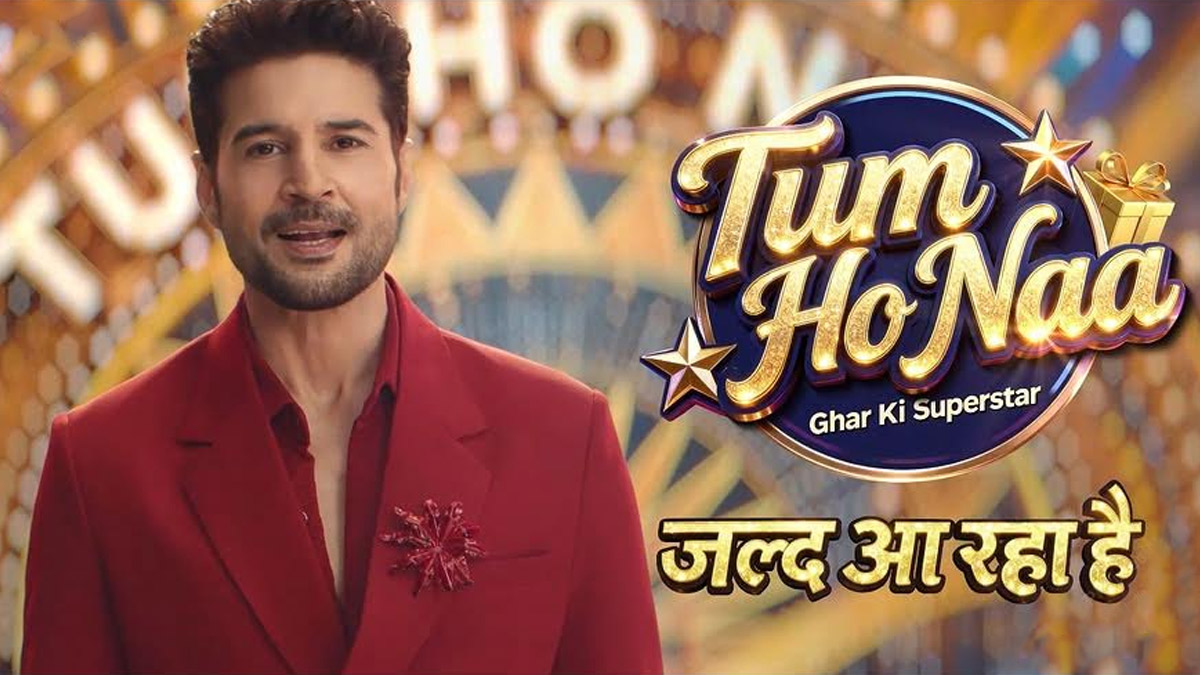
MUMBAI: Lights, camera… connection because this time, the game isn’t just about winning, it’s about who’s with you. Sony Pictures Networks India is gearing up to launch a new reality game show, Tum Ho Naa, expanding its unscripted slate with a format that promises both emotion and engagement.
The show will premiere soon on Sony Entertainment Television and stream on Sony LIV, with Rajeev Khandelwal stepping in as host. Known for his measured screen presence and selective choices, Khandelwal’s return to television adds a layer of familiarity and credibility to the upcoming format.
While specific details of the gameplay remain under wraps, the positioning suggests a reality format that leans as much on emotional resonance as it does on competition, an increasingly popular blend in Indian television, where audiences are gravitating towards content that offers both stakes and storytelling.
Khandelwal, reflecting on his return, noted that his choices have often been guided by instinct rather than convention, describing Tum Ho Naa as a project that feels “close to the heart”. His association also signals Sony’s continued focus on anchoring new formats with recognisable faces who bring both relatability and depth.
The launch comes at a time when broadcasters are doubling down on original non-fiction formats to drive appointment viewing, even as digital platforms expand parallel reach. By placing the show across both linear television and OTT, Sony appears to be aiming for a dual-audience strategy capturing traditional viewers while engaging digital-first consumers.
As the countdown to premiere begins, Tum Ho Naa positions itself not just as another game show, but as a reminder that sometimes, the biggest prize on screen isn’t the jackpot, it’s the journey shared along the way.






