iWorld
Director Santosh Singh talks about his starcast in ‘Ranneeti: Balakot & Beyond

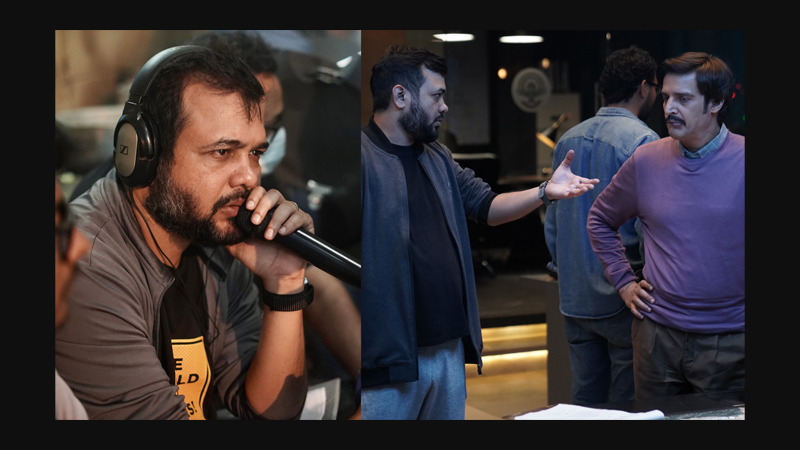
Mumbai: In the landscape of modern entertainment, where heroes often remain unsung, there are rare moments when their valorous tales are etched onto screens, immortalising their sacrifices. Director Santosh Singh, a maestro of storytelling, is on the brink of unravelling one such saga with his upcoming series, “Ranneeti: Balakot & Beyond.” Now, the director opens up about his series, sharing insights that transcend mere filmmaking.
Director Santosh Singh, the guiding force behind this monumental project, peels back the layers of his creative process, offering poignant insights that went into the making of this series. “‘Ranneeti: Balakot and Beyond’ is a series inspired by true events, namely the Pulwama blast and its aftermath leading up to the Balakot airstrikes and the aerial combat that occurred between India and Pakistan after a hiatus of 50 years. While these events unfolded before our eyes, what remains unknown to many is the behind-the-scenes action in the war rooms—the planning, plotting, and execution. It’s the war of narrative and perception, the drama unfolding behind those closed doors, that fascinated me and inspired me to undertake this series.” says Singh.
Talking about authenticity and the pursuit of truth, Singh confronts the daunting task of navigating conflicting versions of history and said, “When you claim that your film or show draws inspiration from real events, there’s a heightened expectation from the audience regarding its credibility and authenticity, particularly when it involves our armed forces and defence establishment.” Santosh continues, “Entertainment stems from the drama inherent in the events themselves. The reality of this event surpasses any scripted drama, so our focus was simply on capturing it accurately. We aimed to keep the story as close to reality as possible, straightforward, and simple. We took a practical approach by portraying there’s no clear villain in this story. It’s about two countries and their people, each doing what they believe is best for their nation’s safety. Viewing the emotions through this lens allowed us to capture them in a genuine and meaningful way.”

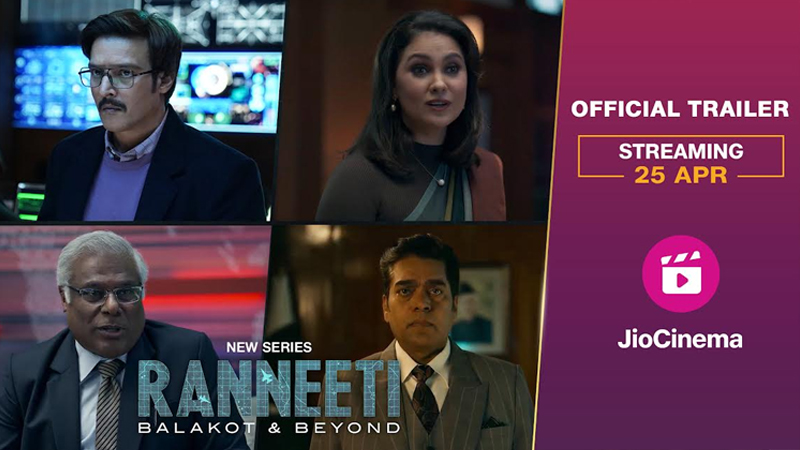
Check out the trailer now,
He further added, “As a director, there’s no margin for error in such a sensitive narrative space. The events surrounding this whole incident are classified, resulting in multiple conflicting versions of what actually happened. Therefore, conducting thorough research and pinpointing the most accurate portrayal was the most difficult task. Our writers faced lots of challenges navigating through many drafts until we achieved the level of accuracy and authenticity required to do justice to this kind of story.”
Reflecting on the profound impact of one pivotal scene, Santosh opens up about the challenges of recreating the Pulwama bus blast. “One moment that deeply impacted me was recreating the Pulwama bus blast and filming the aftermath—the sight of the soldiers’ lifeless bodies. The emotions on set were palpable, and a sombre silence enveloped the entire crew,” he recounts. “It was difficult to comprehend the magnitude of grief.”
Talking about the star cast, the director finds himself blessed with an ensemble cast that breathes life into his vision. “I consider myself fortunate to have such an amazing cast for “Ranneeti: Balakot & Beyond.” Jimmy Shergill, Lara Dutta, Ashutosh Rana, Ashish Vidyarthi, Prasanna, Satyajeet Dubey, Akansha Singh, and Elnaz Nourozi were quite an ensemble that me and my creative team were able to put together. They are not only exceptional actors but also individuals with great positive energy and vibe. This dynamic was crucial for the scale of the show we aimed to achieve. Jimmy Shergill was always our first choice for his role, and his portrayal in the show will demonstrate why. When it came to casting Lara Dutta’s character, we came across a few names, but it was her who stood out to us. She’s an extremely strong personality, and that’s what we were looking for. We were relentless in our pursuit to have her on board, and she proved to be an absolute delight to work with.”
On the work front, director Santosh Singh is currently gearing up for his series ‘Ranneeti: Balakot & Beyond,’ produced by Sphire Origins, the series is all set to release on Jio Cinemas on 25 April. Apart from that, Santosh has left an indelible mark on the world of entertainment with his diverse portfolio of work. From directing acclaimed series like “Broken but Beautiful,” “Fitrat,” and “Apharan 2,” to collaborating with renowned directors such as Ayan Mukerjee, Karan Johar, and Goldie Behl, Singh’s journey in the industry is a testament to his versatility and talent. With notable contributions to blockbuster films like “Wake Up Sid,” “Yeh Jawaani Hai Deewani,” “Brothers,” “Gippi,” “Ae Dil Hai Mushkil,” and the highly anticipated “Brahmastra,” Santosh Singh continues to captivate audiences with his unique storytelling and directorial prowess.

iWorld
JioHotstar’s Tadka explained: India’s big new bet on bite-sized drama
The streaming giant goes short with vertical micro-dramas timed to ride the IPL’s massive reach
MUMBAI: India’s biggest streaming platform has a new trick up its sleeve. JioHotstar has launched Tadka, a vertical micro-content offering that serves up episodic dramas in 60-second to two-minute bursts, built not for the binge-watcher sprawled on the sofa but for the thumb-scroller on the bus. The name, borrowed from the Hindi culinary term for a flavour-charged tempering of spices, signals intent: quick, punchy, unmissable. And the timing is no accident. Tadka’s launch coincides with the Indian Premier League, one of JioHotstar’s biggest audience moments of the year, giving the new format an instant audience of tens of millions.
What exactly is Tadka?
At its core, Tadka is JioHotstar’s answer to the global micro-drama boom, a format that has quietly become a multi-billion-dollar category in China and is fast gaining ground elsewhere. Content is shot vertically, native to the mobile screen, and runs in episodes of 60 seconds to two minutes. Crucially, nothing is edited down from longer cuts: every story is conceived and produced specifically for the short form.
The genres span romance, drama, thriller, comedy and youth-oriented stories, all anchored in contemporary Indian life. Titles already in the library include Mitti Ka Sher, Section F Ka Only Boy, Undercover Boss: Scam Smash and Punch Dialogue Prince Ki Oka Chinna Love Story. Content is available in Hindi, Tamil and Telugu, with more languages to follow.
At launch, the platform has more than 100 original titles on offer. By year-end, JioHotstar plans to have 1,000-plus titles in the catalogue.
Production beyond Mumbai
One of the more striking aspects of Tadka is where it is being made. JioHotstar is deliberately breaking with the Mumbai-centric logic of Indian entertainment, shifting shoots to smaller cities. Game Over Gold Digger and Billionaires vs. Middle Class Mom were shot in Indore; Mitti Ka Sher and Startup Junoon: Rinki Bani Bazigar in Lucknow.
The platform has partnered with more than 50 production houses, ranging from established players such as M5 Entertainment, Salt Media and Tamasha Studios to digital-native outfits such as Incnut, Fourth Wall and Kaijuhouse Productions, many of them new to the long-form ecosystem altogether. The content and production team was built entirely from scratch, drawing talent deliberately from outside the traditional long-form world. Television production veterans, it turns out, are rather well suited to the high-volume, fast-turnaround demands of micro-content.
How the money might flow
Monetisation is still early-stage, but the roadmap is taking shape. Advertising is the primary near-term opportunity: several brands have already approached JioHotstar about integrated content formats, and ad revenues are expected to scale with viewership. Further down the road, the platform may explore subscription packs and coin-based unlock models, a path already well-trodden in global micro-drama markets, where 65 to 70 per cent of revenue has shifted over time from pay-per-episode unlocks to recurring subscriptions.
Fully AI-generated content, story and visuals alike, is also in the pipeline for specific genres, including animated and fantastical formats.
Partners are enthusiastic
Those building content for the platform are bullish. Firdaus, owner and partner at Salt Media, says Tadka “lowers traditional barriers, allowing storytellers across sizes to participate without being constrained by large budgets or legacy structures.” Sonya V. Kapoor, owner and partner at M5 Entertainment, calls micro-content “where the next generation of IP is going to be built and tested.” Anish Surana, founder of Ananta Productions, says Tadka is “formalising micro-content as a serious entertainment category within the mainstream ecosystem.”
Jehangir Irroni, assistant vice president of video divisions at Incnut Digital, puts it bluntly: “When a platform at JioHotstar’s scale backs a format, it has the ability to expand the category itself.”
The bigger picture
Within days of its launch, Tadka has already pulled in a share of JioHotstar’s active user base that, the company claims, is comparable in size to the entire user base of several standalone short-form or regional OTT platforms. That is a remarkable early signal, though, as with any new format, the harder test is whether that initial curiosity converts to habit.
If it does, Tadka could do for Indian micro-drama what JioHotstar’s backing of the IPL did for streaming sports: drag a format from the fringes firmly into the mainstream. The spice, as always, is in the timing.







