News Broadcasting
Dilip Venkatraman bids adieu to TV18, to pursue entrepreneurial interests

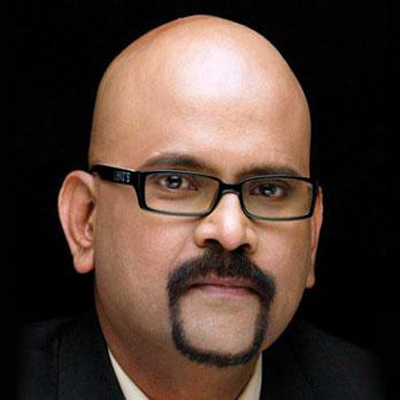
MUMBAI: CNN-IBN and IBN7 CEO N. Dilip Venkatraman has decided to move on from his role in order to pursue his entrepreneurial interests. During his eight year stint, Venkatraman managed a variety of mandates on the general news side of the group. Prior to his current role, he led marketing operations for CNN-IBN, IBN7 and IBN-Lokmat and also managed IBN Focus, the customised media solutions unit for these news channels.
Apart from his leadership role in building CNN-IBN into one of the country’s most reputed news brands, Venkatraman is well-known for conceptualising benchmark properties at the IBN News Network. Network18 COO Ajay Chacko will oversee the operations of the IBN News Network in the interim.

Speaking on this development, Network18 group CEO B. Sai Kumar said “Dilip has played a pivotal role in building our general news network, right from the outset. Today, CNN-IBN, IBN7 and IBN-Lokmat are benchmark brands in the general news space and Dilip has contributed significantly to laying such a strong foundation for the future. We thank him for his invaluable contribution and commitment to the group.”
Commenting on this, IBN News Network editor-in-chief Rajdeep Sardesai added “Dilip’s passion and leadership has been instrumental in making the IBN News Network into one of the most trusted news voices in the country today. He has been a great colleague and we wish him the very best for his future endeavors.”
N. Dilip Venkatraman added “The past few years have been one of the most fulfilling and exciting phases of my professional career. I’m thankful to all my colleagues who have been a part of this enriching journey and I now look forward to taking on newer challenges.”
Venkatraman has over two decades of corporate experience and prior to joining TV18, he held leadership positions at the India Today Group and Zee Network. Venkatraman is a graduate in public administration and holds management qualifications from IIM Bangalore and Harvard Business School.







News Broadcasting
Network18 channels lead YouTube news viewership in March 2026
CNN-News18, News18 India and CNBC channels top categories with record views

MUMBAI: When the world hit refresh on breaking news, Network18’s channels were already streaming ahead. As geopolitical tensions and war-driven headlines fuelled a surge in global news consumption, the network’s digital playbook delivered big clocking record Youtube viewership across English, Hindi and business news categories in March 2026.
At the forefront was CNN-News18, which emerged as the clear leader in the English news segment with 130 million live and video-on-demand views. The channel edged past competitors such as Times of India (126.5 million), Times Now (101.1 million), India Today (88.2 million) and NDTV (77.5 million), according to Databeings data for March.
In the Hindi news arena, News18 India delivered a commanding performance, racking up a staggering 3,297 million views on YouTube. The channel comfortably outpaced NDTV India, which recorded 3,119 million views, underlining its deep reach and consistent engagement with mass audiences, as per Playboard data.
The network’s dominance wasn’t confined to general news. In the Hindi business segment, CNBC Awaaz topped the charts with 92 million views, narrowly ahead of Zee Business (90 million) and well ahead of ET Now Swadesh (57 million). Meanwhile, its English counterpart CNBC-TV18 posted a strong 58 million views, reinforcing the network’s cross-category strength.
The spike in viewership reflects a broader shift in audience behaviour, with viewers increasingly turning to digital platforms particularly Youtube for real-time updates and in-depth coverage during high-intensity news cycles. For Network18, the numbers signal more than just scale; they underline the effectiveness of a multi-platform strategy that blends speed, credibility and continuous coverage.
In a month where the news never paused, it seems viewers chose to stay tuned where the stream never stopped.






