News Broadcasting
Digitisation key to media & entertainment: Ernst & Young

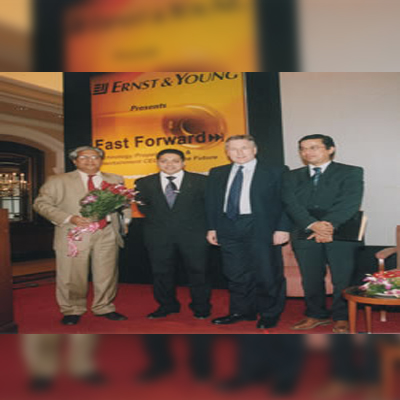
MUMBAI: Digitisation is the single most important technology trend that is continuing to reshape the media and entertainment landscape in the more developed markets of Europe and the US, according to the consulting firm Ernst & Young.
Digital cable and satellite, digital video recorders (DVRs), online content distribution and the mainstreaming of electronic games are likely to impact companies working in old world models.
“The cable and satellite story is powerful, but other sectors will thrive as well,” remarks the Ernst & Young report on “Fast Forward: Technology propels media and entertainment CEOs into the Future” .

Cable companies have high earnings before interest, taxes, depreciation and amortisation (EBITDA) and are growing twice as fast. Broadcast TV, radio and margin operate on margins hovering around 40 per cent, while the other sectors bunch up between 8-15 per cent.
Technology will put the industry on fast forward, the report said. DVR will be the only technology that will have the maximum impact on the future of media and entertainment over the next few years. Balsara pointed out that studies have shown that DVRs are going to slow down and even bleed the broadcast TV industry. DVRs resulted in the TV industry letting go of 1.7 per cent of advertising revenue in 2003. That is going to balloon to a fat 12.5 per cent by 2007.
Ernst & Young interviewed 23 global media and entertainment CEOs, CFOs and leading financial stakeholders for compiling the report. The companies that participated in this global study accounted for combined annual revenues of $214 billion (FY03).
Presenting the report on Tuesday, Ernst & Young head of media and entertainment practice Farokh Balsara said broadband Internet access and online advertising would become a key source for entertainment advertising.
Ernst & Young had invited CEOs and senior executives of Indian companies to a function where the report was presented. AP Parigi was the chief guest, while Ernst & Young’s John Harley and Indiantelevision.com CEO Anil Wanvari were among those who spoke on the occasion.
And industry turned up in large numbers: Sony Picture’s Uday Singh, NDTV’s Raj Nayak, Media Turf’s V. Ramani, Lodestar Media’s Nandini Dias, Hansa Consulting’s Pravin Tripathi, Triton Communications’ Ali Merchant, TAM India’s Atul Phadnis, Aaj Tak’s Nikita Tulsian, Lemon’s Ravi Deshpande were amongst the ones who graced the evening.






News Broadcasting
CNN-News18 to host Fury in the Gulf conclave on West Asia crisis
Three-hour summit to unpack geopolitical fallout and impact on India
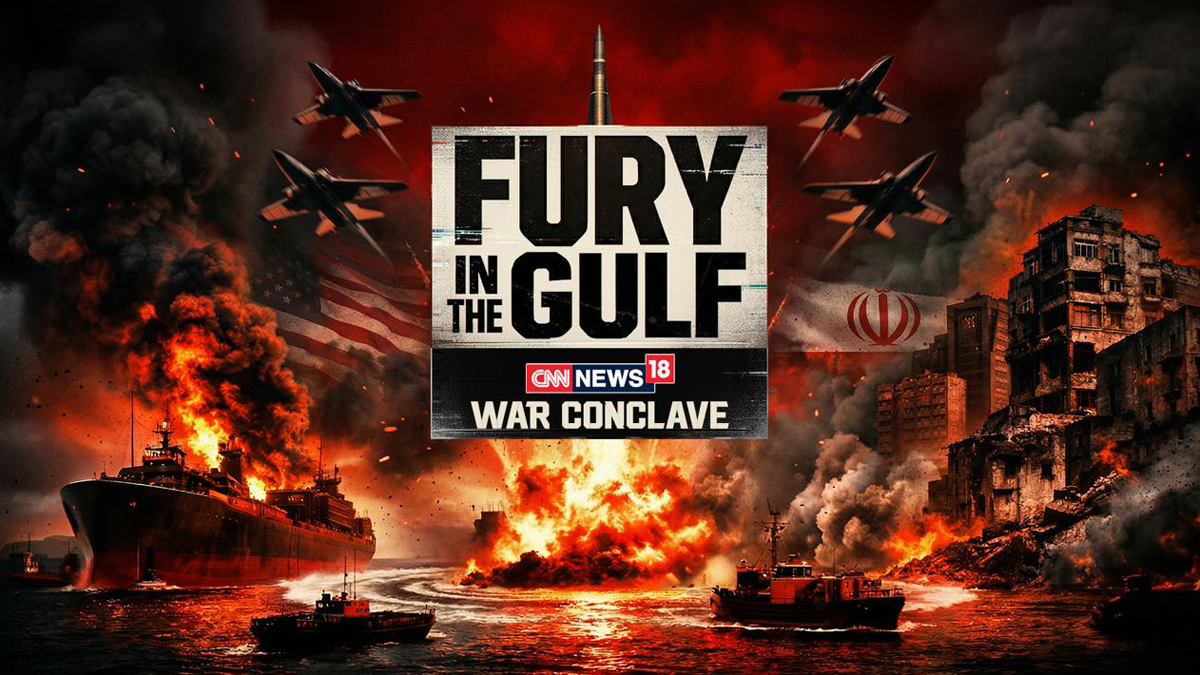
MUMBAI: CNN-News18 is set to host a special three-hour broadcast, Fury in the Gulf – War Conclave, on April 7, aiming to decode the escalating West Asia crisis and its far-reaching implications for India.
Scheduled from 4:00 PM to 7:00 PM, the conclave comes at a time when tensions between Iran and the United States are reshaping global geopolitics and triggering economic uncertainty. With India’s deep energy ties, trade links and large diaspora in the Gulf, the developments carry significant domestic relevance.
Built around the theme ‘Conflict, Consequences, and The Future,’ the programme will feature six curated sessions combining one-on-one interviews and panel discussions. The focus is to cut through the clutter and offer viewers a clearer understanding of the fast-evolving situation.
Key sessions include ‘Diplomacy in Times of War’ featuring Shashi Tharoor, and ‘World After the Iran Conflict’ with voices such as Ram Madhav, Reuven Azar, representatives from the European Union and the Iranian Deputy Envoy. Another session titled ‘Another Dunkirk?’ will bring together K. J. S. Dhillon and Jitin Prasada among others.
CNN-News18 editorial affairs director Rahul Shivshankar said, “In times of war, clarity becomes the most powerful tool. Fury in the Gulf – War Conclave brings together credible voices to address the questions and confusion that arise amid an overwhelming influx of information.”
He added that the initiative is aimed at delivering “facts, perspective, and insight” at a time when misinformation can easily cloud public understanding.
Echoing the sentiment, CNN-News18 CEO– English and business news Smriti Mehra said the conflict marks a defining global moment, with consequences that extend well beyond the region. She noted that the conclave seeks to present the crisis with “depth, nuance and responsibility” so audiences can better grasp its real-world impact.
As geopolitical tensions continue to dominate headlines, the conclave positions itself as an attempt to bring order to the noise, offering viewers a structured, insight-led look at a complex and rapidly shifting global situation.






