News Broadcasting
Digital/video format films included in national film awards

NEW DELHI: Acceding to representations made by the industry, the government has decided to include non-feature films produced on digital/video formats for the Indian Panorama and National Film Awards for the year 2003.
This would be the first time that such a step has been taken in allowing video formats for national awards. The Directorate of Film Festivals, which is the nodal body organizing the National Film Awards and Indian Panorama, is therefore inviting entries for the non-feature film sections for films produced on digital/video formats.
The films should be censored by the Central Board of Film Certification between 1 January 2003 and 31 December 2003 to be eligible for entry for the National Film Awards. The films should be submitted on BETACAM SP (broadcast quality) tapes.

The last date for receiving entries along with tapes for the National Film Awards is 6 August, 2004. The last date for the Indian Panorama would be announced shortly.
This decision has been taken in view of the latest trends of filmmaking in India where a significant number of documentaries and non-feature films are being produced on video/digital format. This would provide a forum for independent and low budget filmmakers to enter their films for the most prestigious cinema awards in the country. The inclusion of these films in the Indian Panorama will give independent film producers an opportunity to present their films in the International Film Festival of India as well as to participate in international film Festivals abroad through the Directorate of Film Festivals.
In this regard, a delegation of short film-makers also met information and broadcasting minister Jaipal Reddy today to reiterate that such films should not be subject to censorship as done during the international festival of short films earlier in Mumbai.
The National Film Awards, which are now over 50 years old, were instituted by the government to encourage the production of films of aesthetic and technical excellence as well as social relevance and to contribute to the understanding and appreciation of cultures of different regions.
The Indian Panorama, which has been part of the International Film Festival of India since 1978, is selected by a special Jury to showcase the best of Indian cinema every year and is presented for the first time in the Festival.




News Broadcasting
Kamlesh Singh receives Haldi Ghati Award from MMCF
India Today Group editor honoured for three decades of journalism at Udaipur ceremony.
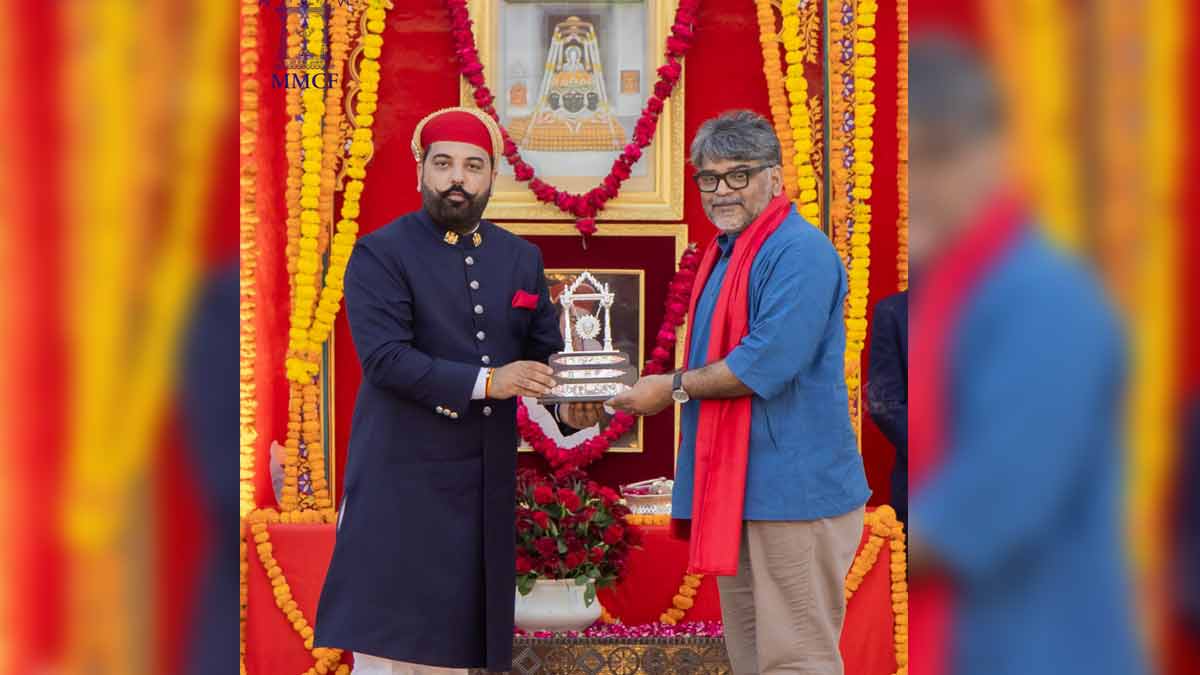
MUMBAI- Kamlesh Singh just turned a lifetime of sharp words into a shiny shield because when journalism wakes up a society, even the Maharana of Mewar wants to pin a medal on it.
The Maharana of Mewar Charitable Foundation (MMCF) conferred its prestigious Haldi Ghati Award on Kamlesh Singh, a senior editor at the India Today Group, during a ceremony in Udaipur on 15 March 2026. The national award, instituted in 1981-82, recognises “work of permanent value that initiates an awakening in society through the medium of journalism.”
Singh, who leads several editorial initiatives including Aaj Tak Radio, the Teen Taal community and The Lallantop, was presented the honour by Lakshyaraj Singh Mewar, Managing Trustee of MMCF. The citation highlighted his three decades of contributions to Indian media, innovations in digital journalism, mentoring young reporters, and his popular podcast persona “Tau” on Teen Taal, which fosters thoughtful public discourse.
The Haldi Ghati Award, named after the historic Battle of Haldighati symbolising valour and resilience, is one of four national awards given annually by MMCF. Past recipients include Tavleen Singh, Piyush Pandey and Raj Chengappa.
Other honourees this year included Padma Vibhushan Pt Hari Prasad Chaurasia, Vedamurti Devvrat Rekhe, Treeman of India Marimuthu Yoganathan, Vir Chakra Capt Rizwan Malik, and US-based researcher Molly Emma Aitken, who received the Colonel James Tod Award for contributions to understanding Mewar’s spirit and values.
In an era where headlines often shout louder than substance, the MMCF quietly reminded everyone that real journalism isn’t about noise, it’s about the quiet, persistent work that stirs society awake, one thoughtful story at a time.