I&B Ministry
“Digital has emerged as alternative platform for information dissemination”: Arun Jaitley

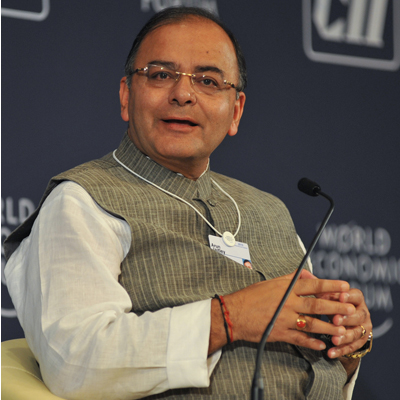
MUMBAI: The Minister for Finance, Corporate Affairs and Information & Broadcasting, Arun Jaitley has said that in the last two decades, conventional contours of the issues pertaining to freedom and responsibility of media had changed due to changes in the nature and content of media and the definition of news.
According to the Minister, news in the electronic media today is being defined by what the camera could capture. “In the current paradigm, technology has become a driving force for these changes. The impact of technology was profound as information dissemination was taking place 24×7 across different technological tools and media platforms including the digital space,” he added.

Jaitley stated this while delivering the first Justice J. S. Verma Memorial lecture on the ‘Freedom & Responsibility of Media’ organised by the News Broadcasters Association.
Elaborating further, Jaitley said that technological developments had defied the contours of censorship and the challenges for the media lay within, in the context of ownership patterns, financial sustainability and financial models, which led to aberrations such as paid news.
According to Jaitley, the challenges before the media were to ensure quality, credibility along with the responsibility to play the role of an educator in handling sensitive issues. The challenge also lay in maintaining high ethical standards on the issue of conflict of interest where media needed to be very careful.
Regarding digital media, the Minister said the financial models would evolve as the medium matured. The digital platform also needed to evolve its own standards of responsibility as it had emerged as an alternative platform for information dissemination.
The Minister further mentioned that media responsibility was critical in addressing matters related to security, social tension, privacy of the individual and the issues that involved a subjudice connotation. “Media needs to avoid the conduct of parallel trials in reporting matters that were subjudice,” he said, adding that constructive deliberations on all issues relating to media freedom and responsibility needed to be initiated amongst all stakeholders.
During the course of his address, Jaitley recalled the outstanding contribution of Justice J. S. Verma in the domains of Human Rights, gender equality, probity and media freedom as the conscience keeper of the society.



I&B Ministry
CBFC speeds up film certification; average approval time cut to 22 days
Over 71,900 films cleared in five years as digital system shortens approval timelines

MUMBAI: The Central Board of Film Certification (CBFC) has significantly reduced the time taken to certify films, with the average approval timeline now down to 22 working days for feature films and just three days for short films.
Operating under the Ministry of Information and Broadcasting, the statutory body certifies films for public exhibition in line with the Cinematograph Act, 1952 and the Cinematograph (Certification) Rules, 2024. The rules prescribe a maximum certification period of 48 working days, though the adoption of the Online Certification System has sharply accelerated the process.
Over the past five years, from 2020-21 to 2024-25, the board certified a total of 71,963 films across formats. Of these, the majority fell under the U category with 41,817 titles, followed by UA with 28,268 films and A with 1,878 films. No films were certified under the S category during the period.
Film approvals have also steadily risen in recent years. The CBFC cleared 8,299 films in 2020-21, a figure that peaked at 18,070 in 2022-23 before settling at 15,444 films in 2024-25. During the same period, 11,064 films were certified with cuts or modifications.
Despite the high volume of certifications, outright refusals remain rare. Only three films were denied certification over the last five years, with one refusal recorded in 2022-23 and two in 2024-25.
The board may recommend cuts or modifications if a film violates statutory parameters relating to the sovereignty and integrity of India, security of the state, friendly relations with foreign states, public order, decency or morality, defamation, contempt of court or incitement to an offence.
Filmmakers can challenge CBFC decisions in court. Data shows that such disputes remain limited but have seen some fluctuation. Between 2021 and 2025, a total of 21 certification decisions were challenged before High Courts, with the number rising to 10 cases in 2025.
Responding to a question in the Rajya Sabha, minister of state for information and broadcasting L. Murugan shared the data. The question was raised by Mallikarjun Kharge.
With faster timelines and a largely digital workflow, the certification process appears to be moving at a far brisker pace, signalling a shift towards quicker clearances for India’s growing film output.