News Headline
Differences & similarities between Kabaddi and Kho-Kho mat


Mumbai: In the vibrant tapestry of traditional Indian sports, Kabaddi and Kho Kho stand out as two enthralling games deeply rooted in cultural heritage. While both are played on mats, they possess distinct characteristics that make them intriguing in their own right. Let’s delve into the similarities and differences between these two captivating sports.
Origins and cultural significance
Kabaddi and Kho Kho share a common origin in the Indian subcontinent, with historical roots dating back centuries. Kabaddi, often hailed as the “game of the masses,” finds mention in ancient texts like the Mahabharata, symbolizing bravery and physical prowess. Kho Kho, on the other hand, traces its lineage to Maharashtra, evolving from a rural pastime to a competitive sport known for its agility and teamwork.

The playing field: Mats as common ground
Both Kabaddi and Kho Kho are played on rectangular mats, serving as the arena for exhilarating encounters. These mats, typically made of synthetic materials, provide a level surface conducive to swift movements and strategic maneuvers. The standardized dimensions ensure fairness and consistency across matches, fostering an environment where skill and strategy reign supreme.
Kabaddi: The clash of strength and strategy
Kabaddi epitomizes the fusion of raw strength with strategic acumen. In Kabaddi, a player, known as the raider, ventures into the opponent’s territory to tag as many defenders as possible before returning safely to their side. The defenders, meanwhile, strive to immobilize the raider through coordinated tackles while avoiding being tagged themselves. The raider must chant “Kabaddi, Kabaddi” continuously to prove they haven’t taken a breath, adding an element of breath control and mental fortitude to the game.
Kho Kho: The pursuit of speed and agility
In contrast, Kho Kho is a test of agility, speed, and tactical maneuvering. The game involves two teams, each comprising 12 players, taking turns as attackers and defenders. The defenders aim to tag the opponents within a stipulated time while navigating through a field of seated opponents, akin to a game of cat and mouse. The attackers, meanwhile, strive to evade capture by sprinting and weaving through the opposing team’s ranks, relying on teamwork and lightning-fast reflexes.
Similarities: Unity Amidst Diversity
Despite their distinct gameplay mechanics, Kabaddi and Kho Kho share several commonalities that underscore their cultural significance and universal appeal. Both sports prioritize teamwork, requiring players to synchronize their movements and communicate effectively to outmaneuver the opposition. Moreover, they embody values such as discipline, perseverance, and respect for opponents, fostering camaraderie and sportsmanship among participants.
Conclusion: Celebrating diversity in sports
In conclusion, Kabaddi and Kho Kho, while played on similar mats, offer unique experiences that reflect the rich tapestry of Indian sports culture. Kabaddi showcases the clash of strength and strategy, while Kho Kho emphasizes speed and agility. Yet, amidst their differences, both sports exemplify the spirit of competition, unity, and tradition that transcends boundaries. As we celebrate the diversity of sports, let us cherish the legacy of Kabaddi and Kho Kho, preserving their heritage for generations to come.
The article has been authored by Gravolite director Paras Maheshwari.




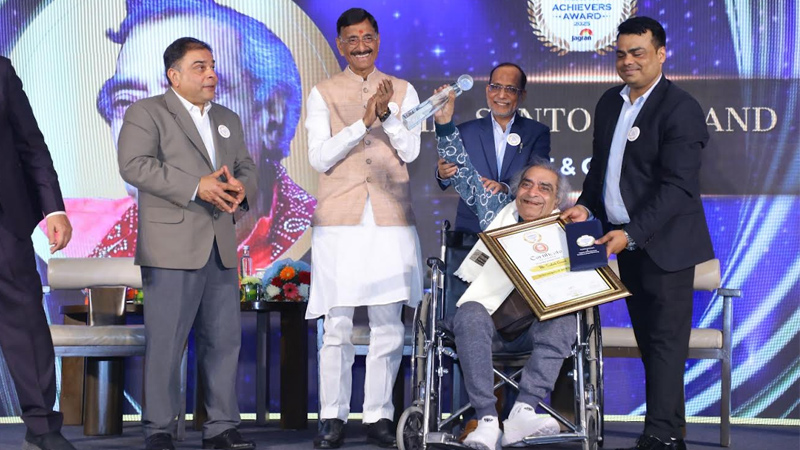
NEW DELHI: Hamdard Laboratories gathered a cross-section of India’s achievers in New Delhi on Friday, handing out the Hakeem Abdul Hameed Excellence Awards to figures who have left their mark across healthcare, education, sport, public service and the arts.
The ceremony, attended by minister of state for defence Sanjay Seth and senior officials from the ministry of Ayush, celebrated individuals whose work blends professional success with a sense of public purpose. It was as much a roll call of achievement as it was a reminder that influence is not measured only in profits or podiums, but in people reached and lives improved.
Among the headline awardees was Alakh Pandey, founder and chief executive of PhysicsWallah, recognised for turning affordable digital learning into a mass movement. On the sporting front, Arjuna Awardee and kabaddi player Sakshi Puniya was honoured for her contribution to the game and for pushing women’s participation onto bigger stages.
The cultural spotlight fell on veteran lyricist and poet Santosh Anand, whose songs have echoed across generations of Hindi cinema. At 97, Anand accepted the honour with characteristic humility, reflecting on a life shaped by perseverance and hope.
Healthcare honours spanned both modern and traditional systems. Manoj N. Nesari was recognised for strengthening Ayurveda’s place in national and global health frameworks. Padma shri Mohammed Abdul Waheed was honoured for his research-backed work in Unani medicine, while padma shri Mohsin Wali received recognition for his long-standing contribution to patient-centred care.
Education and social development also featured prominently. Padma shri Zahir Ishaq Kazi was honoured for decades of work in education, while former Meghalaya superintendent of Police T. C. Chacko was recognised for public service. Goonj founder Anshu Gupta received an award for his dignity-centred rural development initiatives, and the Hunar Shakti Foundation was honoured for empowering women and young girls through skill development.
The Lifetime Achievement Award went to former IAS officer Shailaja Chandra for her long career in public healthcare and governance, particularly in the traditional systems under Ayush.
Speaking at the event, Hamdard chairman Abdul Majeed said the awards were a tribute to those who combine excellence with empathy. “These awardees reflect Hakeem Sahib’s belief that healthcare, education and public service must ultimately serve humanity,” he said.
Minister Seth struck a forward-looking note, saying India’s young population gives the country a unique opportunity to become a global destination for learning, health and wellness by 2047.
The ceremony also featured the trailer launch of Unani Ki Kahaani, an upcoming documentary starring actor Jim Sarbh, set to premiere on Discovery on 11 February.
Instituted in memory of Unani scholar and educationist Hakeem Abdul Hameed, the awards have grown into a national platform that celebrates those building a more inclusive and resilient India. For one evening at least, the spotlight was not just on success, but on service with substance.








