News Headline
Did govt pressure nudge ABS-2 to shutter Indian TV channels on FTA DTH service?


NEW DELHI: ABS has closed the doors from 1 May 2018 on Indian TV channels that were using the ABS-2 satellite-beamed FTA Ku-band platform. Apparent reason: Indian government pressure on local TV channels to stop using the ‘unlicenced’ platform that discouraged payment of carriage fee to the satellite operator, which was the origin of the business.
The Bermuda-registered satellite operator’s ABS-2 signals — hosting on its South Asian beam a Nepalese and a Bangladeshi DTH services licenced in their respective countries — have been spilling over into India and a mix of Indian, Nepalese and Bangladeshi TV channels were available to Indians as a FTA service that was accessed via some plain vanilla hardware (read set-top boxes and antennae) at a nominal cost.
On being petitioned by Indian distribution platforms, Ministry of Information and Broadcasting (MIB) in 2017 had asked Department of Space (DoS) to block the “unauthorised” DTH or KU-band ABS-2 service on the grounds of possible threat to national security — an allegation that was refuted by ABS citing international laws of ITU.

Finally, when ABS took the decision to shut the doors on the Indian TV channels, there were 90 of them, mostly beaming content in non-Hindi Indian languages. These channels were using the FTA Ku-band platform to reach not only Indian audiences in southern and eastern parts of India but, probably, also those in Nepal and Bangladesh for additional eyeballs. Eyeballs meant advertising revenue for these TV channels.
ABS last year had refuted Indian government charges saying “natural spillover” of satellite signals into neighbouring countries, outside the service area of the countries offering licensed DTH services, but falling within the coverage area of the satellite, was in “full compliance” of ITU provisions.
With ABS discontinuing the Indian TV channels, Reliance Big TV (sold by Anil Ambani’s Reliance Communications to new investors) FTA DTH service yet to fully bloom and Doordarshan’s FreeDish platform locked in a policy logjam, free to air platforms and low-cost television viewing for people in the Indian hinterland seem to have run into air turbulence.
According to industry experts, Indian hardware companies had devised a way to have two LNBs (low-noise box) in one single DTH antenna that was capable of receiving both ABS-2 and DD FreeDish services, resulting in sizable popularity of these two platforms that were accessed via a low-cost hardware. This was unlike the full-fledged subscription-based DTH services made available by the likes of Tata Sky, Dish TV, Videocon d2h and Sun TV.
Also Read :
Block illegal DTH FTA, space dept told
Could India blocking ABS’ FTA TV signals lead to breach of ITU norms?
Boeing delivers ABS-2A to optimise video services, DTH





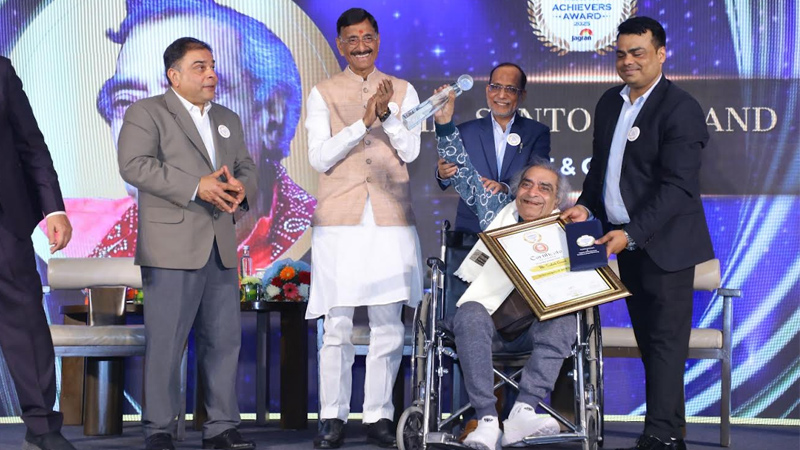
NEW DELHI: Hamdard Laboratories gathered a cross-section of India’s achievers in New Delhi on Friday, handing out the Hakeem Abdul Hameed Excellence Awards to figures who have left their mark across healthcare, education, sport, public service and the arts.
The ceremony, attended by minister of state for defence Sanjay Seth and senior officials from the ministry of Ayush, celebrated individuals whose work blends professional success with a sense of public purpose. It was as much a roll call of achievement as it was a reminder that influence is not measured only in profits or podiums, but in people reached and lives improved.
Among the headline awardees was Alakh Pandey, founder and chief executive of PhysicsWallah, recognised for turning affordable digital learning into a mass movement. On the sporting front, Arjuna Awardee and kabaddi player Sakshi Puniya was honoured for her contribution to the game and for pushing women’s participation onto bigger stages.
The cultural spotlight fell on veteran lyricist and poet Santosh Anand, whose songs have echoed across generations of Hindi cinema. At 97, Anand accepted the honour with characteristic humility, reflecting on a life shaped by perseverance and hope.
Healthcare honours spanned both modern and traditional systems. Manoj N. Nesari was recognised for strengthening Ayurveda’s place in national and global health frameworks. Padma shri Mohammed Abdul Waheed was honoured for his research-backed work in Unani medicine, while padma shri Mohsin Wali received recognition for his long-standing contribution to patient-centred care.
Education and social development also featured prominently. Padma shri Zahir Ishaq Kazi was honoured for decades of work in education, while former Meghalaya superintendent of Police T. C. Chacko was recognised for public service. Goonj founder Anshu Gupta received an award for his dignity-centred rural development initiatives, and the Hunar Shakti Foundation was honoured for empowering women and young girls through skill development.
The Lifetime Achievement Award went to former IAS officer Shailaja Chandra for her long career in public healthcare and governance, particularly in the traditional systems under Ayush.
Speaking at the event, Hamdard chairman Abdul Majeed said the awards were a tribute to those who combine excellence with empathy. “These awardees reflect Hakeem Sahib’s belief that healthcare, education and public service must ultimately serve humanity,” he said.
Minister Seth struck a forward-looking note, saying India’s young population gives the country a unique opportunity to become a global destination for learning, health and wellness by 2047.
The ceremony also featured the trailer launch of Unani Ki Kahaani, an upcoming documentary starring actor Jim Sarbh, set to premiere on Discovery on 11 February.
Instituted in memory of Unani scholar and educationist Hakeem Abdul Hameed, the awards have grown into a national platform that celebrates those building a more inclusive and resilient India. For one evening at least, the spotlight was not just on success, but on service with substance.






