Applications
Den Networks offloads 24 per cent equity; raises $160 million


MUMBAI: India‘s John Malone is on a roll. Earlier this week, the Sameer Manchanda headed cable TV MSO Den Networks announced that it was going for a preferential allotment to Goldman Sachs affiliates ($110 million) and a qualified institutional placement (QIP of $50 million) which would allow it to raise a total $160 million (Rs 865 odd crore). This is the largest transaction in the Indian cable TV sector.
It informed the BSE today that the deals had gone through – the preferential allotment went through the day before and the QIP yesterday – and that the divestment amounts to 24 per cent of Den Network‘s equity. Goldman Sachs had J. Sagar Associates as an advisor while the Hong Kong office of Herbert Smith Freehills acted as the international legal counsel. Den Networks had Amarchand Mangaldas as its advisor.
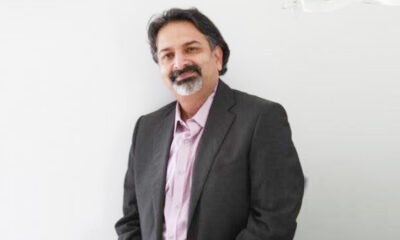
Indiantelevision.com caught up with a very cheerful and confident Den Networks COO M.G. Azhar late this evening. This is what he had to say: “We are delighted to have Goldman Sachs as our partner. It has a long history of constructively driving consolidation, digitisation in various markets across the world. Their association will help us in transitioning through various cycles as business transforms.”

Azhar adds that the deal should encourage other private equity firms and investors to invest in Indian cable TV. “It needs lots of investment. Millions of homes have to be digitised over the next year or so. The investment in Den clearly reflects that the progress of digitisation has helped regain investors‘ confidence in cable TV,” he says. “Other Indian cable TV firms should also benefit.”
Azhar points out that Den Networks will not be looking for any more funds as the current cash stash should meet its needs for at least two years. He says that the money will be used to “drive digitisation, further consolidation and expansion, broadband and also make investments in scaling up Den Networks to handle the changing business environment.”
The company says it is going to start its broadband services in the not-too-distant future in one metro and one tier II city and take it up from there.
He explains: “Digitisation has progressed well in phase I and phase II. Now we have to segment the market. Digitisation has freed us to offer PVR services, HD feeds, PPV, and other value added services. The average revenue per user undoubtedly will go up. There is a lot of potential; there is a lot of value that has to be unlocked.”





Applications
With 57 per cent single new users, Ashley Madison rebrands as discreet dating platform
Platform says majority of new members now identify as single

INDIA: Ashley Madison is shedding the “married-dating” label that defined it for two decades, repositioning itself as a platform for discreet dating in what it calls the post-social media age.
The rebrand, unveiled in India on 27 February, 2026, marks a structural shift in business model and identity. Once synonymous with married dating, the company now describes itself as the “premier destination for discreet dating” under a new tagline: Where Desire Meets Discretion.
The pivot is data-driven. Internal figures show that 57 per cent of global sign-ups between 1 January and 31 December, 2025 identified as single: a notable departure from the platform’s married core. The company argues that its community has already evolved beyond its original positioning.
“In an age where our lives have been constantly put on public display, privacy has become the new luxury,” said Ashley Madison chief strategy officer Paul Keable. He framed the platform’s offering as “ethical discretion” for singles, separated, divorced and non-monogamous users seeking private connections.
The shift also taps into wider digital fatigue. A global survey conducted by YouGov for Ashley Madison, covering 13,071 adults across Australia, Brazil, Canada, Germany, India, Italy, Mexico, Spain, Switzerland, the UK and the US, found mounting discomfort with hyper-public online lives.
Among dating app users, 30 per cent cited constant swiping and messaging as a source of fatigue, while 24 per cent pointed to pressure to curate public-facing profiles and early personal disclosure. Some 27 per cent said fears of screenshots or information being shared contributed to exhaustion; an equal share cited unwanted attention.
The retreat from oversharing appears broader. According to the survey, 46 per cent of adults actively try to keep most aspects of their life private online. Only 8 per cent feel comfortable sharing most aspects publicly, while 35 per cent say they are becoming more selective about what they disclose.
Ashley Madison is betting that this cultural recalibration towards controlled visibility can be monetised. By doubling down on privacy infrastructure and reframing itself around discretion rather than infidelity, the company is attempting to convert reputational baggage into a premium proposition.