News Broadcasting
Delhi dreams big as Live Times Xchange charts vision for 2047 future

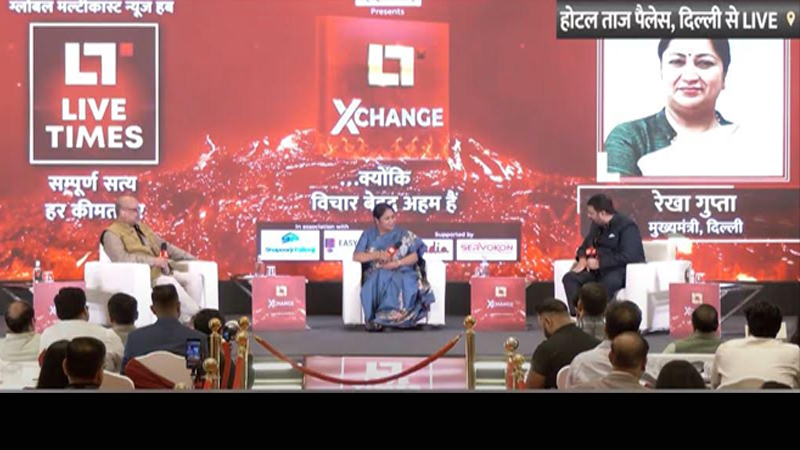
MUMBAI: When the capital talks, the country listens jkand Live Times Xchange made sure Delhi’s voice roared loud and clear at its 4th flagship conclave on 10 September 2025 at the Taj Palace, New Delhi. Centred on ‘Mission Delhi @2047: Reinvent India’s Capital’, the event gathered an eclectic mix of powerbrokers, policymakers, and public voices to reimagine the city’s future.
The line-up was nothing short of formidable: chief minister Rekha Gupta, MPs Sanjay Singh and Manoj Tiwari, ministers Kapil Mishra, Ashish Sood, Parvesh Verma, AAP Delhi president Saurabh Bhardwaj, Congress leaders Devendra Yadav and Alka Lamba, Delhi mayor Raja Iqbal Singh, JNU vice-chancellor Prof. Santishree Dhulipudi, former AIIMS director Dr. M.C. Mishra, and justice Sudheer Aggarwal. Together, they debated the policies, politics, and pathways to transform Delhi into a global, citizen-first capital by 2047.
Rekha Gupta unveiled an ambitious blueprint: complete electrification of public transport, seven million new trees to expand Delhi’s green cover, and a renewed push to restore the city’s healthcare credibility. “Delhi will not only see change in infrastructure but also in intent, as governance becomes truly people-first,” she assured.

Ashish Sood spotlighted futuristic education reforms, from 75 CM Shri Schools teaching AI, robotics, and data science to a Rs 900 crore allocation for 21,000 smart classrooms, alongside the clean yamuna Mission. Alka Lamba, reflecting on her 30 years in politics, credited Sheila Dikshit’s legacy of flyovers, metros, schools, and hospitals, and urged today’s leaders to carry forward long-term, responsible governance.
Manoj Tiwari brought personal grit to the table, recalling his journey from Bhojpuri cinema to Parliament and defending Delhi’s migrants. He touted initiatives like Rs 1 lakh free healthcare for the poor, Ayushman Arogya centres, GPS-tracked water tankers, Yamuna clean-up drives, and the UVR-2 road project as proof of development with intent.
The conclave distilled five big pillars for Mission Delhi @2047:
● Smart, transparent governance
● Sustainable green infrastructure
● EV-led future mobility
● Knowledge and innovation hubs
● Inclusive healthcare, housing, and citizen services
For Live Times founder & editor-in-chief Dilip Kumar Singh the gathering epitomised the brand’s ethos: “Sampoorna Satya, Har Keemat Par is not just a slogan, it is our responsibility. LT Xchange shows that when leadership and media collaborate on facts, democracy thrives.”
As the curtains fell, the message was unmistakable: Delhi’s reinvention rests on collaboration, innovation, and accountability. With optimism and determination in the air, the conclave left one lingering thought, if politics, policy, and people can pull together, Delhi 2047 won’t just be a capital, it’ll be a global benchmark.




News Broadcasting
CNN-News18 to host Fury in the Gulf conclave on West Asia crisis
Three-hour summit to unpack geopolitical fallout and impact on India
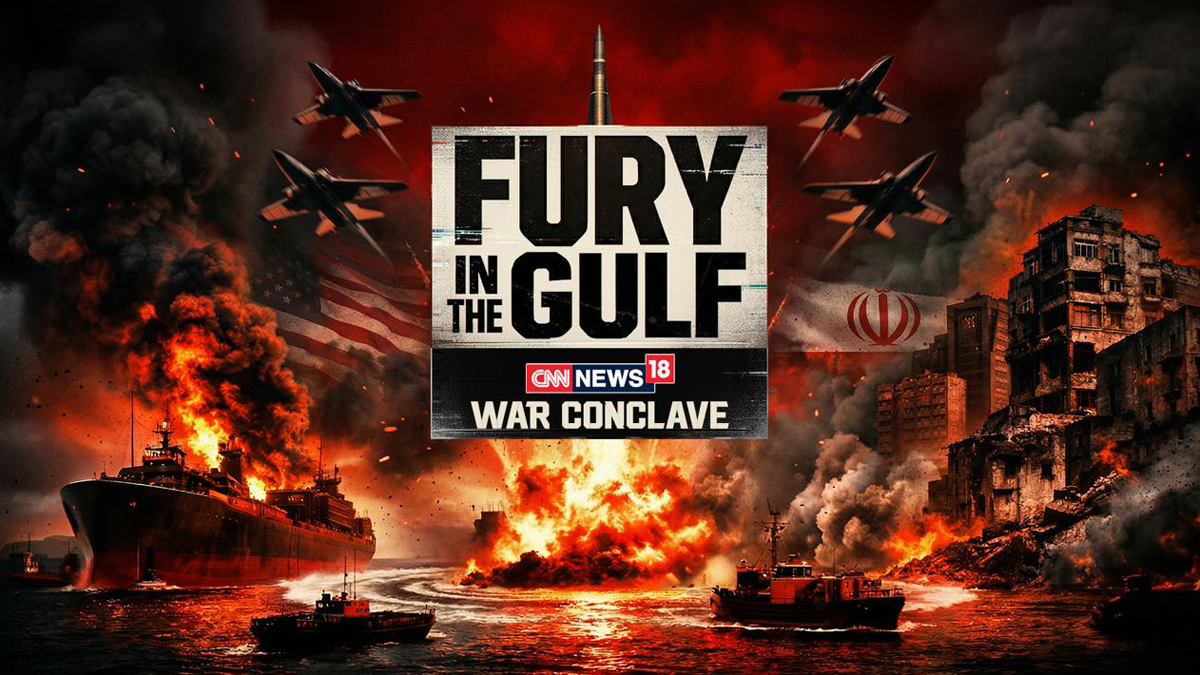
MUMBAI: CNN-News18 is set to host a special three-hour broadcast, Fury in the Gulf – War Conclave, on April 7, aiming to decode the escalating West Asia crisis and its far-reaching implications for India.
Scheduled from 4:00 PM to 7:00 PM, the conclave comes at a time when tensions between Iran and the United States are reshaping global geopolitics and triggering economic uncertainty. With India’s deep energy ties, trade links and large diaspora in the Gulf, the developments carry significant domestic relevance.
Built around the theme ‘Conflict, Consequences, and The Future,’ the programme will feature six curated sessions combining one-on-one interviews and panel discussions. The focus is to cut through the clutter and offer viewers a clearer understanding of the fast-evolving situation.
Key sessions include ‘Diplomacy in Times of War’ featuring Shashi Tharoor, and ‘World After the Iran Conflict’ with voices such as Ram Madhav, Reuven Azar, representatives from the European Union and the Iranian Deputy Envoy. Another session titled ‘Another Dunkirk?’ will bring together K. J. S. Dhillon and Jitin Prasada among others.
CNN-News18 editorial affairs director Rahul Shivshankar said, “In times of war, clarity becomes the most powerful tool. Fury in the Gulf – War Conclave brings together credible voices to address the questions and confusion that arise amid an overwhelming influx of information.”
He added that the initiative is aimed at delivering “facts, perspective, and insight” at a time when misinformation can easily cloud public understanding.
Echoing the sentiment, CNN-News18 CEO– English and business news Smriti Mehra said the conflict marks a defining global moment, with consequences that extend well beyond the region. She noted that the conclave seeks to present the crisis with “depth, nuance and responsibility” so audiences can better grasp its real-world impact.
As geopolitical tensions continue to dominate headlines, the conclave positions itself as an attempt to bring order to the noise, offering viewers a structured, insight-led look at a complex and rapidly shifting global situation.






