iWorld
Decoding Viacom18’s SVOD blueprint for Voot Select

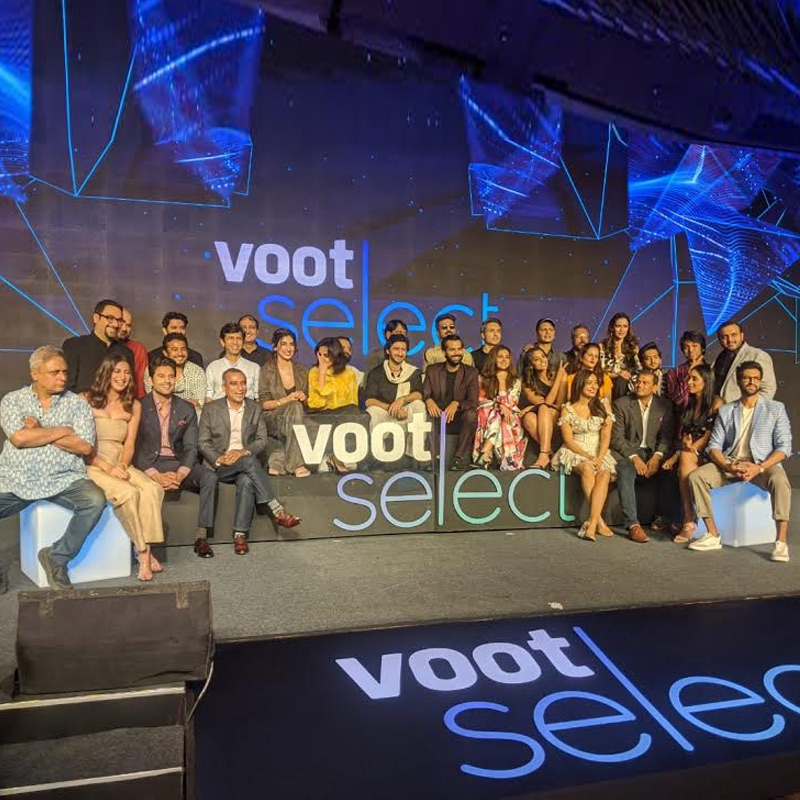
MUMBAI: Unlike other international markets, the Indian streaming revolution was started by major broadcasters and Viacom18’s Voot has been at the forefront of the OTT boom in the country. While it has already built up a robust 100 million monthly active user base, the platform now starts its journey into the subscription game. Voot Select enters the market at a time when SVOD has already started its uptick. As the platform aims to strike a balance between quality and quantity, it looks at a window of three-four years to turn the business profitable.
Viacom18 Digital Ventures COO Gourav Rakshit says that this next decade is going to be about subscription and depth of content consumption while the previous decade was about online video and most of it free. He adds that consumers that are now habituated to online video consumption are going to start to become more and more comfortable with online payments providing impetus to the category.
"We are very clear that we are not playing for quantity. We as a whole network are very clear that we will focus on great stories. And we have been great storytellers, by virtue of everything that you have seen of us over the last 12 to 15 years and creating content at any scale, in any language is second nature to us. That is exactly why we're so proud of the originals that we have. Each original is gripping, keeps you hooked right to the last episode, and you will not want to move till it's over- that is the strength of a story. The primary focus is the script, then everything else,” Voot Select and Viacom18 youth, music and English entertainment head Ferzad Palia comments on content strategy.

“The nature and width of offering that we have is unlike anyone else. Now it comes down to the quality of stories and we are confident of our stories being great stories,” he adds.
“We will do telco and other partnerships with all of the people that either have reached to the consumer, or in billing relationships with the consumer. Both such models makes sense to us and will help us in delivering valuable content to the frontline. Hence, anybody who has a billing pipe to a consumer is valuable to us. These are the partners that we would find a natural fit with and seek to engage,” Rakshit comments on the distribution.
The first step of the campaign will be to target existing AVOD subscribers. "We do have the significant advantage of scale of some of our other businesses, which will allow us to communicate our message and make our offering to them first,” Palia comments.
Voot Select has 30 originals planned in the coming financial year. The currently planned library of these 30 originals will consist of long-format content but the platform is evaluating some interesting digital movies too. The premium service has been priced at Rs 99 per month or at Rs 999 per year with an exclusive offer price of Rs 499 per year.
“The AVOD gives us wings to be able to run this SVOD business. Hence, we will continue to invest in the business and what we are really good at is doubling down on interactivity, moving the 300 million number to a billion and creating an AVOD world as a place where fandom can exist. The SVoD business is going to be all about storytelling. Select is made for stories, and so the best stories in the world are going to be curated for you. And that is kind of how I see the distinct role played by these two businesses,” Rakshit adds on the overall approach going forward.







iWorld
Bill Ackman’s Pershing Square makes $64 billion bid to acquire Universal Music Group
Ackman pitches NYSE relisting plan as UMG board weighs unsolicited offer

The hedge fund has proposed a business combination that values UMG at €30.40 per share, representing a hefty 78 per cent premium to its current trading price. The offer includes €9.4 billion in cash alongside stock in a newly formed entity, with shareholders set to receive €5.05 per share in cash and 0.77 shares in the new company for each UMG share they hold.
Under the proposal, UMG would merge with Pershing Square SPARC Holdings Ltd and re-emerge as a Nevada-based entity listed on the New York Stock Exchange. The move is designed to boost investor visibility and potentially secure inclusion in major indices such as the S&P 500.
Pershing Square Capital Management ceo Bill Ackman argued that while UMG’s operational performance remains strong, its market valuation has lagged due to external factors. “UMG’s stock price has languished due to a combination of issues that are unrelated to the performance of its music business,” Ackman said, pointing to concerns ranging from shareholder overhang to delayed US listing plans.
Ackman also flagged what he sees as untapped potential in UMG’s balance sheet and a lack of clear capital allocation strategy. He added that the market has not fully recognised the value of UMG’s €2.7 billion stake in Spotify, alongside gaps in investor communication.
The proposed transaction would also result in the cancellation of around 17 per cent of UMG’s outstanding shares, while maintaining its investment-grade balance sheet. Pershing Square has said it will fully backstop the equity financing, with debt commitments secured at signing. The deal is targeted for completion by the end of the year.
UMG, however, has struck a measured tone. The company confirmed that its board has received the non-binding proposal and will review it with advisers. It reiterated confidence in its current strategy and leadership under Lucian Grainge, signalling no immediate shift in stance.
The proposal comes at a time when global music companies are navigating evolving investor expectations, streaming economics and capital allocation pressures. For Pershing Square, the bet is clear: sharpen the financial story, relist in the US, and let the music play louder in the markets.
Whether UMG’s board is ready to change the tune remains to be seen, but the spotlight on its valuation just got a lot brighter.






