News Broadcasting
DD irked at Zee’s including its FTA channels as part of Dish TV’s DTH


NEW DELHI: Prasar Bharati has taken umbrage to Subhash Chandra companies — ASC Enterprise and Zee Telefilms — including more than the mandated number of Doordarshan channels in the KU-band direct-to-home (DTH) television service being marketed under the Dish TV brand name.
“The Zee people are showing DD channels without authorization on the DTH service, which is not free to air and is subscription-based. We are concerned about this,” Prasar Bharati CEO KS Sarma said today during an interaction with journalists.Though ruling out initiating any legal action against Dish TV, Sarma said the least that could have been done was to inform them that DD channels were part of the DTH package. “I have written to them on this,” he added.
When asked whether any talks regarding money had taken place, Sarma said that Prasar Bharati had been informed by the ASC-Zee combine that after the DTH service crossed the 200,000-mark subscriber base, DD would get Rs 1 per channel per subscriber. Globally, channels get anywhere between $ 10-30 per channel per subscriber from the DTH service operator, he opined.

However, when indiantelevision.com contacted Zee Telefilms vice-chairman Jawahar Goel, he expressed ignorance about any letter from Prasar Bharati on the issue. “As and when we hear from DD, we’ll take up the matter at the right forum,” he said, adding that if DD wanted, they’d be happy to remove all DD channels.
Meanwhile, Sarma pointed out that DD’s own DTH project — scheduled to go on air on 2 April — is on track with the tenders for uplinking being finalized at the moment.
The non-subscription based DTH service, Sarma said, is being started by DD as a “substitute to terrestrial expansion”, which would have, otherwise, cost much more.







News Broadcasting
Kamlesh Singh receives Haldi Ghati Award from MMCF
India Today Group editor honoured for three decades of journalism at Udaipur ceremony.
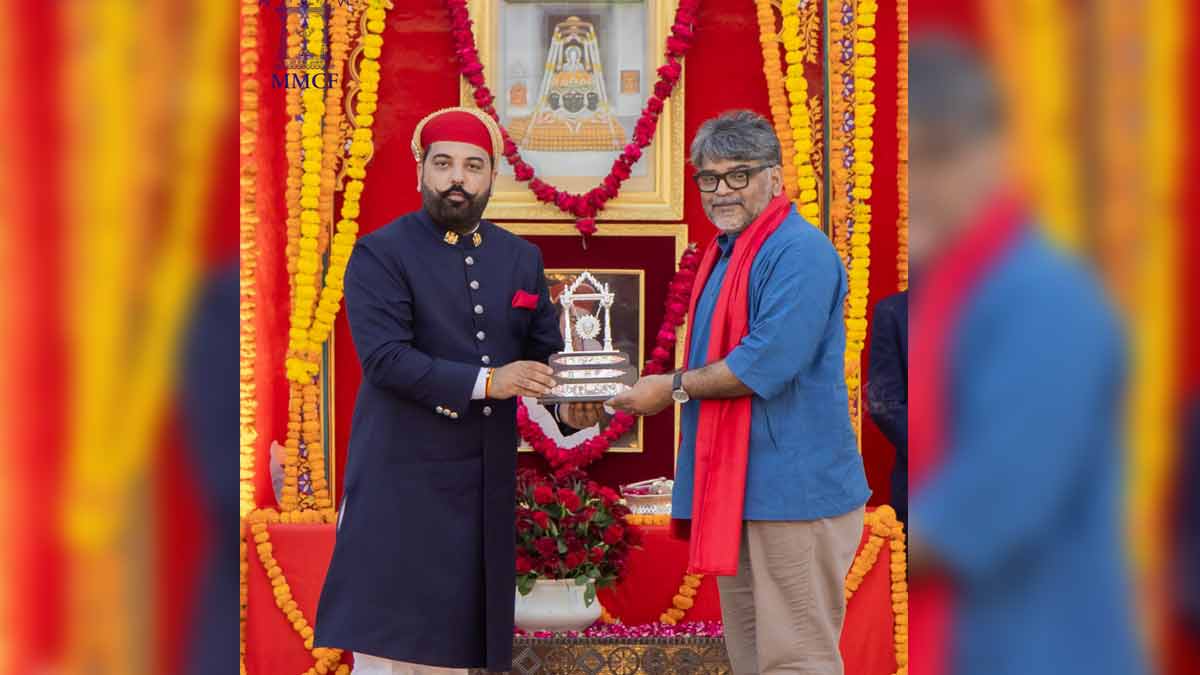
MUMBAI- Kamlesh Singh just turned a lifetime of sharp words into a shiny shield because when journalism wakes up a society, even the Maharana of Mewar wants to pin a medal on it.
The Maharana of Mewar Charitable Foundation (MMCF) conferred its prestigious Haldi Ghati Award on Kamlesh Singh, a senior editor at the India Today Group, during a ceremony in Udaipur on 15 March 2026. The national award, instituted in 1981-82, recognises “work of permanent value that initiates an awakening in society through the medium of journalism.”
Singh, who leads several editorial initiatives including Aaj Tak Radio, the Teen Taal community and The Lallantop, was presented the honour by Lakshyaraj Singh Mewar, Managing Trustee of MMCF. The citation highlighted his three decades of contributions to Indian media, innovations in digital journalism, mentoring young reporters, and his popular podcast persona “Tau” on Teen Taal, which fosters thoughtful public discourse.
The Haldi Ghati Award, named after the historic Battle of Haldighati symbolising valour and resilience, is one of four national awards given annually by MMCF. Past recipients include Tavleen Singh, Piyush Pandey and Raj Chengappa.
Other honourees this year included Padma Vibhushan Pt Hari Prasad Chaurasia, Vedamurti Devvrat Rekhe, Treeman of India Marimuthu Yoganathan, Vir Chakra Capt Rizwan Malik, and US-based researcher Molly Emma Aitken, who received the Colonel James Tod Award for contributions to understanding Mewar’s spirit and values.
In an era where headlines often shout louder than substance, the MMCF quietly reminded everyone that real journalism isn’t about noise, it’s about the quiet, persistent work that stirs society awake, one thoughtful story at a time.