News Headline
Day 3 of TDSAT ad cap hearings

MUMBAI: The queue of channels waiting their turn to present their individual cases on the so-called crippling TRAI 12 minute ad cap to the Telecom Disputes Settlement Appellate Tribunal (TDSAT) has not really got any shorter even as the hearings got into the third day. The reason: the News Broadcasters Association’s (NBA) lawyers continued with their arguments in the presence of TDSAT’s Justice Aftab Alam and member Kuldeep Singh.
And with their presentation referencing statutory laws as relating to the Cable Television Networks (Regulation) Act and the TRAI Act 1997 completed they have now progressed to bringing in references about media freedom as written in the Article 19A of the Indian Constitution.
 |
 |
The NBA counsel referred to the ‘Sakal Papers And Others vs The Union Of India on 25 September, 1961’ case. The Supreme Court had then affirmed that a newspaper should have the liberty to carry as many advertisements as it would want to because ‘curtailment of advertising is a curtailment of free speech as guaranteed by the Constitution of India.
The declaration of this case reads: ‘the state could not make a law which directly restricted one guaranteed freedom for securing the better enjoyment of another freedom. Freedom of speech could not be restricted for the purpose of regulating the commercial aspect of the activities of newspapers.’

According to the NBA, since such a ruling exists for print newspapers, it should also apply to the broadcast medium. However, Alam tended to disagree and opined that that the electronic medium is different from print.
The NBA also contended that broadcasters don’t actually get a ‘license’ from the central government under The Telegraph Act 1885 but rather a ‘registration’ under the uplinking/downlinking policy guidelines. However, the justice doubted that the broadcasters don’t get a licence, and he also felt that broadcasters don’t come under the cable TV act as the NBA is claiming.
During the 12 November hearing, the NBA had argued that TRAI had not done the laying requirements as per section 37 of the TRAI Act which it should have in order to carry out enforcement of ad cap and prosecution of erring channels.
The hearings are slated to continue tomorrow morning with the NBA and its lawyers presenting their arguments. For the other channels, the wait continues. To read about previous reports on the case scroll down.





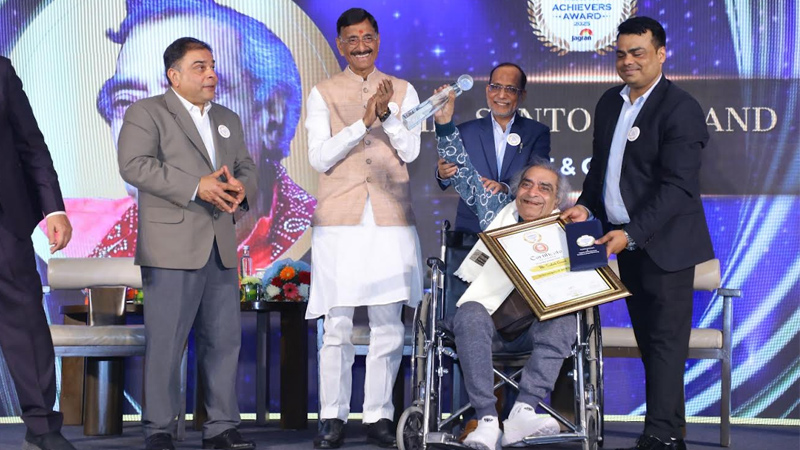
NEW DELHI: Hamdard Laboratories gathered a cross-section of India’s achievers in New Delhi on Friday, handing out the Hakeem Abdul Hameed Excellence Awards to figures who have left their mark across healthcare, education, sport, public service and the arts.
The ceremony, attended by minister of state for defence Sanjay Seth and senior officials from the ministry of Ayush, celebrated individuals whose work blends professional success with a sense of public purpose. It was as much a roll call of achievement as it was a reminder that influence is not measured only in profits or podiums, but in people reached and lives improved.
Among the headline awardees was Alakh Pandey, founder and chief executive of PhysicsWallah, recognised for turning affordable digital learning into a mass movement. On the sporting front, Arjuna Awardee and kabaddi player Sakshi Puniya was honoured for her contribution to the game and for pushing women’s participation onto bigger stages.
The cultural spotlight fell on veteran lyricist and poet Santosh Anand, whose songs have echoed across generations of Hindi cinema. At 97, Anand accepted the honour with characteristic humility, reflecting on a life shaped by perseverance and hope.
Healthcare honours spanned both modern and traditional systems. Manoj N. Nesari was recognised for strengthening Ayurveda’s place in national and global health frameworks. Padma shri Mohammed Abdul Waheed was honoured for his research-backed work in Unani medicine, while padma shri Mohsin Wali received recognition for his long-standing contribution to patient-centred care.
Education and social development also featured prominently. Padma shri Zahir Ishaq Kazi was honoured for decades of work in education, while former Meghalaya superintendent of Police T. C. Chacko was recognised for public service. Goonj founder Anshu Gupta received an award for his dignity-centred rural development initiatives, and the Hunar Shakti Foundation was honoured for empowering women and young girls through skill development.
The Lifetime Achievement Award went to former IAS officer Shailaja Chandra for her long career in public healthcare and governance, particularly in the traditional systems under Ayush.
Speaking at the event, Hamdard chairman Abdul Majeed said the awards were a tribute to those who combine excellence with empathy. “These awardees reflect Hakeem Sahib’s belief that healthcare, education and public service must ultimately serve humanity,” he said.
Minister Seth struck a forward-looking note, saying India’s young population gives the country a unique opportunity to become a global destination for learning, health and wellness by 2047.
The ceremony also featured the trailer launch of Unani Ki Kahaani, an upcoming documentary starring actor Jim Sarbh, set to premiere on Discovery on 11 February.
Instituted in memory of Unani scholar and educationist Hakeem Abdul Hameed, the awards have grown into a national platform that celebrates those building a more inclusive and resilient India. For one evening at least, the spotlight was not just on success, but on service with substance.