News Broadcasting
Data on effect of sexual images on TV on US youth insufficient

MUMBAI: The issue over celebrities baring themselves in the US took centrestage during the Super Bowl on 1 February. In some quarters the Janet Jackson expose has even been referred to as the strip show.
The Medical Institute for Sexual Health in the US has released a study called Impact of the Media on Adolescent Sexual Attitudes and Behaviours.
The study reviews the research conducted into the impact of sexual imagery in the media on youth yet completed. It reveals that past studies fail to throw much light on what the barrage of sex on television, movies, CDs, the radio, and the Internet really means for American children and youth.

The review castigated Hollywood saying that its age old prescription of ‘just turn the channel if you don’t like what your kids are seeing,’ doesn’t work anymore. In fact the study doubts whether that strategy worked in the first place.
The study elaborates on the fact that whether they want it or not kids and teens are constantly being exposed to sexual imagery and content be it the TV, the Internet, the radio, CDs, movies, and video games. Data shows that the average American teen watches three to four hours of television every day. For every hour of television watched by teens, there are, on average, 6.7 scenes including sexual topics, and about 10 per cent of these scenes show couples engaged in sexual intercourse.
22 per cent of teen-oriented radio segments contain sexual content, and studies have shown that 20 per cent of these range from rather to very explicit. The rot has been going on for quite a while. An analysis of the top-selling CDs in 1999 found that 42 per cent contain sexual contact, 41 per cent of which is either pretty or very explicit. 61 per cent of teens using computers “surf the net,” and 14 percent report seeing something they wouldn’t want their parents to know about.
The study is an extensive systematic review of the relevant biomedical and social science literature available over a 20 year period. This reveals that only 19 of 2,522 eesearch-related documents (less than 1 per cent) involving media and the youth address the effects of mass media on adolescent sexual attitudes and behaviour.
While past studies suggest an association between media exposure and adolescent sexual behavior they are limited because of their study designs, sampling procedures, and small sample sizes. ‘We do not know the relationship over time between exposure to television and sexual initiation in adolescents’ states the review.
The review found that the available studies done in the past indicated that adolescents exposed to TV with sexual content are more likely to overestimate the frequency of some sexual behaviours. They have more permissive attitudes toward premarital sex and also think that having sex is beneficial.



News Broadcasting
CNN-News18 to host Fury in the Gulf conclave on West Asia crisis
Three-hour summit to unpack geopolitical fallout and impact on India
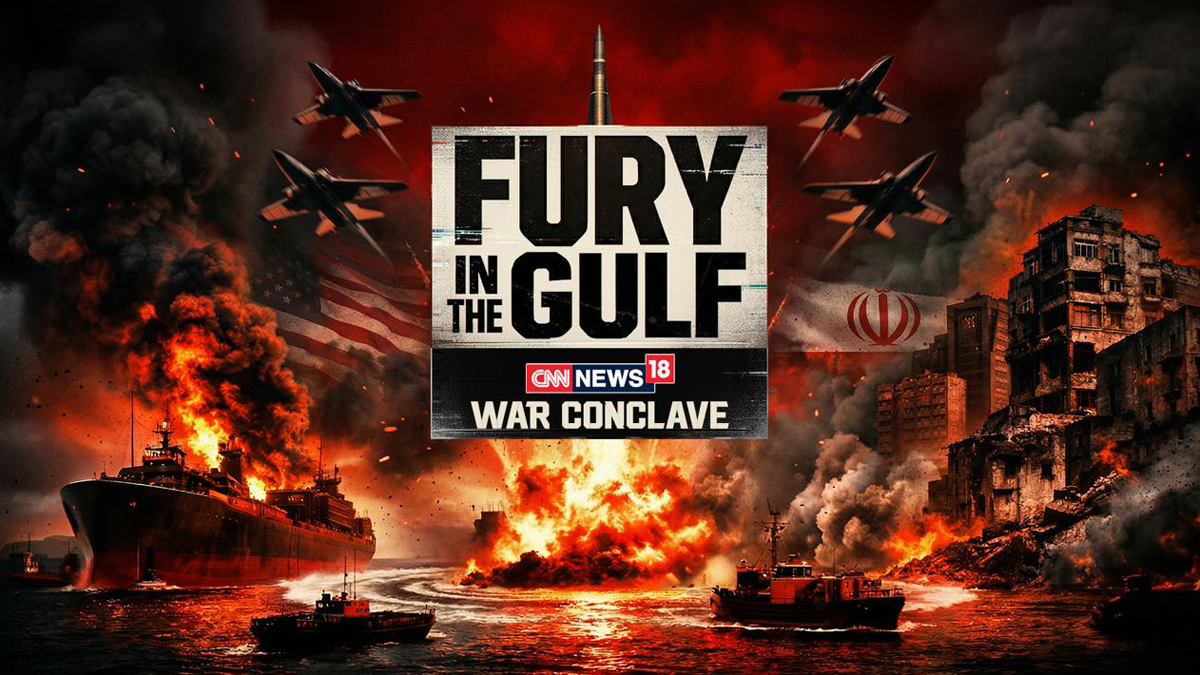
MUMBAI: CNN-News18 is set to host a special three-hour broadcast, Fury in the Gulf – War Conclave, on April 7, aiming to decode the escalating West Asia crisis and its far-reaching implications for India.
Scheduled from 4:00 PM to 7:00 PM, the conclave comes at a time when tensions between Iran and the United States are reshaping global geopolitics and triggering economic uncertainty. With India’s deep energy ties, trade links and large diaspora in the Gulf, the developments carry significant domestic relevance.
Built around the theme ‘Conflict, Consequences, and The Future,’ the programme will feature six curated sessions combining one-on-one interviews and panel discussions. The focus is to cut through the clutter and offer viewers a clearer understanding of the fast-evolving situation.
Key sessions include ‘Diplomacy in Times of War’ featuring Shashi Tharoor, and ‘World After the Iran Conflict’ with voices such as Ram Madhav, Reuven Azar, representatives from the European Union and the Iranian Deputy Envoy. Another session titled ‘Another Dunkirk?’ will bring together K. J. S. Dhillon and Jitin Prasada among others.
CNN-News18 editorial affairs director Rahul Shivshankar said, “In times of war, clarity becomes the most powerful tool. Fury in the Gulf – War Conclave brings together credible voices to address the questions and confusion that arise amid an overwhelming influx of information.”
He added that the initiative is aimed at delivering “facts, perspective, and insight” at a time when misinformation can easily cloud public understanding.
Echoing the sentiment, CNN-News18 CEO– English and business news Smriti Mehra said the conflict marks a defining global moment, with consequences that extend well beyond the region. She noted that the conclave seeks to present the crisis with “depth, nuance and responsibility” so audiences can better grasp its real-world impact.
As geopolitical tensions continue to dominate headlines, the conclave positions itself as an attempt to bring order to the noise, offering viewers a structured, insight-led look at a complex and rapidly shifting global situation.






