News Broadcasting
Dasmunsi reiterates govt resolve on B’cast Bill

NEW DELHI: A draft Broadcasting Bill may have been put in the backburner for the time being, but the government is determined to bring in regulation for the broadcast industry.
Pointing out that allegations of intrusion of privacy of individuals and other such issues are taken up by an autonomous Press Council of India for the print medium, information and broadcasting minister Priya Ranjan Dasmunsi today said, “In so far, as electronic media are concerned, such a specific code has not been formulated.”
That’s why the government is considering a Broadcasting Services Regulation Bill in consultation with other ministries, the minister informed the Rajya Sabha (Upper House of Parliament) today.

Dasmunsi’s ministry, which had earlier proposed to bring in the broadcast Bill in the ongoing monsoon session of Parliament, has not yet listed it amongst the business that the House would undertake during this session lasting till end-August.
However, the I&B minister, who has been blowing hot and cold over the proposed Broadcast Bill, did admit in Parliament today “a need has also been felt to consult the media in the matter.”
This makes it amply clear that the government had failed to take the industry stakeholders into confidence while drafting a note for the Cabinet’s consideration on the issue and has been forced to soften its stand on the face of stiff media opposition to some draconian clauses proposed.
According to Dasmunsi, a committee has been set up to formulate a programme code based upon the concept of self-regulation by TV channels.
While making his point on the need to regulate the electronic medium in the country, Dasmunsi scored a few points when answering to queries from his fellow parliamentarians.
To a question on government show cause to TV channels, Dasmunsi said 190 such notices have been issued to different television channels for violation of Programme and Advertising Codes during the period 2004-06 till date.
The break up of number of channels against whom it was established a breach of Programme and Advertising Codes has Orders for setting up of monitoring committees for private television channels at the State and District levels was issued in September 2005 and the order for constitution of an inter-ministerial committee to take cognizance suo-motu or look into the specific complaints regarding violations of the Programme Code and Advertising Code, as defined in Rule 6 and 7 of the Cable Television Network Rules, 1994 was issued in April 2005.
Government has asked States to constitute monitoring committees at district levels to monitor private satellite and local cable channels to detect and look into the violation of Programme and Advertising Code, according to the minister.
As far as content monitoring is concerned, the Indian government is serious about the whole thing.
Dasmunsi said the government proposes to set an Electronic Media Monitoring Centre (EMMC) for content monitoring of private television channels and to check violations of programme and advertisement codes.
The total cost of the project is Rs 116.5 million out of which RS 29 million has already been released.
Another tranche of RS 58 million has been allocated under Annual Plan 2006-07 for the purpose.
As of now, EMMC project is underway on a temporary basis in Pushpa Vihar area in Delhi and is likely to be commissioned in a full-fledged manner 2007, subject to availability of funds and other infrastructural requirements.
However, Dasmunsi said that the ministry of urban development has been requested to give a permanent piece of real estate in the Capital for the EMMC project.
(RS 47= 1US$)NEW DELHI: A draft Broadcasting Bill may have been put in the backburner for the time being, but the government is determined to bring in regulation for the broadcast industry.
Pointing out that allegations of intrusion of privacy of individuals and other such issues are taken up by an autonomous Press Council of India for the print medium, information and broadcasting minister Priya Ranjan Dasmunsi today said, “In so far, as electronic media are concerned, such a specific code has not been formulated.”
That’s why the government is considering a Broadcasting Services Regulation Bill in consultation with other ministries, the minister informed the Rajya Sabha (Upper House of Parliament) today.
Dasmunsi’s ministry, which had earlier proposed to bring in the broadcast Bill in the ongoing monsoon session of Parliament, has not yet listed it amongst the business that the House would undertake during this session lasting till end-August.
However, the I&B minister, who has been blowing hot and cold over the proposed Broadcast Bill, did admit in Parliament today “a need has also been felt to consult the media in the matter.”
This makes it amply clear that the government had failed to take the industry stakeholders into confidence while drafting a note for the Cabinet’s consideration on the issue and has been forced to soften its stand on the face of stiff media opposition to some draconian clauses proposed.
According to Dasmunsi, a committee has been set up to formulate a programme code based upon the concept of self-regulation by TV channels.
While making his point on the need to regulate the electronic medium in the country, Dasmunsi scored a few points when answering to queries from his fellow parliamentarians.
To a question on government show cause to TV channels, Dasmunsi said 190 such notices have been issued to different television channels for violation of Programme and Advertising Codes during the period 2004-06 till date.
The break up of number of channels against whom it was established a breach of Programme and Advertising Codes has Orders for setting up of monitoring committees for private television channels at the State and District levels was issued in September 2005 and the order for constitution of an inter-ministerial committee to take cognizance suo-motu or look into the specific complaints regarding violations of the Programme Code and Advertising Code, as defined in Rule 6 and 7 of the Cable Television Network Rules, 1994 was issued in April 2005.
Government has asked States to constitute monitoring committees at district levels to monitor private satellite and local cable channels to detect and look into the violation of Programme and Advertising Code, according to the minister.
As far as content monitoring is concerned, the Indian government is serious about the whole thing.
Dasmunsi said the government proposes to set an Electronic Media Monitoring Centre (EMMC) for content monitoring of private television channels and to check violations of programme and advertisement codes.
The total cost of the project is Rs 116.5 million out of which RS 29 million has already been released.
Another tranche of RS 58 million has been allocated under Annual Plan 2006-07 for the purpose.
As of now, EMMC project is underway on a temporary basis in Pushpa Vihar area in Delhi and is likely to be commissioned in a full-fledged manner 2007, subject to availability of funds and other infrastructural requirements.
However, Dasmunsi said that the ministry of urban development has been requested to give a permanent piece of real estate in the Capital for the EMMC project.
(RS 47= 1US$)





News Broadcasting
WITT Summit 2026 concludes in New Delhi
Babar Azam’s comical diving attempt goes viral as league introduces anti-dew measures.
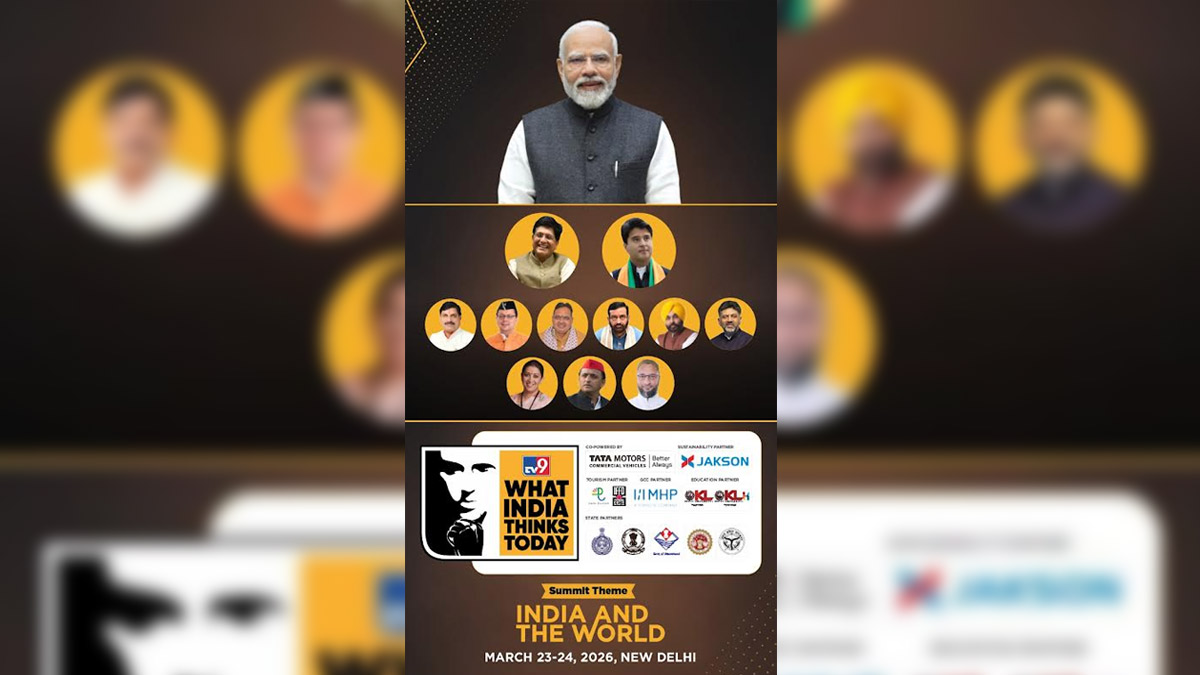
MUMBAI: The WITT Summit just wrapped up with enough big ideas to fill a policy playbook because when India’s leaders, thinkers and icons gather under one roof, even the conversations hit sixes. The eighth edition of TV9 Network’s flagship What India Thinks Today (WITT) Summit 2026 concluded on Saturday after two days of dynamic discussions at its New Delhi venue. India’s largest multi-domain public policy and culture summit brought together political leaders, policymakers, sports icons, artists and technology innovators to examine the forces shaping contemporary India and its global standing.
Prime minister Narendra Modi delivered the keynote address on the theme “India and the World” for the third consecutive year. In a wide-ranging speech, he addressed the ongoing conflict in West Asia, calling for restraint and compassion while highlighting India’s continued development trajectory despite global turmoil.
The summit featured candid conversations with state leaders. Telangana Chief Minister A. Revanth Reddy articulated a people-first governance model and contrasted it with other development approaches. Madhya Pradesh Chief Minister Mohan Yadav declared that Left-wing extremism had been effectively eliminated in his state and highlighted preparations for the upcoming Kumbh Mela. Punjab Chief Minister Bhagwant Mann defended his government’s record, citing the closure of 19 toll plazas and creation of the Sadak Suraksha Force. Karnataka Deputy Chief Minister D.K. Shivakumar expressed confidence in Congress prospects in Assam and addressed recent allegations against him.
On geopolitics and national security, Union Minister Jyotiraditya Scindia outlined India’s ambition to become a builder of trusted digital infrastructure for the world, citing the rapid 5G rollout and village-level 4G connectivity.
Cricket received significant attention. Former India captain Sourav Ganguly praised player freedom and trust as hallmarks of great leadership and named MS Dhoni as the greatest captain due to his World Cup successes. India women’s team bowling coach Aavishkar Salvi credited the BCCI and Women’s Premier League for building a pipeline of world-class talent behind the team’s recent ODI World Cup triumph.
The summit also hosted the inaugural AI² Awards 2026, celebrating the convergence of human creativity and machine intelligence in storytelling and content creation. Poet and kathavachak Kumar Vishwas delivered a nuanced take on India’s concept of Dharma and criticised the recent arrest of an 80-year-old Shankaracharya. Veteran lyricist Sameer Anjaan and storyteller Neelesh Misra reflected on changing music trends and artistic responsibility in the wake of a recent controversy involving Nora Fatehi.
In a country where conversations often run as deep as the Ganges, the WITT Summit proved once again that when leaders, thinkers and storytellers come together, the real winner is public discourse lively, layered and refreshingly unafraid to tackle the big questions shaping India’s tomorrow.








