I&B Ministry
DAS task force to meet on 8 October amidst protests

NEW DELHI: Almost a month after its constitution, the task force set up for the implementation of digitisation in the country and particularly overseeing the execution of the last two phases of Digital Addressable System (DAS) is expected to meet on 8 October at 10:30 in Delhi.
However, local cable operators who have already expressed their protest at not being given a voice in the Task Force have not been invited to the meeting.

Talking about the meeting, Information and Broadcasting Ministry secretary Bimal Julka told indiantelevision.com that all the stakeholders named in the task force order of 12 September had been nominated and are expected to be at the meeting. Although an official of the Information and Broadcasting Ministry denied this.
LCOs who form the backbone of the cable television system in the country said no organisation of LCOs had been included in the task force or invited in the meeting.
Meanwhile, ASSOCHAM Media and Entertainment Committee co-chairman Sujatha Dev informed the industry body that she is unaware of how a representative of ASSOCHAM was nominated to the task force.
National Cable & Telecommunication Association president Vikki Choudhry has in a letter to the I&B Minister Prakash Javadekar alleged that “In spite of all your endeavours taken to clean up the mess that had been created on account of DAS by the previous UPA government, few officials still attached to the MIB are bent on misleading and misguiding you on this much controversial DAS issue.”
He has also pointed out that certain categories had not been invited to the task force meeting despite them being directly involved in implementation of DAS which included five Independent MSOs one each from North, South, East, West and North East region, five registered LCO associations one each from North, South, East, West and North East regions, a representative of the Association of Regional Television Broadcasters of India/ Regional News Broadcasters Association, five prominent consumers organisations, one each from North, South, East, West and North East regions, a representative of ASSOCHAM and a representative of Telecom Equipment Manufacturers Association of India (TEMA).
Choudhry added that while there had been mention of these in the order of 12 September constituting the task force, no persons had been nominated for these categories.
Additionally, he also revealed that there was no representation / invitation sent to Conditional Access System Vendors (an integral part of the entire DAS) and Subscriber Management System (SMS) that controls the entire DAS ecosystem after integration with the CAS.
According to the 12 September order, the new task force was to be headed by I&B additional secretary as chairperson, with Telecom Regulatory Authority of India (TRAI) principal advisor for broadcast and cable satellite, I&B Ministry joint secretary broadcasting, representatives from the MSO Alliance, five independent MSOs one each from north, south, east, west and north east regions, five registered LCO associations one each from north, south, east, west and north east regions, representatives from the Indian Broadcasting Foundation, News Broadcasters Association, Association of Regional Television Broadcasters of India, DTH Association, FICCI, CII, ASSOCHAM, CEAMA, Department of Telecommunications, Department of Electronics and Information Technology, DG: Doordarshan, DG: All India Radio, BECIL, BIS, five prominent consumer organisations one each from north, south, east, west and north east regions and 33 state level nodal officers one each from the states/union territories governments.
The task force was to act as an interface between the government and the industry in matters related to implementation of DAS in the cable TV sector and monitor the execution of DAS. It also will have to analyse the roadblocks that may come in the way of digitisation and suggest measures.
While NBA and IBF will be participating in the meeting, representatives of cable operators associations from different states are protesting against the exclusion of LCOs and MSOs from the meeting.





I&B Ministry
Govt extends TRP suspension for news channels by four weeks amid concerns
I&B ministry cites sensationalism fears linked to West Asia conflict coverage
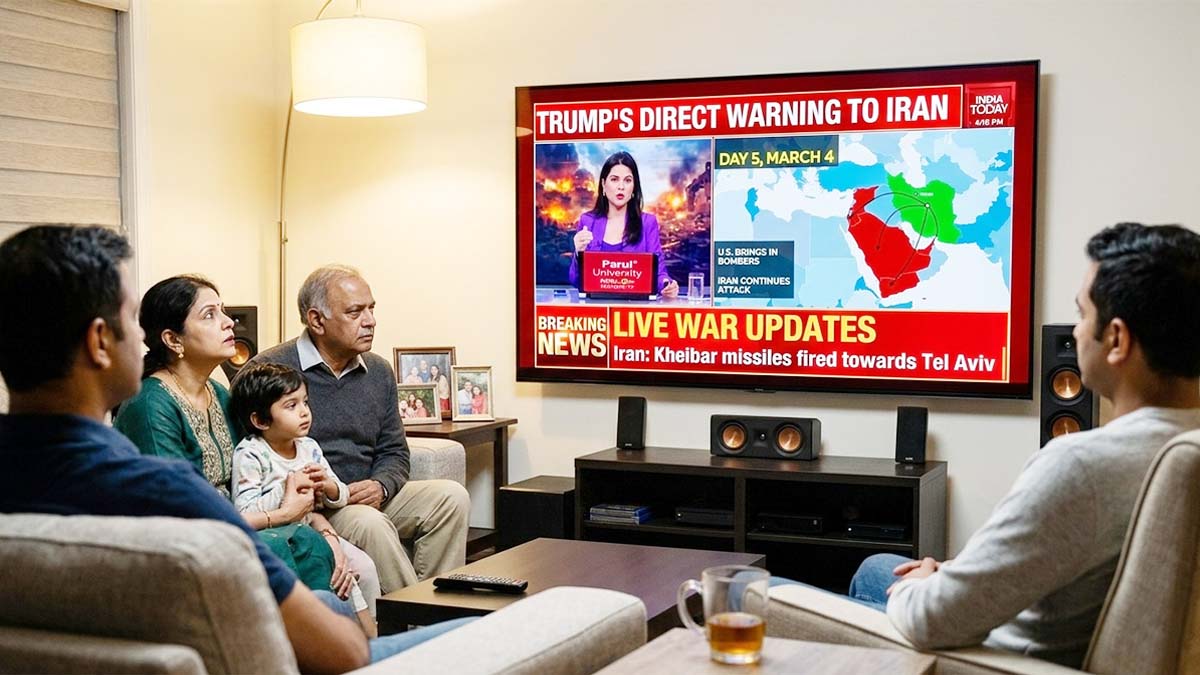
NEW DELHI: The Ministry of Information and Broadcasting has extended the suspension of Television Rating Points for news channels by another four weeks, keeping the industry in a ratings blackout for a longer stretch.
In an order dated March 31, the ministry directed the Broadcast Audience Research Council to continue withholding TRP data “for a further period of four weeks or until further directions, whichever is earlier.” This marks the second such directive after an initial four-week pause was imposed on March 6.
The government said the extension is aimed at curbing unwarranted sensationalism and speculative reporting, particularly in the context of the ongoing tensions in West Asia. It noted that the conflict continues to evolve and could trigger anxiety among viewers, especially those with personal or economic ties to the region.
TRPs serve as the primary yardstick for measuring television viewership and play a crucial role in shaping advertising revenues and competitive positioning among news broadcasters. Their absence effectively removes a key performance benchmark, forcing channels to operate without publicly available ratings.
The directive applies specifically to news television channels and has been issued under the government’s regulatory powers in the interest of public order. While the move is framed as a temporary measure, its continuation suggests ongoing concerns about the tone and nature of coverage.
For broadcasters, the extended blackout means navigating a high-stakes news cycle without the usual scoreboard. Whether it tempers the noise or simply shifts the battle elsewhere remains to be seen, but for now, the ratings race is officially on pause.






