Hindi
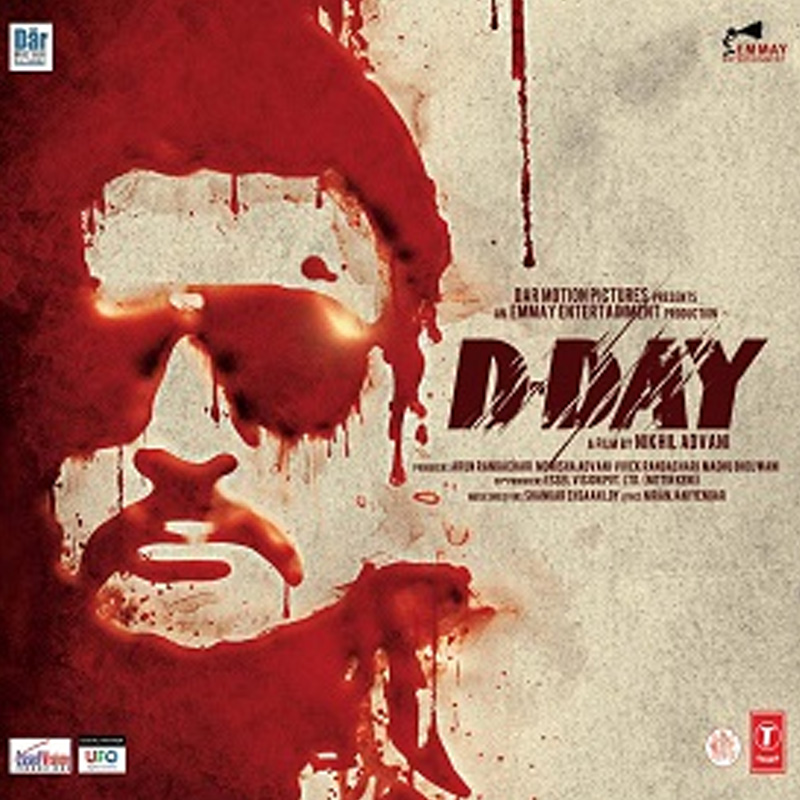
D-Day: A film of great substance

|
MUMBAI: The US Navy Seals entered Pakistani airspace and killed the worlds‘ most wanted terrorist, Osama Bin Laden, in an operation given the go-ahead by the country’s President. Many years earlier, Israeli commandoes had a tougher job at hand. They had to travel many miles not to kill a single person in a remote location away from crowds but to save a plane load of Israelis hijacked and held captive at Entebbe Airport in Mombasa, Uganda, and that too in an era of minimal communication technology. One always thought that why couldn’t the Indian agencies carry out such an operation and either eliminate or bring back the most wanted Indian from the neighbouring country from where he still calls the shots? But then one thought of a bandit closer home, Veerappan, who was not on a foreign land but roamed the Indian jungles of the south. For 20 long years, he smuggled, poached and killed people without any action. So much for daydreaming about getting someone from another country! Yet, in D-Day, the makers realise that very dream.
D-Day is about a covert operation to pick up of India’s most wanted terrorist and don, Rishi Kapoor, from across the border with an off-the-record okay from the Indian head of the state. A dormant RAW operative, Irrfan (as Wali Khan), staying in Pakistan in the guise of a barber with his wife, Shriswara, and son, Dwij, has blended well with the local population. He is asked to become active. Irrfan is joined by an ex-army man, the ruthless, Arjun Rampal (as Rudra Pratap Singh), an explosive expert from RAW’s UK unit in Huma Qureshi (as Zoya Qureshi) and a petty Mumbai criminal, Akash Dhaiya (as Aslam), who has bought his freedom from death row with this assignment. He has managed to find a job as driver with the don. Rampal has chosen a prostitute’s house being safest for him. Qureshi checks into the very hotel where the don’s son is to wed. The only person who knows the agents on this assignment is the RAW chief, Nassar.  The four have gathered in Karachi. The don’s son is due to marry a famous cricketer’s daughter at a 5-star hotel. Despite ISI’s insistence that the don should not attend the ceremony, he is determined. This is considered a rare opportunity to grab the don; whoever is blown up in the process is immaterial. The plan is to bomb the hotel venue, stun the security and grab the don soon as he enters. Irrfan has bid adieu to his son and wife for the last time and despatched them off to London to her brother’s house. To mislead the authorities, he sets his house on fire after planting three bodies there to look like his family has been burnt alive. The mission starts but a volcano eruption in Europe causes the skies to fill with ash and smoke. All flights to Europe are cancelled. The burning down of a house and deaths are on the news and the beginning of the failure of the mission also begins. Links are soon made between the woman and child, the burnt house and the event of the don’s family. The action is simultaneous. As the mission proceeds, the ISI starts catching on. The four agents are a step ahead and after many blasts and shootouts the don is in their hands. In a last minute debate between Irrfan and Rampal weather to shoot him or to take him alive, he gets away. The mission has failed, Irrfan is hurt and you wonder what the other half will have to offer! The four gather in a lodge kind of accommodation now knowing how the ISI had got onto them. The ISI pieced together the links and knew at least one of them, Irrfan. They know they are doomed so they might as well stay back and finish the job. Rampal meanwhile has another score to settle. He has developed a soft corner for the prostitute, Shruti Haasan. A local goon has scarred her face. Rampal puts him to rest in one swift moment thus also exhibiting the fighter in him. A plan is worked out but the four have more opposition now. They are not only fighting the ISI, even the RAW wants them dead so there is no connection with India if they are caught. They plan a suicide mission. The son’s wedding is at the don’s house now. They plan to drive an explosive-filled car into his house. The plan fails again as the don is being shifted out. The ISI has had enough of him and his maniacal nephew, Chandan Roy, and they want to eliminate both. The four don’t let ISI have that satisfaction and get hold of their target. They are close to Kutch border and the last leap is to take the don across into India. D-Day has been written to be a taut action espionage drama which, for a change, does not depict the enemy as a bunch of idiots. Nikhil Advani does a great job of creating a plausible atmosphere be it showing parts of Pakistan or showing the neighbourhoods of Karachi. The film sags a bit towards end when Rampal and Irrfan get into an argument. But the scene thereafter makes up for that. Photography is very good though many viewers may prefer brightness instead of so much light and shade. Considering the genre, the film has a surprisingly soothing mix of melody, ghazal and even qawwali with good lyrics. The performances by all are excellent and rating them would be unfair. However, Kapoor as the don and Shriswara as Irrfan’s wife are the surprise packets. Rampal, Irrfan, Huma, and Dhaiya excel. Shruti Haasan in a smaller role is fine. D-Day has opened weak in opposition to the youth-oriented Ramaiya Vastavaiya but is expected to get better over the weekend and comfortably earn back its reasonable cost. |
||
|
|
||
|
|
||
Tips’ Kumar Taurani launches his son Girish with Ramaiya Vastavaiya and the wisest thing to do was to choose a feel good romance and handover the reins to a tried and tested director. In this case, that is Prabhudheva, who has perfect track record in Hindi films so far besides being a top rated choreographer, a plus while directing a youthful romance. To add to that, the film’s title is derived from an evergreen Raj Kapoor romantic number from the film Shri 420. Having done all that, there has been no looking back when it came to promoting the film. The film’s theme is as old as the hills: young romance is challenged by family traditions and values and determined by status of families. The lovers have to win over all concerned. The film is a remake of Prabhudheva’s own directorial debut hit in Telugu, Nuvvostanante Nenoddantana, which was itself inspired from Rajshri’s Maine Pyar Kiya and many other films of similar genre. Girish Kumar is the only son of the Australia-based millionaire couple Randhir Kapoor and Poonam Dhillon. He is in India and while attending his cousin’s wedding, he meets Shruti Haasan, a good friend of his cousin. Ram tries to flirt with her and then begins Taming of the Shrew, i.e. the usual love-hate moments until suddenly true love happens. Girish is attracted to Sona and her simplicity and the feelings are shared by Shruti as well. Romance is very much in the air. But then there is also a bubble around that air and a time comes for that bubble to burst. The lovers are separated because of status barriers. Sonu Sood is Shruti’s elder brother and she is the apple of his eye. He will not let anybody hurt her in anyway and is overly protective of her after the death of his mother. He gives her the best of life and education, his limited resources notwithstanding. He has an aversion to rich people and does not approve of Girish. If Girish has to win the hand of Shruti, he has to accept a challenge Sood throws at him and prove himself. If Sood has an aversion to rich people, for Dhillon it works the other way round, she does not like poor people. Love, of course, has to triumph over status, traditions and all the other hurdles. What is creditable about this film is the heavy padding that has been given to the new hero Girish. The film’s supporting cast boasts of Kapoor, Dhillon, Vinod Khanna, Satish Shah, Paresh Ganatra, Nassara nd many other known character artistes so as not to burden the fragile lead cast too much. Prabhudheva has tried to keep the film picturesque with a lot of colour all around as well as with the choice of locations; there is also the inevitable South touch to many scenes. The photography is good and so is choreography. Music, mandatory for a love story, is a positive with some foot tapping and melodious numbers. Girish is sincere and for a first film hero, his enthusiasm is evident. Shruti does well as a demure girl in love. Sonu Sood is convincing playing a farmer. While Kapoor, Dhillon, Khanna and Shah are fine, Ganatra manages to evoke laughter. Ramaiya Vastavaiya has been well promoted and has opened very well all over and should continue to do well over the weekend. |
||
Ship Of Theseus, also known as Theseus’ Paradox has its roots in an ancient Greek legend about the king Theseus and the ship he used. The ship was preserved by the Athenians and as its planks decayed, they were replaced with new stronger planks till the time that every plank and part of the ship was new. The question that then rose was this: did it still remain the same ship or was it a new ship? Writer-director Anand Gandhi juxtaposes this philosophical question and its essence with the modern-day scientific triumph of organ donations. If a person lives on donated organs, does he/she still remain who he/she was? The film also explores the effects on three such people who have received transplants. Aida El-Kashef is a blind experimental photographer who is due to undergo a cornea transplant. The operation is over and she has regained vision in both her eyes. But she just can’t get used to sense of sight and she feels her photography now does not compare to her intuitive talent earlier. Neeraj Kabi is a scholarly monk who leads a sect, a kind of Jain-Buddhist combine. He is fighting a legal battle against the use of animals in medical research. He is diagnosed with cirrhosis of liver but he would rather await his end than take medication that has been tested on animals. But when his ailment becomes unbearable, he concedes and asks for a liver transplant. Sohum Shah is a young stockbroker who has just received a kidney transplant. He is back home with his grandmother who sets high standards for all around her. Soon, Shah is back in hospital, taking care of his grandmother who has broken a leg. That is when he learns of a labourer admitted in the hospital for an operation where he learns that his kidney was stolen at the earlier hospital where he was admitted. Shah makes it his mission to find the culprits. He traces the recipient to Stockholm. These three are a few of the eight recipients or organs from a single donor, a young adventurer who had died accidently. They are all invited to a museum to watch his video and the kind of work he did. The film deals with various aspects of human nature over varying periods and phases in a person’s life. Watching this film makes one get into debate with one’s own self. The theme and scripting needed some great research. Direction is outstanding. The choice of locations is amazing and brilliantly captured. Performances by the three protagonists of the three stories, Aida El- Kashet, Neeraj Kabi and Sohum Shah, all first time actors, are true to life. The rest of the cast also supports well. Background score also deserves a special mention. |




Hindi
India’s telecom subscribers cross 1.32 billion in February 2026
Broadband base swells past 1.06 billion as Jio and Airtel tighten grip on the market.

MUMBAI: India’s telecom sector is ringing in steady growth once again adding millions of new connections every month while the race for broadband supremacy continues to heat up like a fiercely contested cricket match. According to the latest data released by the Telecom Regulatory Authority of India (TRAI) on 1 April 2026, the total telephone subscriber base in the country reached 1,321.31 million at the end of February 2026. This marked a net addition of 7.31 million subscribers during the month, translating into a monthly growth rate of 0.56 per cent.
Wireless subscribers (including mobile and Fixed Wireless Access) stood at 1,273.31 million, registering a net addition of 6.97 million and a growth rate of 0.55 per cent. Within this, urban wireless connections grew to 730.75 million (growth 0.70 per cent), while rural wireless subscribers reached 542.56 million (growth 0.35 per cent).
Wireline subscribers, though much smaller in scale, showed slightly faster growth. The total wireline base increased to 47.99 million, with a net addition of 0.34 million and a monthly growth rate of 0.70 per cent. Urban areas continued to dominate wireline connections with a share of 89.41 per cent.
Overall tele-density in India improved to 92.66 per cent. Urban tele-density stood at 150.68 per cent, while rural tele-density edged up to 60.02 per cent.
The broadband subscriber base crossed a significant milestone, reaching 1,059.05 million at the end of February 2026. This reflected a healthy net addition of 6.33 million subscribers and a monthly growth rate of 0.60 per cent from January’s figure of 1,052.72 million.
Segment-wise, mobile wireless access continued to drive the majority of growth with 996.52 million subscribers. Fixed Wireless Access (including 5G FWA) added 16.51 million, while wired broadband stood at 46.02 million.
Reliance Jio Infocomm Ltd. maintained its commanding lead with 519.64 million broadband subscribers. Bharti Airtel Ltd. followed with 364.14 million, Vodafone Idea Ltd. with 129.36 million, Bharat Sanchar Nigam Ltd. with 28.70 million, and Atria Convergence Technologies Ltd. with 2.38 million.
Together, these top five players command a massive 98.60 per cent share of the total broadband market.
In the wireless (mobile) segment, private operators continued to dominate with 92.59 per cent market share, leaving public sector undertakings (BSNL and MTNL) with just 7.41 per cent.
Out of the total 1,257.29 million wireless (mobile) subscribers, 1,177.60 million were active on the peak Visitor Location Register (VLR) date, representing an impressive 93.66 per cent activity rate. Bharti Airtel led in this metric with 99.42 per cent of its subscribers active.
Meanwhile, 14.47 million subscribers submitted requests for Mobile Number Portability (MNP) in February, indicating healthy competition and customer churn across zones.
While urban areas still lead in absolute numbers, rural connectivity is slowly catching up. Rural wireless tele-density stood at 59.46 per cent, compared with the much higher urban figure of 142.32 per cent.
Fixed Wireless Access using 5G technology also showed promising traction, growing to 11.93 million subscribers. Reliance Jio and Bharti Airtel are the primary players driving this segment.
The data paints a picture of a maturing yet still rapidly expanding telecom ecosystem. With total telephone subscribers now well past the 1.32 billion mark and broadband users comfortably above 1.06 billion, India continues to solidify its position as one of the world’s largest and most dynamic digital markets.
From bustling city streets to remote villages, more Indians are staying connected than ever before proving that when it comes to telecom, the country’s appetite for growth shows no signs of hanging up anytime soon.






