Applications
Cyber switch as Tenable taps ex-Google exec Eric Doerr for product power play

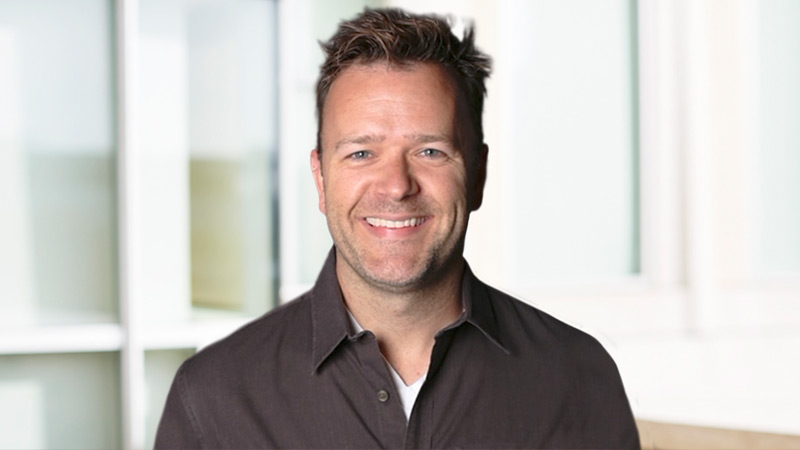
MUMBAI: Tenable just made a heavyweight addition to its cybersecurity war room and it’s a Doerr-opener. The exposure management company has roped in Eric Doerr as its new chief product officer, betting big on his two decades-plus of experience at Microsoft and, most recently, Google Cloud.
The move comes at a strategic inflection point for Tenable, which is gearing up to roll out a major expansion of its flagship Tenable One platform. Doerr will now be in charge of global product strategy and innovation, as the company sharpens its focus on unified visibility, prioritisation, and remediation the trifecta of modern cybersecurity.
“Tenable has a clear and compelling vision for the future of cybersecurity, one that unifies visibility, prioritisation and remediation across the modern attack surface,” said Tenable co-CEO, Steve Vintz. “Eric’s deep expertise in cloud-native security, threat intelligence, and large-scale product innovation makes him the ideal leader to advance our exposure management vision and accelerate our impact across the enterprise.”

Doerr’s résumé reads like a cybersecurity masterclass. At Google Cloud, he oversaw security products including Chronicle (now Google Secops) and Google Threat Intelligence, and played a pivotal role in integrating Mandiant. Before that, he was a Microsoft veteran holding key positions like General Manager of Microsoft Account and corporate VP of Cloud Security and the Microsoft Security Response Center (MSRC).
“Tenable is transforming how organisations think about and reduce cyber risk,” said Doerr. “Its forward-thinking approach to exposure management and its rapid innovation in cloud security make this an incredibly exciting time to join. I’m thrilled to be part of a team that’s building the future of cybersecurity.”
Doerr replaces Shai Morag, who will remain during the transition. The company acknowledged Morag’s contributions to product growth during his tenure.
With cyber threats multiplying and attack surfaces expanding, Tenable’s timing is no coincidence. And with Doerr at the helm of product strategy, the company is doubling down on building not just the tools to respond but the vision to stay ahead.
In the battle for digital security, Tenable’s latest move signals it’s not just playing defence, it’s drawing up a bold new offence.






Applications
With 57 per cent single new users, Ashley Madison rebrands as discreet dating platform
Platform says majority of new members now identify as single

INDIA: Ashley Madison is shedding the “married-dating” label that defined it for two decades, repositioning itself as a platform for discreet dating in what it calls the post-social media age.
The rebrand, unveiled in India on 27 February, 2026, marks a structural shift in business model and identity. Once synonymous with married dating, the company now describes itself as the “premier destination for discreet dating” under a new tagline: Where Desire Meets Discretion.
The pivot is data-driven. Internal figures show that 57 per cent of global sign-ups between 1 January and 31 December, 2025 identified as single: a notable departure from the platform’s married core. The company argues that its community has already evolved beyond its original positioning.
“In an age where our lives have been constantly put on public display, privacy has become the new luxury,” said Ashley Madison chief strategy officer Paul Keable. He framed the platform’s offering as “ethical discretion” for singles, separated, divorced and non-monogamous users seeking private connections.
The shift also taps into wider digital fatigue. A global survey conducted by YouGov for Ashley Madison, covering 13,071 adults across Australia, Brazil, Canada, Germany, India, Italy, Mexico, Spain, Switzerland, the UK and the US, found mounting discomfort with hyper-public online lives.
Among dating app users, 30 per cent cited constant swiping and messaging as a source of fatigue, while 24 per cent pointed to pressure to curate public-facing profiles and early personal disclosure. Some 27 per cent said fears of screenshots or information being shared contributed to exhaustion; an equal share cited unwanted attention.
The retreat from oversharing appears broader. According to the survey, 46 per cent of adults actively try to keep most aspects of their life private online. Only 8 per cent feel comfortable sharing most aspects publicly, while 35 per cent say they are becoming more selective about what they disclose.
Ashley Madison is betting that this cultural recalibration towards controlled visibility can be monetised. By doubling down on privacy infrastructure and reframing itself around discretion rather than infidelity, the company is attempting to convert reputational baggage into a premium proposition.






