News Broadcasting
Court seeks guidelines on stings, status of Broadcast Bill

NEW DELHI: Pointing out that it was the responsibility of the Government to act if any television channel concocted a sting operation, the Delhi High Court today sought to know the provisions drawn up in this regard.
The Court also wanted to know the status of the Broadcasting Bill, on which discussions had been going on for some time. The ministry was asked to file its reply by 17 September.
Hearing a public interest litigation by social worker Rahul Verma seeking to regulate sting operations by TV channels, a Division Bench comprising Chief Justice M K Sharma and Justice Sanjeev Khanna noted: “There have been discussions regarding the bill. The Minister (for Information and Broadcasting) has said that the government is bringing the bill. What has come out so far?”

Referring to the recent report of the fake sting operation by Live India channel, the court said: “If the sting is concocted, it is your responsibility to take action. Some kind of restriction has to be there. It is not about an individual case but about broader policy.”
The court made a reference to the “sting operation” purportedly showing government schoolteacher Uma Khurana as running a prostitution racket, though the police found it to be a fake report.
The telecast of the sting by Live India last month triggered mob violence in and around the school in central Delhi where Khurana taught mathematics. She was soon arrested and sacked from the job. However, Khurana was released on bail earlier this week as no evidence was found against her.
The Centre today informed the Court that the I&B ministry had issued a show cause notice yesterday to ‘Live India’ channel to respond within three days as to why action against it should not be taken for irresponsible reporting in the fake sting operation involving the school teacher. Not satisfied by that reply, the Court asked, ”Under which provision of the law you have issued the show cause notice. If offence is committed, you have to register a case and start criminal proceedings.”
The Court had in fact taken suo motu notice of the case on 7 September and had issued notice to the Government and the Police. Interestingly, the police has in its reply told the court that it has not given a clean chit to the teacher. The police had arrested reporter Prakash Singh and his associate Rashmi Singh after booking him under various sections of the Indian Penal Code, including those relating to cheating and criminal conspiracy.
The fake sting reports have come at a time when broadcasters are opposing the ministry’s proposal in the bill to bring in a Content Code to regulate news and current affairs content.


News Broadcasting
CNN-News18 to host Fury in the Gulf conclave on West Asia crisis
Three-hour summit to unpack geopolitical fallout and impact on India
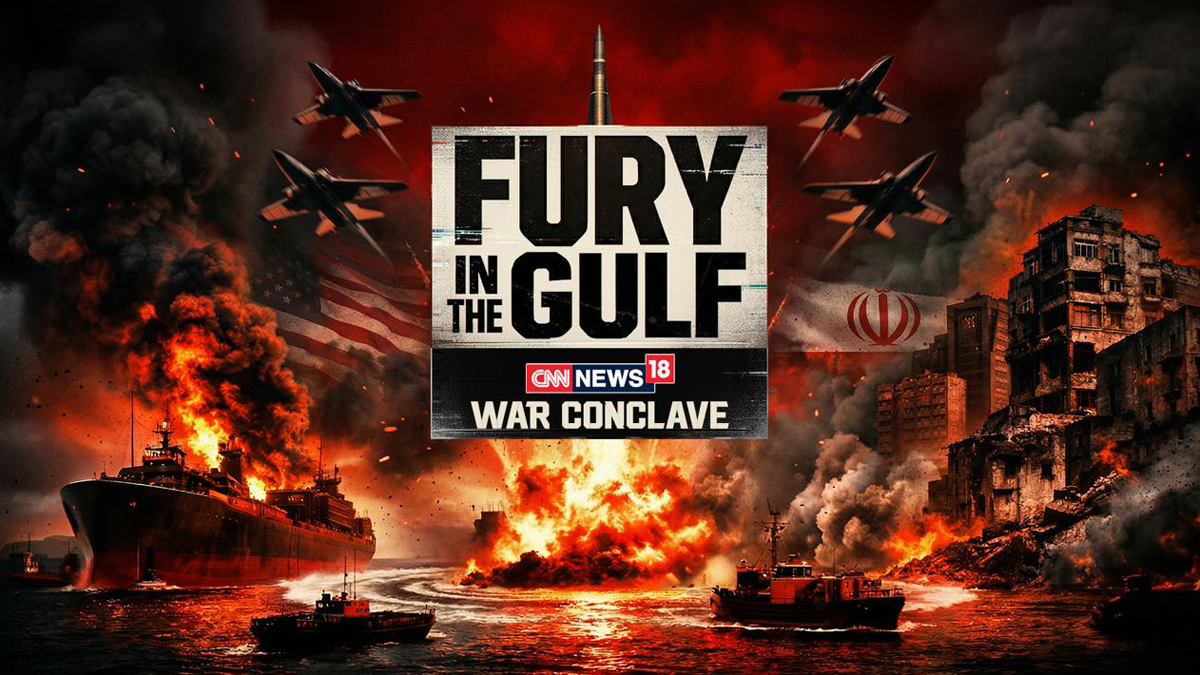
MUMBAI: CNN-News18 is set to host a special three-hour broadcast, Fury in the Gulf – War Conclave, on April 7, aiming to decode the escalating West Asia crisis and its far-reaching implications for India.
Scheduled from 4:00 PM to 7:00 PM, the conclave comes at a time when tensions between Iran and the United States are reshaping global geopolitics and triggering economic uncertainty. With India’s deep energy ties, trade links and large diaspora in the Gulf, the developments carry significant domestic relevance.
Built around the theme ‘Conflict, Consequences, and The Future,’ the programme will feature six curated sessions combining one-on-one interviews and panel discussions. The focus is to cut through the clutter and offer viewers a clearer understanding of the fast-evolving situation.
Key sessions include ‘Diplomacy in Times of War’ featuring Shashi Tharoor, and ‘World After the Iran Conflict’ with voices such as Ram Madhav, Reuven Azar, representatives from the European Union and the Iranian Deputy Envoy. Another session titled ‘Another Dunkirk?’ will bring together K. J. S. Dhillon and Jitin Prasada among others.
CNN-News18 editorial affairs director Rahul Shivshankar said, “In times of war, clarity becomes the most powerful tool. Fury in the Gulf – War Conclave brings together credible voices to address the questions and confusion that arise amid an overwhelming influx of information.”
He added that the initiative is aimed at delivering “facts, perspective, and insight” at a time when misinformation can easily cloud public understanding.
Echoing the sentiment, CNN-News18 CEO– English and business news Smriti Mehra said the conflict marks a defining global moment, with consequences that extend well beyond the region. She noted that the conclave seeks to present the crisis with “depth, nuance and responsibility” so audiences can better grasp its real-world impact.
As geopolitical tensions continue to dominate headlines, the conclave positions itself as an attempt to bring order to the noise, offering viewers a structured, insight-led look at a complex and rapidly shifting global situation.






