Hindi
Copyright case against Jodi Breakers makers in Bombay High Court

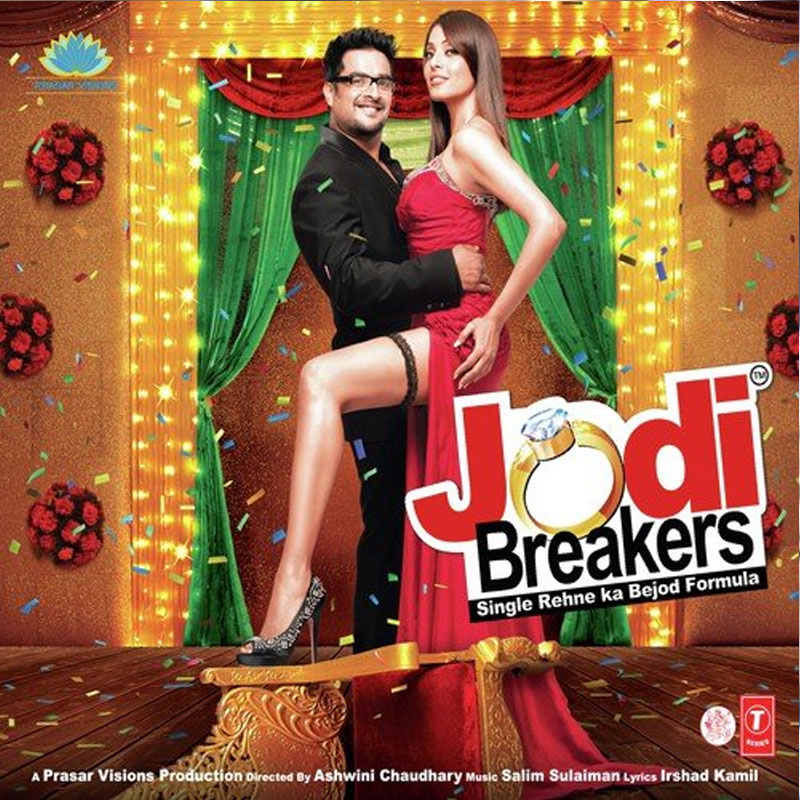
MUMBAI: The release of The Jodi Breakers is said to be in a limbo with Universal Pictures International France and Ors (a co-producer of Heartbreakers and a part of American entertainment company NBC Universal Inc) filing a case against producers Prasar Visions in the Bombay High Court for infringement of copyright. They have also asked for a compensation of Rs 500 million.
It has been reported that the Bipasha and Madhavan-starrer has been allegedly inspired from the French film Hertbreakers, starring Romain Duris and Venessa Paradis. It is also reported that Insia Dariwala, a relatively unknown writer-filmmaker, claimed to be the original owner of the idea behind the film.
It so happened that when several Bollywood filmmakers including Karan Johar were negotiating with the makers of the French film, the producers were surprised to see the promos of Jodi Breakers, the plot of which was strikingly similar to their film.

Accordingly, the French producers have filed the case against five people – the producer, director Ashwini Chaudhary, the writer and the processing lab. They have also questioned Dariwala’s claim that the producers stole her idea.
The Neolegal Associates (a leading intellectual property firm which handles litigations for Hollywood studios) is representing the producers of Heartbreakers in the Court case.
Other films that were caught copying Hollywood content were UTV that made Shoebite, based on Manoj Night Shyamalan‘s Labour of Love, Ravi Chopra‘s Banda Yeh Bindaas Hai that was a copy of Twentieth Century Fox’s My Cousin Vinny, and the makers of Knock Out that was copied from the Twentieth Century Fox film Phone Booth.





Hindi
Hansa Entertainment launched to produce across OTT, TV and film
New venture from R K Swamy Hansa Group eyes multi-language stories for digital-first audiences.

MUMBAI: Hansa Entertainment has just stepped into the spotlight because when a legacy media house decides to script its next act, even the credits get excited. Hansa Entertainment Private Limited has been incorporated to develop and produce original programming across digital, television, OTT platforms and theatrical features. The company will create short-running series, long-running series and original films for OTT, alongside standout theatrical ventures. It will also launch a podcast platform called Hansa Spotlight and produce content for the fast-growing vertical drama format. Stories are initially planned in Hindi, Tamil, Telugu, Malayalam, Bengali and Kannada.
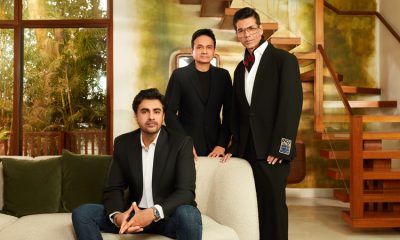
The venture is founded by Sruti Swamy and Siddharth Swamy, drawing on the rich legacy of Hansa Vision and the broader R K Swamy Hansa Group. Sruti brings creative expertise with a master’s in architecture, interiors and design from Milan and a postgraduate degree in business management from the Indian School of Business. Siddharth contributes a data-driven perspective, having studied data science at Imperial College London.
Sujatha Narayanan has been appointed CEO of Hansa Entertainment. With over two decades of experience in creative content curation and production across film and OTT, she is also a well-known film columnist and media entrepreneur.
R K Swamy Hansa Group executive chairman Srinivasan Swamy said, “The launch of Hansa Entertainment marks an exciting new chapter. The new entity is the brainchild of the next generation and will be independently managed by Sruti Swamy, who is the Director and the newly appointed CEO.”
Hansa Entertainment director Sruti Swamy added, “I am very optimistic about the future of Hansa Entertainment, given the content explosion and the opportunities offered by new technologies for production.”
Hansa Entertainment director Siddharth Swamy noted, “The idea is to grow a contemporary production house that creates compelling stories for today’s multi-platform audiences while drawing inspiration from the rich storytelling traditions that audiences have appreciated over the years.”
Hansa Entertainment CEO Sujatha Narayanan said, “Hansa Entertainment will evolve as a story-first, IP-driven entity. We have already put together a smart team of interesting and dynamic creators who will helm our vertical dramas, shows and films.”
In the ever-evolving world of Indian entertainment, where stories now travel faster than the scripts that birth them, Hansa Entertainment is stepping onto the stage with fresh ink and big ambitions proving that even the best legacies know when it’s time for a compelling sequel.