GECs
Cookie communication causes commotion


MUMBAI: & coming soon… A box containing a cookie with these words imprinted on it has been making its way to the offices of trade and print publications, creating a buzz amongst journos. Speculation has been running rife about what this unexpected teaser gift means. Is it from the Star network which is acquiring an expensive cricket property or movie catalogue? Or is it the Zee Network which is launching a new channel? Or is it from Colors which is coming up with a new weekend event or show? Or is it from Sony which has launched another movie in partnership with another Indian studios? The bets are out and nobody knows, but it sure has got scribes’ attention who now have their ears pricked up for even a sliver of information relating to the gift. Hundreds of calls have been made to one of the GECs, but no information has been forthcoming.
Welcome to marketing to trade lesson 1.01. Of course channels and brands have been doing it for years. The Essel group, for instance, in the early nineties had sent out toothpaste tubes to newspaper and magazine offices to impress upon journalists/advertisers/media planners what a lamitube looks like.

Former Star India communications head Yash Khanna points out such “activities” do lead to a lot of excitement. “Gone are the days when one or two channels ruled. If a corporation does this they not only create excitement but they also remind the various members of the ecosystem that hey we are connecting with you and we care enough to share with you something meaningful.”
He states the example of Star Gold and Star Movies. “Before Star Movies was launched, we had sent out a Director’s chair to most advertisers and bean bags before the launch of Star Gold. Such initiatives keep the channel in the recipient’s mind.”
Shola Rajachandran an independent PR consultant who has worked with Star, Zee and Sony in the past goes on to say that today creating buzz before a launch has become a said thing. “Today, before any product is launched, a certain amount is kept aside to create buzz through different initiatives and activations. Earlier, people used to call for press conferences and give out merchandise which is not the case today. The competition has increased tremendously and hence, everyone is trying to outdo each other by coming up with out of the box innovations.”
A communication consultant who has spent over 40 years in the industry, Amitabh Khona, goes on to call them collectors’ items. “I have got watches, wine bottles, cricket balls, trophies etc. Once I got a pillow from CNBC shaped in their logo. It would be wrong to label it as a gimmick because a lot of thought goes into coming up with such innovative ideas that too keeping in mind the whole fraternity.”
“Clearly, the marketing teams have to dig deep into their creative wells,” said a media observer. “And come up with new gimmicks to create the buzz. Which they have done in this cookie’s case. By the way has anyone identified who it is,” he asked us.
We, at indiantelevision.com have kind of guessed, but we have chosen to keep our lips sealed and open them only to munch away at the cookie and wait until the mysterious sender declares what and who is it for.







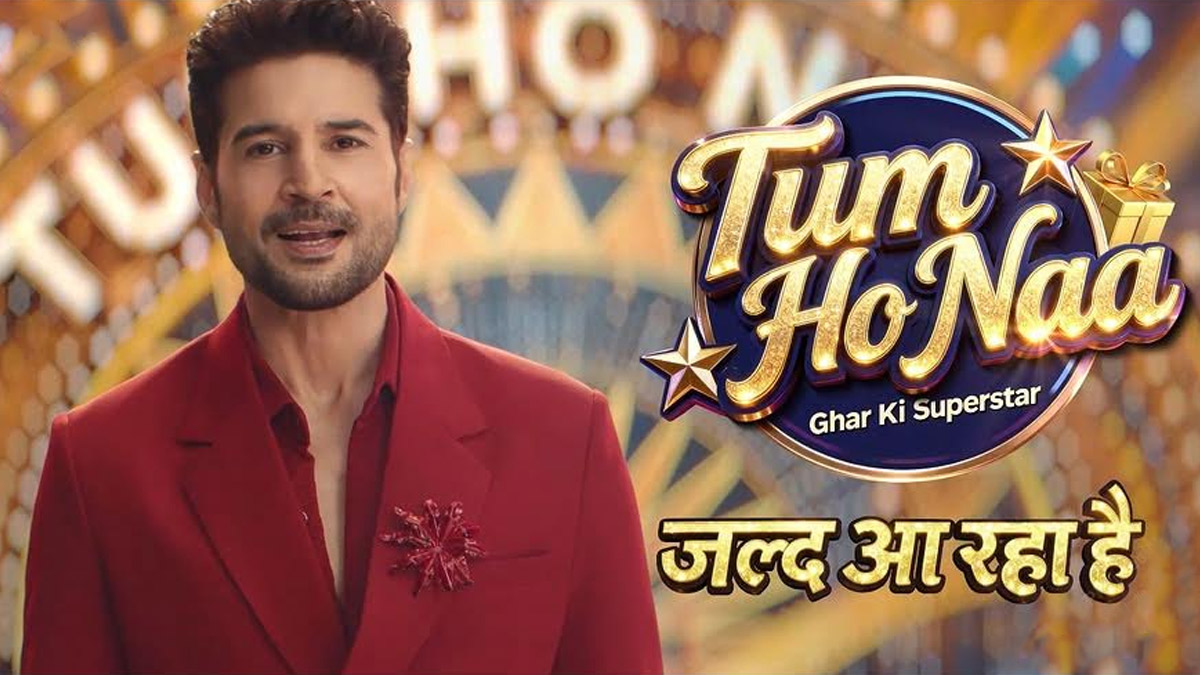
MUMBAI: Lights, camera… connection because this time, the game isn’t just about winning, it’s about who’s with you. Sony Pictures Networks India is gearing up to launch a new reality game show, Tum Ho Naa, expanding its unscripted slate with a format that promises both emotion and engagement.
The show will premiere soon on Sony Entertainment Television and stream on Sony LIV, with Rajeev Khandelwal stepping in as host. Known for his measured screen presence and selective choices, Khandelwal’s return to television adds a layer of familiarity and credibility to the upcoming format.
While specific details of the gameplay remain under wraps, the positioning suggests a reality format that leans as much on emotional resonance as it does on competition, an increasingly popular blend in Indian television, where audiences are gravitating towards content that offers both stakes and storytelling.
Khandelwal, reflecting on his return, noted that his choices have often been guided by instinct rather than convention, describing Tum Ho Naa as a project that feels “close to the heart”. His association also signals Sony’s continued focus on anchoring new formats with recognisable faces who bring both relatability and depth.
The launch comes at a time when broadcasters are doubling down on original non-fiction formats to drive appointment viewing, even as digital platforms expand parallel reach. By placing the show across both linear television and OTT, Sony appears to be aiming for a dual-audience strategy capturing traditional viewers while engaging digital-first consumers.
As the countdown to premiere begins, Tum Ho Naa positions itself not just as another game show, but as a reminder that sometimes, the biggest prize on screen isn’t the jackpot, it’s the journey shared along the way.






