GECs
Consumption & disruption: The Emerald Media mantra

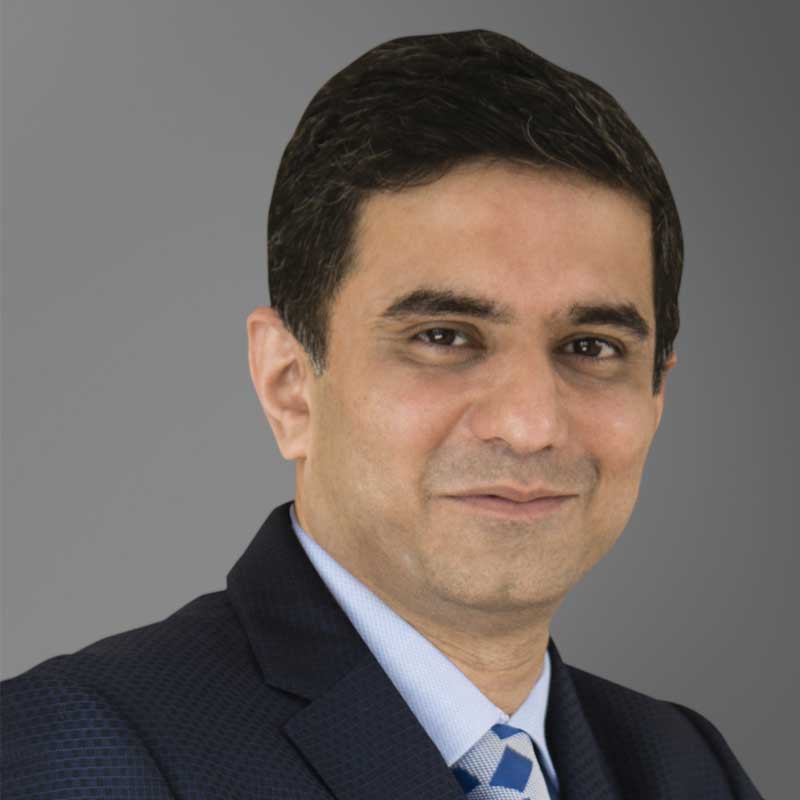
MUMBAI: When Rajesh Kamat makes a move, you take notice. His decision to set foot in the private equity world in 2011 with The Chernin Group’s CA Media after a blistering three-year run as Viacom18 COO and Colors CEO left India’s media and entertainment ecosystem intrigued. Cut to 2018, Kamat is staying true to form – making plays that continue to invoke as much curiosity, surprise and awe. Now of course he’s teamed up with global private equity giant KKR to make pan-Asia media tech investments as part of a $300 million fund that was set up in 2016. In a sense, he will have a say in how the existing and future media and entertainment landscape takes shape.
The fund – Emerald Media – has Kamat and former Star Group CEO Paul Aiello as managing directors based out of Singapore. The original thesis behind setting up Emerald was to help companies scale, take their business global, open up new doors for them and transform them from start-ups to organisations.
Typically, Emerald invests at an early growth stage in companies with proven business models that generate around $8-10 million in revenues. The objective is to pump in $20-$75 million in each asset, picking up larger stakes if not a controlling stake.

Since inception, they’ve invested in four businesses in India (Yupp TV, Amagi, Cosmos-Maya, Global Sports Commerce) and one in Thailand (aCommerce). There is a fundamental hypothesis the team follows for all their investments. In a sense, it can be described as the Emerald Media mantra, wherein bets are made based on where the consumption (B2C) and disruption (B2B) is bound to take place.
“It’s a niche area they are helping to build rather than entering high-end categories like GEC or sports. They are helping turn around companies with high potential. Their current strategy seems to be content driven and they are supporting underdogs in the industry who need the most support,” says an analyst from a top management consultancy firm.
Team Emerald also manages CA Media’s assets, which include the likes of Endemol Shine India, Graphic India, Fluence among others. However, there is a key distinction in the investment philosophy between the two funds. The investments made by CA Media weren’t restricted to a particular ticket size. Also, the fund collaborated with mostly IP-based content companies. Emerald on the other hand has invested in mostly media tech businesses barring the exception of Cosmos-Maya.
“Our involvement in all assets is somewhere between day-to-day management and just being board members. We neither restrict ourselves to quarterly updates nor believe in intruding on a daily basis. We are far more involved because there are lots of areas where we can add value, which promoters of rapidly growing companies appreciate,” says Kamat’s man in India Emerlad Media executive director & investment head Vivek Raicha.
He is responsible for deal scouring – through his proprietary network or bankers – negotiation, execution and overall supervision of the asset, which includes its monitoring but more importantly value creation.
It is needless to say there is tremendous synergy between Emerald’s integrated basket of assets, almost as if by design Kamat & Co have created a network of organisations. Perhaps it is the by-product of seeking comfort under the umbrella of a common shareholder. What makes the nature of Emerald’s investment solid and sensible is the fact that all these platforms are part of a digital content value chain.
For instance, Yupp TV is focused on the diaspora audience, while Cosmos-Maya is a kids’ animation company, which services broadcasters and streaming players. So, when Cosmos makes content, it gives exploitation rights to its broadcast partners for the India territory while retaining international rights. In Yupp TV, there is a platform, which caters to an outside of India audience.
Emerald got Cosmos to create three linear channels for Wow Kidz, their own brand, and launch it on Yupp TV on a subscription basis, handing them ready access to the latter’s customer base across the world in one fell stroke.
In return, Yupp TV got content that they'd have paid a lot of money for or may not have had in the first place. Such an arrangement enabled them to offer the likes of Motu Patlu to an audience outside India.
Another example of such symbiosis is Yupp TV and Amagi. Yupp’s live channels and catch-up content contain ads that are of no use to the diaspora audience. Inserting ads on an OTT platform is tricky business. The option of doing a pre-roll exists but it is fairly complex to put a mid-roll or replace an ad.
Amagi has the technology to do this job, a bit like geo-targeting. So Yupp TV uses Amagi's technology to substitute the Indian ads with those that are locally relevant.
Similarly, Global Sports Commerce (GSC) and YuppTV can jointly acquire sports rights. The possibilities are endless.
So how does Emerald invest in assets?
That boils down to the nature of the deal. In some cases it has invested the entire capital in one go, while in others it has resorted to a tranche-based funding. Injection of funds into a company depends on the requirement, with no thumb rule at play.
However, multiple boxes need to be ticked before a target company is zeroed in on as an investment option. The most important thing is the person who's running that business. “People make businesses, businesses don't make people,” Raicha quips.
Given that the investor is bound to exit at some stage, it is imperative that there has to be a meeting of minds with the promoters and management with regards to the journey and vision.
Apart from a company’s year-on-year growth, the Emerald execs also factor in how the company has insulated itself from risk – competition and general ecosystem changes that take place.
Risk assessment takes both internal and external factors into account. Return and risk go hand in hand, which is why Emerald conducts an exhaustive analysis before putting pen to paper.
Their objective is to invest as much capital as the company requires to break-even. That's the amount of capital that goes in primary. If that primary capital does not get them the desired stake, and then they approach the existing investors, some of whom are willing to sell. And that’s how a ticket size is arrived at.
“Content is a good place to be right now. So companies that create, distribute and monetize content are all going important stakeholders in the future of media,” media and entertainment advisory services partner Ernst & Young Ashish Pherwani.
On an average, Emerald looks at 500 companies a year across Asia, ultimately plonking its cash in couple of them.
“You have to add value. Return only comes from value creation,” Raicha adds.
From devising strategy to unlocking global opportunities, Emerald has walked the talk when it comes to creating value for its investees. Ushering in a consolidation strategy for Yupp TV, creating a winning culture at Cosmo-Maya, introducing GSC to business prospects across the world, and being instrumental in bringing Colors on board for Amagi are some examples.
Raicha believes mobile-based online gaming will witness the next consumption wave. He rues the dearth of Indian gaming companies of scale at this point in time. While digital content remains an area of focus, Emerald hasn’t yet been being able to pick the right collaborator to go with. Another space that excites them is B2B tech.
The telco, media and tech convergence has served as a catalyst in private equity funds looking more closely at media and entertainment companies, a departure from the previous years. TPG Growth’s $100 million bet on BookMyShow is a case in point.
Having invested $200 million, Emerald has more $100 million in the bank.
A challenge on hand is exiting from his earlier investments through CA Media. Talks are on with Indian and international megacorps. Kamat, Aiello and Raicha are quite sanguine that they will get the right valuations and will post a healthy return on the fund.
Even as all this is going on, the team has already got its eyes on another fund, thanks to the stellar rep they have acquired over the past decade.
Very few understand the media and entertainment business like Kamat. So, the nature of his next moves could signal a larger industry trend. And when that happens, it is bound to invoke as much curiosity, surprise and awe from his peers as always.






MUMBAI: Lights, camera… connection because this time, the game isn’t just about winning, it’s about who’s with you. Sony Pictures Networks India is gearing up to launch a new reality game show, Tum Ho Naa, expanding its unscripted slate with a format that promises both emotion and engagement.
The show will premiere soon on Sony Entertainment Television and stream on Sony LIV, with Rajeev Khandelwal stepping in as host. Known for his measured screen presence and selective choices, Khandelwal’s return to television adds a layer of familiarity and credibility to the upcoming format.
While specific details of the gameplay remain under wraps, the positioning suggests a reality format that leans as much on emotional resonance as it does on competition, an increasingly popular blend in Indian television, where audiences are gravitating towards content that offers both stakes and storytelling.
Khandelwal, reflecting on his return, noted that his choices have often been guided by instinct rather than convention, describing Tum Ho Naa as a project that feels “close to the heart”. His association also signals Sony’s continued focus on anchoring new formats with recognisable faces who bring both relatability and depth.
The launch comes at a time when broadcasters are doubling down on original non-fiction formats to drive appointment viewing, even as digital platforms expand parallel reach. By placing the show across both linear television and OTT, Sony appears to be aiming for a dual-audience strategy capturing traditional viewers while engaging digital-first consumers.
As the countdown to premiere begins, Tum Ho Naa positions itself not just as another game show, but as a reminder that sometimes, the biggest prize on screen isn’t the jackpot, it’s the journey shared along the way.







