Cable TV
Consumer fail to get adequate information on packages and so any agreement remains unilateral, says Chrome study


New Delhi, 28 March: Even when the third phase of digitization of cable television is underway and the country is proceeding towards the final phase, the average consumer remains unaware of answers to simple questions that can be provided by the local distributor/direct-to-home operator or cable operator.
Thus, a bilateral transaction remains unilateral as consumers pay for a certain package consisting of a series of channels but are not made aware when a package is revised, leaving them to continue paying the same amount, regardless of whether the revised price of the package is lesser.
A Chrome DM report says that “the broadcasters and consumers are both left in the dark. Similarly, consumers may not necessarily require all the channels provided in the package, and would be watching channels worth less than the amount they are paying. For example, they may pay Rs. 400 per month, whereby their content affinity may be towards channels that cost only Rs. 250”.

In fact, the Report says even basic questions remain unanswered despite the Telecom Regulatory Authority of India have introduced the e-CAF (Consumer Application Forms) to increase the efficiency in the system, and giving it priority by advertising on all TV channels.
For example, few consumes know what DTH platform they use at home, the package they are subscribed to, or the channels available on those packages, as they accept a lucrative offer that comes their way and accept it without asking questions.
The Report says these basic questions give rise to huge discrepancies on-ground, impacting the stakeholders in the scenario, in various ways; namely the government, broadcasters, cable operators and consumers.
Interestingly, the study found that consumers are under the misconception that à la carte is only for sports channels. And though there may be curious consumers who visit respective websites to get information, they find that these may or may not be updated.
Thus, the notion that the flow of information should be two-way is undermined as the key stakeholders – the consumers – remain uninformed.
“The total package implementation that collectively took place in Phase I and Phase II is 16 per cent, across the digital universe, with a subscriber base of 2,90,14,214. Despite Phase I and Phase II being implemented in November, 2012 and December, 2013, respectively, the package implementation in Phase I has only been 24 per cent and 13 per cent in Phase II,” the study claims.
|
PHASE
|
PACKAGES IMPLEMENTED
|
PACKAGES NOT IMPLEMENTED
|
GRAND TOTAL
|
% OF IMPLEMENTATION
|
|
Phase 1
|
20
|
63
|
83
|
24%
|
|
Phase 2
|
32
|
213
|
245
|
13%
|
|
Grand Total
|
52
|
276
|
328
|
16%
|
“Discrepancies have definitely arisen from the problem of package implementation. The overall scenario requires much more clarity and I always believe that this is purely contingent on basics. For instance, a leading DTH provider launches a brilliant mobile application meant to be paired with a certain set-top box – however, they go wrong by not seeding the new boxes before launching the application itself! Transparency in the system facilitates concrete addressability. If there were no electricity metres and individuals were to pay electricity bills based purely on negotiations, havoc would ensue.”
The primary data Chrome DM collected from the ground showed some grave discrepancies. In two areas in Kolkata (Rajabazar and Radhamadhav Dutta, Garden Lane), two respondents in the respective areas are paying two separate prices to their cable operators (Rs 330 and Rs 350 respectively), whereas the former is receiving only 228 available channels and the latter is receiving 342. The respondents are not even provided with receipts.
Chrome Data Analytics & Media founder and CEO Pankaj Krishna said that “the basics should be very carefully focused upon in order to create a strong and successful foundation upon which the rest of the infrastructure can be implemented.”
The lack of awareness of the end-consumers and the gravity of this issue as a whole has to be addressed as early as possible if digital addressable system has to succeed, says the study.



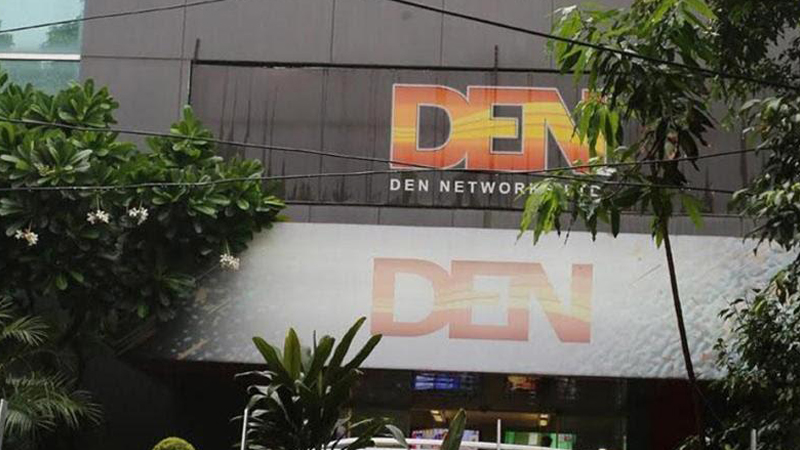
MUMBAI: When margins wobble, liquidity talks and in Q3 FY25-26, cash did most of the talking. Den Networks Limited closed the December quarter with consolidated revenue of Rs.251 crore, marginally higher than the previous quarter but down 4 per cent year-on-year, even as profitability stayed resilient on the back of strong cash reserves and disciplined cost control.
Subscription income softened to Rs.98 crore, slipping 3 per cent sequentially and 14 per cent from last year, while placement and marketing income offered some cheer, rising 15 per cent quarter-on-quarter to Rs.148 crore. Total costs climbed faster than revenue, up 7 per cent QoQ to Rs.238 crore, driven largely by higher content costs and operating expenses. As a result, EBITDA dropped sharply to Rs.13 crore from Rs.19 crore in Q2 and Rs.28 crore a year ago, pulling margins down to 5 per cent.
Yet, the bottom line refused to blink. Profit after tax stood at Rs.40 crore, up 15 per cent sequentially and only marginally lower than last year’s Rs.42 crore. A healthy Rs.57 crore in other income helped cushion operating pressure, keeping profit before tax at Rs.48 crore, broadly stable quarter-on-quarter despite the tougher cost environment.
The real headline-grabber, however, sits on the balance sheet. The company remains debt-free, with cash and cash equivalents swelling to Rs.3,279 crore as of December 31, 2025. Net worth rose to Rs.3,748 crore, while online collections accounted for 97 per cent of total receipts, underscoring strong cash discipline across operations, including subsidiaries.
In short, while Q3 showed signs of operating strain, the financial backbone remains solid. With zero gross debt, steady profits and a formidable cash war chest, the company enters the next quarter with flexibility firmly on its side proving that in uncertain markets, balance sheet strength can be the best growth strategy.