News Headline
Concerned at slow growth of broadband in India, TRAI wants stakeholders to give suggestions

NEW DELHI: Concerned that only 60.87 million broadband connections had been achieved against a target of 175 million connections by 2017, the Telecom Regulatory Authority of India (TRAI) has issued a Consultation Paper to probe the reasons for this slow growth.
One of the questions posed in the 78-page paper is to know the specific reasons that Internet Service providers are proactively not connecting with the National Internet Exchange of India (NIXI) set up in 2002 and what measures are required to achieve this.

TRAI wants to know if the hosting of content within the country helps in reduction of the cost of broadband to a subscriber and what measures are required to encourage content service providers to host content in the data centre situated within India.
It has also sought to know if public sector undertakings are ideal choices for implementing the National Optical Fibre Network (NOFN) project.
The regulator has asked the stakeholders to send their comments 14 October and counter comments by 21 October. TRAI has also said that no further extension will be given.
In its initial remarks, the Paper noted that the country is nowhere near meeting the target for a service which is considered almost a basic necessity in many developed countries. Broadband is helping to deliver a wide range of services, from services directly related to the Millennium Development Goals set by the United Nations, to services in support of broader citizen participation or services leveraged across different sectors to bring more people into the formal economy. Therefore there is an urgent need to review the present policies and its implementation initiated to build infrastructure required for penetration of broadband in the country.
The objective of the Paper is to discuss issues contributing to the poor broadband penetration in India and solicit stakeholders’ views on actions required to be taken both by the Government and the service providers to accelerate the proliferation and use of broadband in the country.
It says India has the intrinsic strengths for an Internet transformation, but concerted efforts are required to address key gaps in the Internet ecosystem.
Consumers, entrepreneurs, enterprises and the Government can play a pivotal role in building a strong Internet ecosystem driven by the country’s young Internet-savvy population and strong local consumption, entrepreneurship and innovation, and a large pool of technically trained human capital. Identification of the impediments to expansion of this ecosystem and addressing these impediments to create an environment to encourage broadband growth is the need of the hour.
The Digital India project aims to offer a one-stop shop for Government services which would use the mobile phone as the backbone for its delivery mechanism. The Rs 1,13,000 crore initiative seeks to transform India into a connected knowledge economy offering world class services at the click of a mouse. Plans to digitally connect the country will be supported by modules on digital literacy in regional languages which the Government plans to run in the next few years.
But to be successful, a broadband policy needs to reflect the requirements of different communities across the country. This means taking a holistic approach and leveraging the opportunities provided by wireline and wireless technology in each part of the network i.e. backbone, backhaul and local access. The implementation of broadband plans and strategies needs to be monitored. Monitoring should be an integral part of broadband plans and strategies – providing an information base for the initial development of plans and strategies as well as for checking the progress of particular policies and programs, and for the evaluation and reassessment of priorities and strategies.
The regulator wants to know what immediate measures are required to promote wireline technologies in access networks and what is the cost per line for various wireline technologies and how can this cost be minimised.
What are the impediments to the deployment of wireless technologies in the access network and how these deployments can be made faster, it wants to know.
TRAI recently released recommendations on Microwave backhaul and it wants to know if some issues were left out to ensure availability of sufficient Microwave backhaul capacity for the growth of broadband in the country.
The pricing of Domestic Leased Circuits (DLC) had been reviewed in July 2014. Apart from pricing, TRAI has asked if there are any other issues which can improve availability of DLC.
Should the awarding of EPC turnkey contracts to private sector parties through International Competitive Bidding (ICB) be considered for the NOFN project, the regulator wants to know.
It also asked if there are any ways in which infrastructure development costs can be reduced and is it possible to piggyback on the existing private sector access networks so as to minimize costs in reaching remote rural locations.
It wonders if the private sector can do something to reduce delivery costs.
It wants to know the major issues in obtaining right of way for laying optical fibre and the applicable charges/ constraints imposed by various bodies who grant permission of right of way.
It wants to know if the Government should consider framing guidelines to mandate compulsory deployment of duct space for fibre/ telecommunications cables and space for telecommunication towers in all major physical infrastructure construction projects such as building or upgrading highways, inner-city metros, railways or sewer networks.
Do cable operators face impediments to the provision of Broadband by them, it wants to know.
TRAI has asked what measures are required to reduce the cost and create a proper eco system for deployment of FTTH in the access network.
It wonders if there are any regulatory issues in providing internet facility through Wi-Fi Hotspots and the business model for these.
What other spectrum bands which can be unlicensed for usage of Wi-Fi technology or any other technology for provision of broadband, it seeks to know, also wondering how much spectrum will be required in the immediate future and in the long term to meet the target of broadband penetration and what initiatives are required to make available the required spectrum.
How can Government agencies be encouraged to surrender spectrum occupied by them in IMT bands and what should be the time frame for auctioning the spectrum in 700 MHz band, it asks.






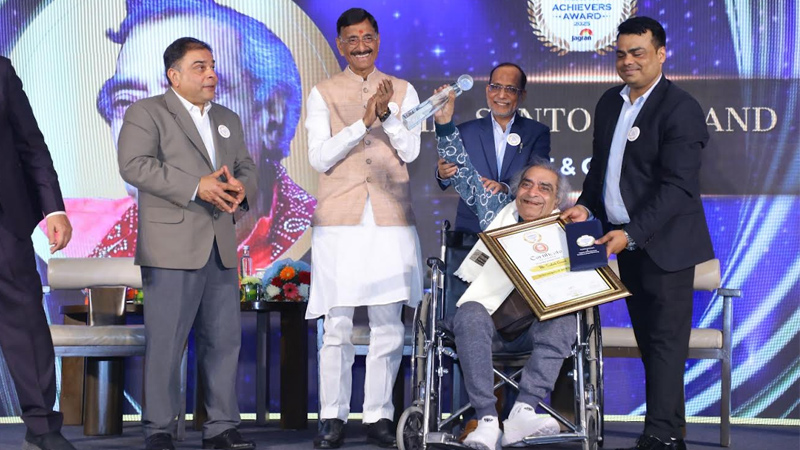
NEW DELHI: Hamdard Laboratories gathered a cross-section of India’s achievers in New Delhi on Friday, handing out the Hakeem Abdul Hameed Excellence Awards to figures who have left their mark across healthcare, education, sport, public service and the arts.
The ceremony, attended by minister of state for defence Sanjay Seth and senior officials from the ministry of Ayush, celebrated individuals whose work blends professional success with a sense of public purpose. It was as much a roll call of achievement as it was a reminder that influence is not measured only in profits or podiums, but in people reached and lives improved.
Among the headline awardees was Alakh Pandey, founder and chief executive of PhysicsWallah, recognised for turning affordable digital learning into a mass movement. On the sporting front, Arjuna Awardee and kabaddi player Sakshi Puniya was honoured for her contribution to the game and for pushing women’s participation onto bigger stages.
The cultural spotlight fell on veteran lyricist and poet Santosh Anand, whose songs have echoed across generations of Hindi cinema. At 97, Anand accepted the honour with characteristic humility, reflecting on a life shaped by perseverance and hope.
Healthcare honours spanned both modern and traditional systems. Manoj N. Nesari was recognised for strengthening Ayurveda’s place in national and global health frameworks. Padma shri Mohammed Abdul Waheed was honoured for his research-backed work in Unani medicine, while padma shri Mohsin Wali received recognition for his long-standing contribution to patient-centred care.
Education and social development also featured prominently. Padma shri Zahir Ishaq Kazi was honoured for decades of work in education, while former Meghalaya superintendent of Police T. C. Chacko was recognised for public service. Goonj founder Anshu Gupta received an award for his dignity-centred rural development initiatives, and the Hunar Shakti Foundation was honoured for empowering women and young girls through skill development.
The Lifetime Achievement Award went to former IAS officer Shailaja Chandra for her long career in public healthcare and governance, particularly in the traditional systems under Ayush.
Speaking at the event, Hamdard chairman Abdul Majeed said the awards were a tribute to those who combine excellence with empathy. “These awardees reflect Hakeem Sahib’s belief that healthcare, education and public service must ultimately serve humanity,” he said.
Minister Seth struck a forward-looking note, saying India’s young population gives the country a unique opportunity to become a global destination for learning, health and wellness by 2047.
The ceremony also featured the trailer launch of Unani Ki Kahaani, an upcoming documentary starring actor Jim Sarbh, set to premiere on Discovery on 11 February.
Instituted in memory of Unani scholar and educationist Hakeem Abdul Hameed, the awards have grown into a national platform that celebrates those building a more inclusive and resilient India. For one evening at least, the spotlight was not just on success, but on service with substance.






