News Headline
Community Radio Stations to get extension for up to 5 years at a time

NEW DELHI: Even as the term of permission for community radio stations (CRS) should continue to be five years, the extension should also be for five years at a time.
In recommendations made relating to community radio stations in the country, the Telecom Regulatory Authority of India (TRAI) has said CRS seeking extension should submit an application and verification to the terms and conditions of the permission in the fourth year of operation.

CRSs should be allowed to broadcast news and current affairs content, sourced exclusively from AIR, in its original form or translated into the local language/ dialect. It will be the responsibility of the CRS permission holder to ensure that the news is not distorted during translation.
CRSs should be allowed to take advertisements from other sources to encourage self-sustainability and enhance its relevance to the community, and the stipulation that Directorate of Advertising and Visual Publicity approved rates are their lowest rates and cannot be offered to any other agency should be relaxed.
The Information and Broadcasting Ministry should develop a performance evaluation format in consultation with the stakeholders and place it in the public domain.
CRSs applying for extension beyond 10 years should submit the performance evaluation report, duly filled in, along with their application one year before end of the permission period. The application for extension will be considered along with other fresh applications, if any.
The same procedure will be adopted for all applications for extension beyond 10 years of operation.
The duration of advertisement on a CRS should continue to be five minutes per hour.
The Ministry should establish an online ‘single window’ system that will reengineer and integrate the entire process from the stage of filing application with MIB; grant of the Wireless Operating Licence (WOL) by WPC and signing of the GOPA. The online system must provide feedback on stage and status of the application in accordance with the time-lines already prescribed by the Ministry.
The National Disaster Management Authority in consultation with the I& B Ministry and WPC establish detailed guidelines for use of CRSs in disaster management operations. The guidelines should include the procedure to be followed in case relocation of an existing CRS is required or for the establishment of a new CRS in the disaster affected region.
As on 1 July 2014, 200 Grant of Permission Agreements (GOPA) have been signed. Of these 170 CRSs are operational 101 CRSs of which are run by educational institutes and universities, six by Krishi Vigyan Kendras and the rest 63 by civil society organisations. Currently, CRSs in rural and remote areas are generally being run by NGOs and campus CRSs by educational institutions mostly in urban and semi-urban areas.
The TRAI recommendations are in response to a letter sent by the government on 8 January. As validity of GOPA for some of the CRSs had already expired on completion of five years, TRAI suggested some interim measures on 23 January. TRAI also issued a Consultation Paper on the subject on 21 May.
The government announced its policy for the grant of permission for setting up of CRS in December 2002. Under those guidelines well established educational institutions, including IITs and IIMs, were permitted to setup CRSs.
In December 2006, the government revised the policy for CRSs, bringing non-profit community based organisations, apart from other educational institutes, within its ambit. Non-profit organisations like civil society and voluntary organisations, state agriculture universities (SAU), Indian council of agricultural research (ICAR) institutions, Krishi Vigyan Kendras, registered societies and autonomous bodies and public trusts registered under Societies Act or any other such Act relevant for the purpose, were permitted to operate CRSs.
The period of permission was increased three years to five years. All the operational CRS permission holders under the 2002 guidelines were permitted to migrate to the new policy regime without any financial implications.






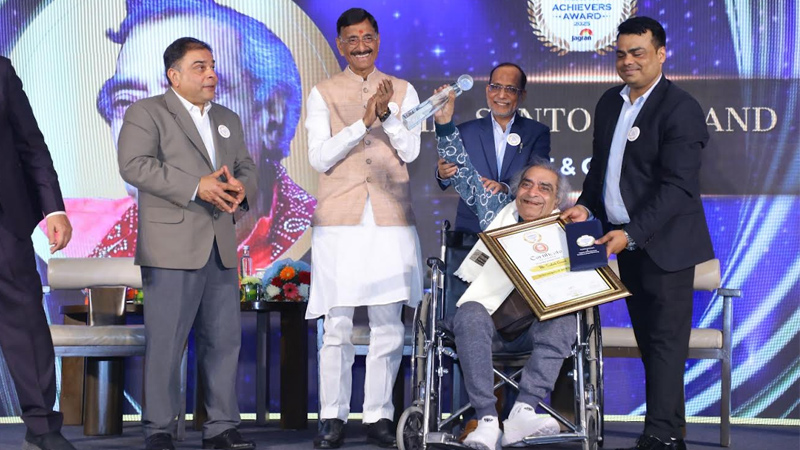
NEW DELHI: Hamdard Laboratories gathered a cross-section of India’s achievers in New Delhi on Friday, handing out the Hakeem Abdul Hameed Excellence Awards to figures who have left their mark across healthcare, education, sport, public service and the arts.
The ceremony, attended by minister of state for defence Sanjay Seth and senior officials from the ministry of Ayush, celebrated individuals whose work blends professional success with a sense of public purpose. It was as much a roll call of achievement as it was a reminder that influence is not measured only in profits or podiums, but in people reached and lives improved.
Among the headline awardees was Alakh Pandey, founder and chief executive of PhysicsWallah, recognised for turning affordable digital learning into a mass movement. On the sporting front, Arjuna Awardee and kabaddi player Sakshi Puniya was honoured for her contribution to the game and for pushing women’s participation onto bigger stages.
The cultural spotlight fell on veteran lyricist and poet Santosh Anand, whose songs have echoed across generations of Hindi cinema. At 97, Anand accepted the honour with characteristic humility, reflecting on a life shaped by perseverance and hope.
Healthcare honours spanned both modern and traditional systems. Manoj N. Nesari was recognised for strengthening Ayurveda’s place in national and global health frameworks. Padma shri Mohammed Abdul Waheed was honoured for his research-backed work in Unani medicine, while padma shri Mohsin Wali received recognition for his long-standing contribution to patient-centred care.
Education and social development also featured prominently. Padma shri Zahir Ishaq Kazi was honoured for decades of work in education, while former Meghalaya superintendent of Police T. C. Chacko was recognised for public service. Goonj founder Anshu Gupta received an award for his dignity-centred rural development initiatives, and the Hunar Shakti Foundation was honoured for empowering women and young girls through skill development.
The Lifetime Achievement Award went to former IAS officer Shailaja Chandra for her long career in public healthcare and governance, particularly in the traditional systems under Ayush.
Speaking at the event, Hamdard chairman Abdul Majeed said the awards were a tribute to those who combine excellence with empathy. “These awardees reflect Hakeem Sahib’s belief that healthcare, education and public service must ultimately serve humanity,” he said.
Minister Seth struck a forward-looking note, saying India’s young population gives the country a unique opportunity to become a global destination for learning, health and wellness by 2047.
The ceremony also featured the trailer launch of Unani Ki Kahaani, an upcoming documentary starring actor Jim Sarbh, set to premiere on Discovery on 11 February.
Instituted in memory of Unani scholar and educationist Hakeem Abdul Hameed, the awards have grown into a national platform that celebrates those building a more inclusive and resilient India. For one evening at least, the spotlight was not just on success, but on service with substance.






