News Broadcasting
Colour TV clocks polychromatic half century


MUMBAI: Colour TV turned 50 on Thursday.
It was on 25 March, 1954, that the Radio Corporation of America’s (RCA) plant in Bloomington, Indiana, produced the first CT-100, a $1,000 set (approaching $7,000 in today’s dollars) that historians call the first mass production color TV. The 160-pound unit had 1,012 parts, 36 vacuum tubes and 150 feet of wire.
Called The Merrill, the model hit US stores in April 1954. Only about 5,000 of these 12-inch sets were manufactured however. This was because colour took its time to spread its reach, high cost the culprit. Most Americans saw the Kennedy assassination in 1963 in black and white. It was only in 1967 that colour outsold black-and-white for the first time – with more than 5.5 million sets sold. By 1973, more than half of all American households had colour.

In India, colour came into television with the Asian Games in 1982. Today, about 32 million households in the country have colour TV sets, while the majority of 56 million households still has black and white sets. Last year, a total of seven million TV sets were sold, of which approximately seven per cent were 21 inches or of the “flat” category. The television market, which has been growing at a rate of 11-13 per cent annually, is expected to maintain this momentum, if not up it.
According to reports, the domestic colour TV market has grown 50 per cent in three years from five million units in 2000, with the growth rate hovering around 10-15 per cent, as against five -10 per cent in China and three to five per cent in Europe and North America .
With flat screens and new technology making their way into Indian households, the high growth rates are likely to hold in the coming years. While the market size is miniscule compared to bigger markets like China and the US, it is fast catching up, reports indicate.
50 years ago, NBC made history with the first live broadcast in colour; the event – the Tournament of Roses Parade in California.
The first cartoons that aired in colour were The Flintstones and The Jetsons in 1962.
However many industry experts consider the first definitive colour show to be the western Bonanza., which started airing on NBC from 1959.
In India, colour TV bloomed with national colours with the New Delhi Asiad and flowered with the coming of the satellite age and multi-hued programming from overseas. Lowering import duties and relaxation of rules on the import of colour picture tubes added to the colour lure.
Today, consumer electronics companies (with the TV enjoying pride of place) vie for sponsorships of important events and sports on television.
With flat screens, HDTV and even better technology, television has a colourful future ahead.





News Broadcasting
Kamlesh Singh receives Haldi Ghati Award from MMCF
India Today Group editor honoured for three decades of journalism at Udaipur ceremony.
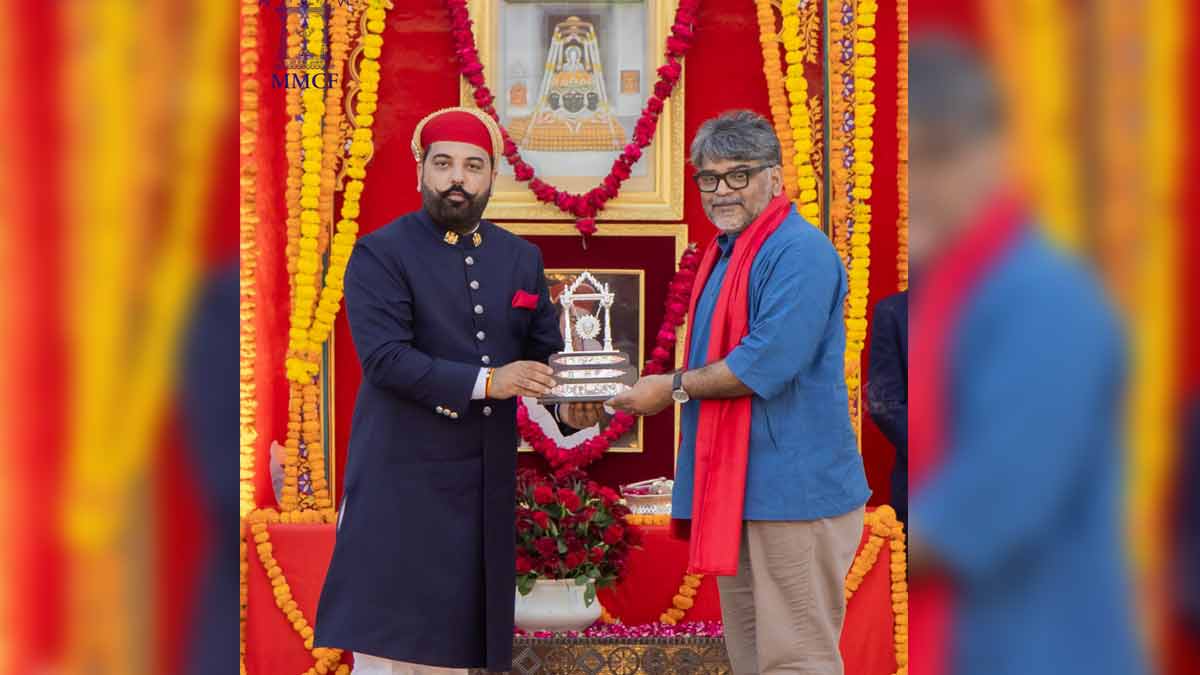
MUMBAI- Kamlesh Singh just turned a lifetime of sharp words into a shiny shield because when journalism wakes up a society, even the Maharana of Mewar wants to pin a medal on it.
The Maharana of Mewar Charitable Foundation (MMCF) conferred its prestigious Haldi Ghati Award on Kamlesh Singh, a senior editor at the India Today Group, during a ceremony in Udaipur on 15 March 2026. The national award, instituted in 1981-82, recognises “work of permanent value that initiates an awakening in society through the medium of journalism.”
Singh, who leads several editorial initiatives including Aaj Tak Radio, the Teen Taal community and The Lallantop, was presented the honour by Lakshyaraj Singh Mewar, Managing Trustee of MMCF. The citation highlighted his three decades of contributions to Indian media, innovations in digital journalism, mentoring young reporters, and his popular podcast persona “Tau” on Teen Taal, which fosters thoughtful public discourse.
The Haldi Ghati Award, named after the historic Battle of Haldighati symbolising valour and resilience, is one of four national awards given annually by MMCF. Past recipients include Tavleen Singh, Piyush Pandey and Raj Chengappa.
Other honourees this year included Padma Vibhushan Pt Hari Prasad Chaurasia, Vedamurti Devvrat Rekhe, Treeman of India Marimuthu Yoganathan, Vir Chakra Capt Rizwan Malik, and US-based researcher Molly Emma Aitken, who received the Colonel James Tod Award for contributions to understanding Mewar’s spirit and values.
In an era where headlines often shout louder than substance, the MMCF quietly reminded everyone that real journalism isn’t about noise, it’s about the quiet, persistent work that stirs society awake, one thoughtful story at a time.







