GECs
Colors bets on nostalgia for successful ‘Mahabharat’ run

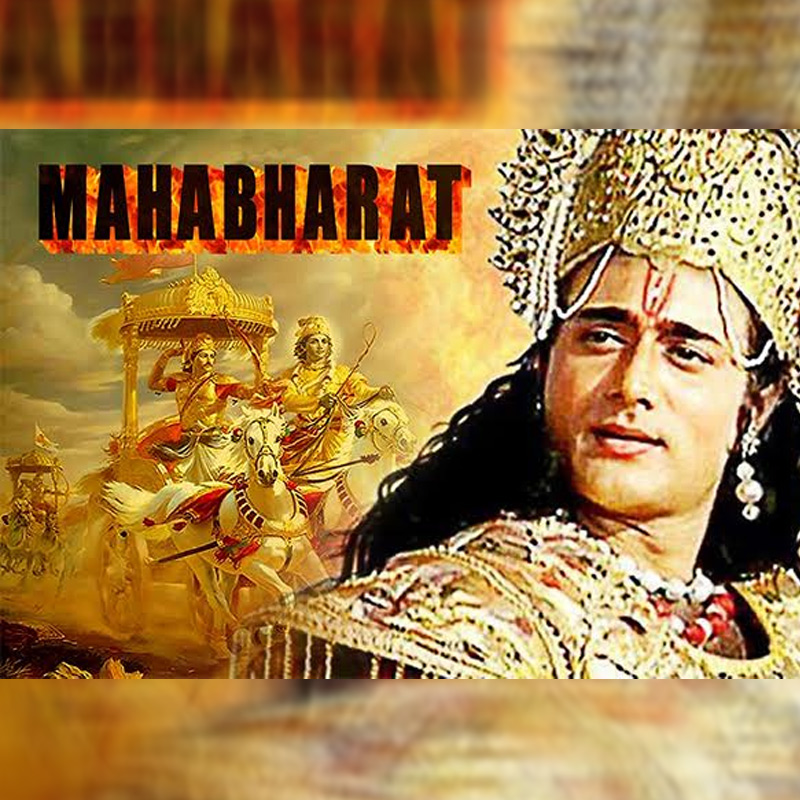
MUMBAI: Mythological shows have come to the rescue of GECs struggling with a dearth in original content caused by the ongoing lockdown restrictions. And it has been a gala time for epic shows like Mahabharat. After a successful run on DD Bharati, the 1980’s epic by BR Chopra Mahabharat has made its way to Colors from 4 May.
Viacom18 Hindi mass entertainment chief content officer Manisha Sharma says that during this pandemic, when people are seeking relief and hope, the epics are proving to be a perfect reminder of the golden times and a guiding light for how we wish to lead life from here on. The combination of purpose, nostalgia and the great narrative keeps bringing people back to watch these shows and take away something meaningful from it every time. Despite being produced almost three decades ago, the shows are backed by a strong storyline and impressive character outlines that make for a great entertainment proposition, regardless of the generation gap.
Is it a good business call to air the show right after its conclusion on DD? Sharma says that demographically the audience of Colors is different. “For the ones who have not seen the show or the episodes before, it’s like watching a new show or catching up on the missed episodes. Secondly, it is also liked by viewers who have watched the show before and want to relive the charm as it evokes a sense of nostalgia. Both these sets of viewers cut across NCCS, age, gender, and geography,” she says.

While DD aired the show at 9 pm, Colors chose to go with the 7 pm timeslot. The reason? Some of its best properties such as Balika Vadhu have performed well in the 6-8 pm slot.
Sharma says: “Keeping the viewer's interest in mind and without disturbing the FPC, we decided to air Mahabharat in the 7-9 pm slot.
With regard to the reach, there are a considerable number of consumers in the GEC universe who have not watched Mahabharat. That leaves us with enough scope to gain eyeballs.”
Sharma further highlights that mythological shows such as Mahabharat help to bolster television audiences and attract advertisers. Time spent on such shows has consistently been increasing and brands that are relevant in today’s context should use it as an opportunity to create awareness and salience. She says that products with huge demand and ample supply, such as FMCG and retailers, are the revenue generators and contributing largely to the ad inventory.
Digitalkites SVP Amit Lall says that mythological shows have been resonating with audiences for ages. It is only the distribution that has become robust now. “DD connects strongly with people from rural or tier II and III cities. On the satellite TV side, channels like Colors top your mind. Advertisers choose these channels because they have rural and urban audiences. Though 70 per cent of rural India viewers are DD-oriented, the other 30 per cent from these satellite channels play a big role. So, Colors is trying to capitalise that section of the society.”
For promoting the show, Sharma says they have been closely mapping consumer sentiments and media consumption habits to ensure effective and collaborative engagement. “Looking at the audience’s strong penchant for mythological shows, we have gone all out on digital and TV to promote the show. We are also doing programmatic buying on digital and tapping the platforms to target viewers,” she adds.
According to Lall, channels need to cater to their loyal audiences’ taste or else they may shift to other channels. Sharma says: “We are closely monitoring the trends and looking at offering an ideal balance of the kind of content, thus staying true to our DNA of offering the best variety content for our loyal viewers.”
Colors has also acquired the rights to air it in the Middle East. Colors ME has been telecasting Mahabharat from 6 May in a two-hour slot from 8-10 pm along with English subtitles. Back in India, Mahabharat will be aired only on Colors and won’t be seen on any other regional channels.
The channel also holds some strong mythological and historical properties such as Karamphal Data Shani and Chakravartin Ashoka Samrat. The channel is monitoring viewership trends and may take a call for an appropriate time to re-run these.






GECs
Sahara One reports financial results, notes director exit and business realignment
Muted revenues, steady expenses and strategic adjustments shape company’s current phase

MUMBAI: In a tale where the sands seem to be slipping faster than they can be gathered, Sahara One Media and Entertainment Limited has reported another quarter of wafer-thin income and widening losses, even as a boardroom exit adds to the unease.
The company informed the Bombay Stock Exchange that its board, in a meeting held on April 4, approved its unaudited financial results for the quarter ended September 30, 2025. The numbers paint a stark picture. Total income for the quarter stood at just Rs 0.13 lakh, unchanged sequentially and sharply down from Rs 0.26 lakh a year earlier.
Losses, meanwhile, deepened. The company posted a net loss of Rs 24.16 lakh for the quarter, compared to Rs 18.81 lakh in the June quarter and Rs 39.69 lakh in the same period last year. For the six months ended September 2025, the cumulative loss stood at Rs 39.69 lakh, while the full-year loss for FY25 was reported at Rs 60.72 lakh.
Expenses continued to outweigh income by a wide margin. Total expenses for the quarter came in at Rs 24.30 lakh, led by employee benefit costs of Rs 6.51 lakh and other expenses of Rs 17.78 lakh. Earnings per share remained in the red at Rs (0.11) for the quarter.
The balance sheet reflects a company with significant assets on paper but limited operational momentum. Total assets stood at Rs 23,065.57 lakh as of September 30, 2025, broadly unchanged from March 2025. Equity share capital remained steady at Rs 2,152.50 lakh, while total equity was reported at Rs 18,004.85 lakh.
Cash and cash equivalents saw a modest uptick to Rs 6.75 lakh from Rs 4.68 lakh earlier, supported by a positive operating cash flow of Rs 180.01 lakh for the period.
Yet, beneath these numbers lies a more complex narrative. The company’s auditors flagged their inability to obtain sufficient evidence to form a conclusion on the financial statements, citing lack of access to records. They also raised concerns over the company’s ability to continue as a going concern, pointing to insufficient funds, delayed recoveries, and stalled content investments.
Adding to the governance overhang, the company disclosed that Rana Zia has resigned as whole-time director, effective October 16, 2025, citing other professional commitments. The resignation, noted and accepted by the board, also brings an end to her role across company committees.
Regulatory pressures continue to loom large. The Securities and Exchange Board of India has already initiated penal actions for non-compliance with listing norms, with trading in the company’s shares remaining suspended. There is also a risk of promoter demat accounts being frozen.
Legacy legal issues remain unresolved. A substantial deposit of Rs 694,027.88 thousand linked to the long-running OFCD dispute involving Sahara group entities is still under the purview of the Supreme Court of India. Restrictions on asset disposal continue to weigh on the company’s financial flexibility.
Operationally, challenges persist across multiple fronts. Advances worth Rs 1,92,916 thousand given for film content remain stuck, with delays in project completion and uncertain recoverability. The company’s YouTube channel, despite being operational, has generated no revenue for over three years due to compliance lapses. In a further twist, management has indicated that revenues may have been fraudulently diverted through unauthorised changes to its AdSense account, with a police complaint in the works.
There are also missed revenue opportunities. Television content rights continue to be used by a related party despite the expiry of the licence agreement, with fresh negotiations still underway.
For now, Sahara One Media and Entertainment Limited appears caught between legacy disputes and present-day operational hurdles. As losses linger and governance questions mount, the road to recovery looks less like a sprint and more like a slow trudge through shifting sands.






