News Broadcasting
CNNMoney expands globally; Richard Quest named editor-at-large


MUMBAI: CNN Worldwide has expanded its CNNMoney brand internationally, across both TV and digital, to provide consumers with business and financial news and analysis. With the addition of staff in Hong Kong, New Delhi, London, and Dubai, CNNMoney will launch new franchises, series, features and reporting tailored directly to the regions and audiences it covers.
“By uniting our portfolio of US and international business reporting under the CNNMoney brand, we now offer an even more compelling product to globally-minded consumers hungry for a smart, accessible business and financial news experience – everywhere in the world,” said CNN International general manager and senior vice president Mike McCarthy.
The venture will tap the talents like Richard Quest, Nina dos Santos and Maggie Lake whose programs will represent CNNMoney on television. Quest will now serve as editor-at-large for CNNMoney and will pen a global daily newsletter “CNNMoney Presents: Quest Means Business,” timed to the open of the Asia markets.

“CNNMoney is an important and unique business offering for the Asia-Pacific market that already resonates with a core premium audience,” said CNN International advertising sales Asia Pacific VP Sunita Rajan. “This global expansion will amplify that engagement and attract a wider audience who want business at their fingertips. The synergy between the influential CNNMoney brand and journalistic excellence creates a compelling advertising proposition and something our clients are genuinely excited about.”
Coverage from CNNMoney will span Asia, Europe, the Middle East, Africa and Latin America. It will focus on global markets and the economy, business strategy, corporate leadership, global brands, business travel, lifestyle and luxury, as well as industries such as auto, energy and technology.
Also joining the CNNMoney roster are Andrew Stevens, Asia Pacific editor based in Hong Kong; John Defterios, Emerging Markets editor based in Abu Dhabi; Eleni Giokos, Africa business correspondent based in Johannesburg; and Samuel Burke, CNNMoney business correspondent based in New York. The multi-platform editorial teams will be led by Penny Manis, director of global business news programming based in New York, and CNNMoney International managing editor Mark Thompson, who is based in London.
The global initiative will also expand CNNMoney’s data-driven storytelling and digital war rooms to international bureau, arming reporters with the most advanced tools and analytics available to drive and react to stories in the global marketplace.






News Broadcasting
Kamlesh Singh receives Haldi Ghati Award from MMCF
India Today Group editor honoured for three decades of journalism at Udaipur ceremony.
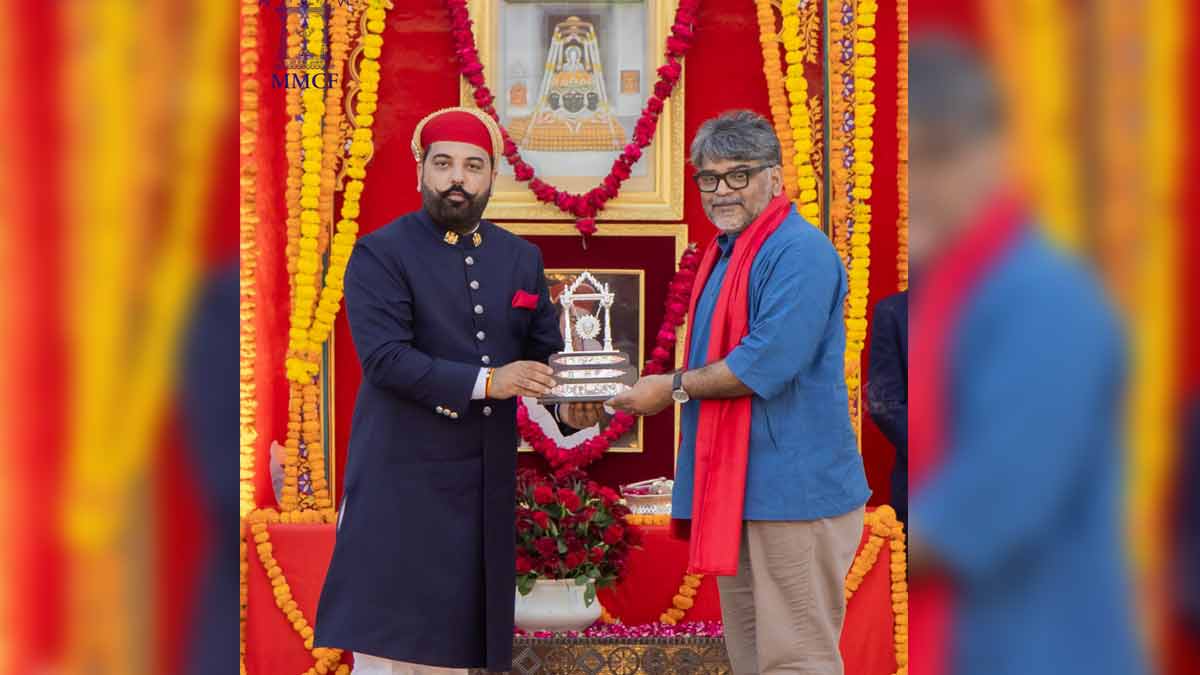
MUMBAI- Kamlesh Singh just turned a lifetime of sharp words into a shiny shield because when journalism wakes up a society, even the Maharana of Mewar wants to pin a medal on it.
The Maharana of Mewar Charitable Foundation (MMCF) conferred its prestigious Haldi Ghati Award on Kamlesh Singh, a senior editor at the India Today Group, during a ceremony in Udaipur on 15 March 2026. The national award, instituted in 1981-82, recognises “work of permanent value that initiates an awakening in society through the medium of journalism.”
Singh, who leads several editorial initiatives including Aaj Tak Radio, the Teen Taal community and The Lallantop, was presented the honour by Lakshyaraj Singh Mewar, Managing Trustee of MMCF. The citation highlighted his three decades of contributions to Indian media, innovations in digital journalism, mentoring young reporters, and his popular podcast persona “Tau” on Teen Taal, which fosters thoughtful public discourse.
The Haldi Ghati Award, named after the historic Battle of Haldighati symbolising valour and resilience, is one of four national awards given annually by MMCF. Past recipients include Tavleen Singh, Piyush Pandey and Raj Chengappa.
Other honourees this year included Padma Vibhushan Pt Hari Prasad Chaurasia, Vedamurti Devvrat Rekhe, Treeman of India Marimuthu Yoganathan, Vir Chakra Capt Rizwan Malik, and US-based researcher Molly Emma Aitken, who received the Colonel James Tod Award for contributions to understanding Mewar’s spirit and values.
In an era where headlines often shout louder than substance, the MMCF quietly reminded everyone that real journalism isn’t about noise, it’s about the quiet, persistent work that stirs society awake, one thoughtful story at a time.







