News Broadcasting
CNBC-TV18 sets up new show ‘Mad About Markets’ for young & budding investor


Mumbai: Business news channel CNBC-TV18 has launched a weekly show called “Mad About Markets” that will air every Wednesday at 3.30 p.m. The show will be hosted by the anchors Ritu Singh and Mangalam Maloo who will examine the markets, explain and analyse trends, and look at social media buzz on market-related chatter.
“Mad About Markets” will cater to millennial and GenZ viewers and keep them updated on the latest happenings in markets, business, technology by de-jargonising finance, demystifying investment trends, all in an easy to comprehend style and a snackable format, said the channel in a statement on Thursday.
Starting with ‘On Top of Mind!’ to share the headlines, the show will discuss all the ‘Yays’ and ‘Mehs’ of the top stories, and ‘The Bigger Q’ will identify the underlying trends of business and finance. Exciting segments like ‘Number Crunchhhhh’ will give an idea of how big the markets are in terms of numbers and size. ‘Quack Quack’ will explain how to read & comprehend the big news of the week, while ‘Newsreel’ will give the audience quick bytes on the stories of the week. In addition to this, the last segment ‘Viral’ will focus on what’s trending in the world of social media by sharing interesting reels and video clips.

“Mad About Markets is our latest offering that stays true to our promise of providing credible, actionable financial information. This show is unique as it attempts to connect a whole new generation of young retail investors to what matters in the markets. Sharp financial insights are delivered in a format and style that a younger demographic is familiar with,” said CNBC-TV18, managing editor, Shereen Bhan. “Over the past two decades, CNBC-TV18 has helped create a culture of equity investing and we hope our new programming line-up will resonate with future investors.”






News Broadcasting
News18 India launches Command Centre war explainer with Arya
New show shifts from debates to decoding global conflicts and impacts
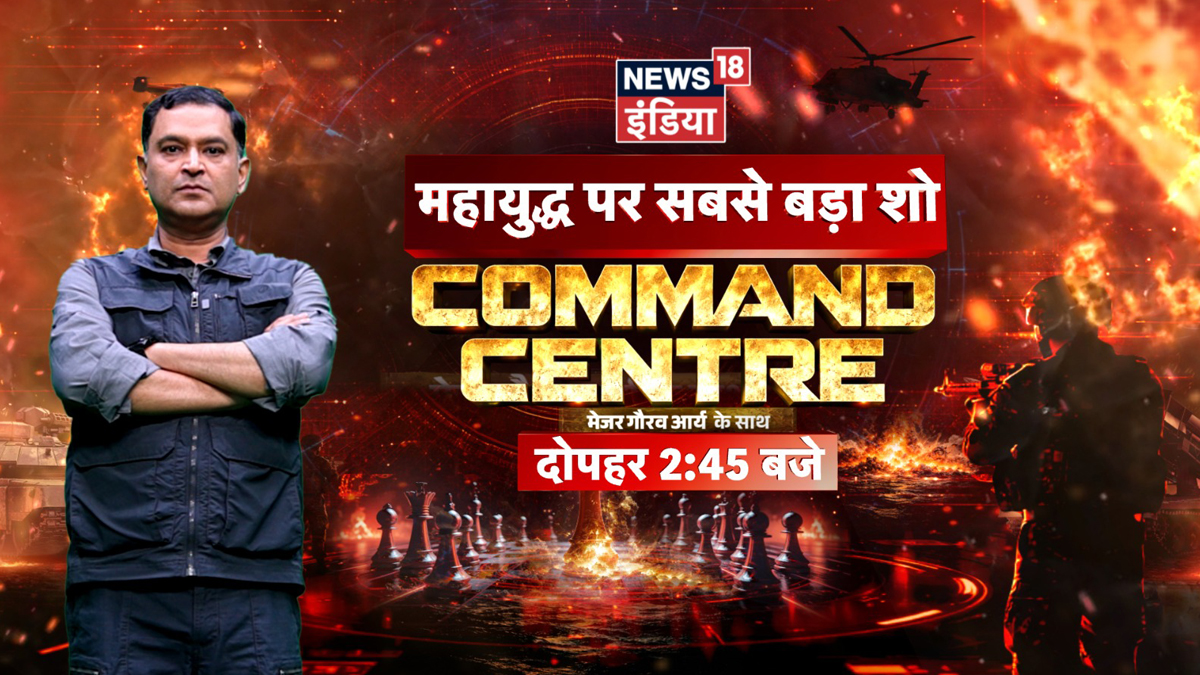
MUMBAI: News18 India has rolled out a new war-focused programme, Command Centre, featuring Gaurav Arya, as it looks to offer viewers a sharper, more grounded take on global conflicts amid rising tensions in West Asia.
Positioned as an “insider war room”, the show moves away from conventional panel debates and instead focuses on explaining military developments, decoding strategy and connecting global events to their everyday impact, from fuel prices to economic shifts.
The format leans heavily on visuals and data. The studio has been designed like a command hub, complete with large LED war maps, real-time graphics and an alert system to track developments as they unfold.
At the centre of it all is Arya, who brings his military background to simplify complex war strategies for viewers. His signature line, “Seedhi baat samjhiye”, anchors the show’s promise of clarity over noise.
News18 India managing editor Jyoti Kamal said, “Command Centre, featuring Major Gaurav Arya is designed to deliver accurate insights and a clear perspective on how evolving conflicts impact everyday life, from household budgets to national security. With expert voices analysing every development in real time, the show goes beyond headlines to decode what’s happening now, what it means, and what could come next.”
Echoing the intent, Gaurav Arya added, “In times of war, confusion is the biggest threat. With News18 India’s Command Centre, we are bringing viewers inside the war room, decoding strategies, tracking every escalation, and explaining, in the simplest terms, what it means for India and for every household. Seedhi baat samjhiye, this is where you understand not just what is happening, but what happens next.”
The weekday show will air in the afternoon slot and will also feature Gaurav Shukla, adding to its editorial depth.
With its mix of analysis, visuals and a clear focus on impact, the show reflects a broader shift in news consumption. Viewers are no longer just watching events unfold, they are looking to understand what those events mean for them.






