News Broadcasting
CNBC-TV18 marks fifth anniversary with Awaaz launch

 NEW DELHI: With an aim to empower the common man with business decisions and target regional and smaller advertiser-brands, the Raghav Bahl-promoted Televison Eighteen today formally launched the country’s “first consumer channel”, aptly called Awaaz.
“Our aim is to be India’s largest business and consumer network,” Television Eighteen CEO Haresh Chawla said at press conference to announce the launch of Awaaz, which was reported by indiantelevision.com earlier.
The new channel’s launch, unveiled at a function here attended by prime Minister Manmohan Singh, also marks the completion of five years of CNBC-TV18, country’s first full-fledged business news channel that caters mainly to the upper and upper middle class society.
Pointing out that the business new segment market is worth between Rs. 800 million to Rs. 1 billion — mostly dominated by CNBC TV18 at the moment — Chawla said that the launch of Awaaz and other business channels (from the NDTV stable; Zee Biz has already been launched) is likely to result in doubling of this market segment in a couple of years.

Though TV-18 has a slew of marketing and promotional activities lined up for creating an awareness about Awaaz, which would not be restricted to the TV 18 network channels only, Chawla refused to hold out details saying it may act as a tip off to competition.
According to Chawla, the new channel, carrying the tagline `Awaaz khushali ki’ (the voice of prosperity), should break even between 9-18 months time.
“Our target is to get about 30 million subscribers in three to four months time,” he added, refusing to divulge the price of this pay channel aimed at empowering average Indians to make informed decisions about investing, careers and spending.
According to information available with indiantelevision.com, Awaaz is slated to be a pay channel and priced at Rs 6 on an a la carte basis and will be distributed by Zee Turner. The maximum retail price of Aawaz has been marked at Rs 25, but an effective rate of Rs 6 will be charged from subscribers.
Awaaz is being distributed as part of a new bouquet created by Zee Turner and, according to information available, approximately 3,000 boxes are being seeded in the market place spanning urban and rural areas. “Since we are targeting first time and smaller investors, our focus would be on smaller cities to begin with,” Chawla said.
Awaaz would be on Dish TV’s DTH platform soon and the endeavor, according to Chawla, would be to be present on all DTH platforms, apart from Doordarshan’s free to air KU-band DTH transmission.
Asked whether smaller investors in states like Gujarat and Maharashtra understand Hindi language, Chawla explained, “Hindi, the national language, is understood by more than 65 per cent of Indians and a good 75 per cent of this population falls in the working adult category. There is a fairly large proportion of Hindi-speaking audience that is financially independent and who take investing and spending decisions. There definitely is a need for a channel that understands and talks to the Indian consumer in a language that has wider appeal. With ‘Awaaz’ we aim to fill this gap.”
The new Hindi channel will broadly focus on programmes related to personal finance & markets, guidance on careers, education and consumer based programming, which will help them make more intelligent choices. “Our effort will be to provide jargon free information,” Sanjay Pugalia, editor of Awaaz said.
Besides Pugalia, a former print medium journlaist with experience in the electronic medium too, the editorial team at ‘Awaaz’ includes a mix of print and electronic media journalists like Vivek Law, Gaurika Chaudhuri and Joyneel Mukherjee.
The launch of Awaaz will be phased across various categories of towns over the coming weeks.
Earlier in the day, a CNBC-TV18 India Economic Conclave was held, which was attended amongst other by industry minister Kamal Nath, Planning Commission deputy chairperson Montek S Ahluwalia, Arun Jaitley, former commerce and industry, HSBC India hewad Naina Lal Kidwai, first deputy MD of IMF Anne Kruger,, Heizo Takenaka, minister of state for economic & fiscal policy, Japan, and Gordon Astles, president, Asia Pacific, Cisco Systems, Singapore.
Indicative programmes on Awaaz
Investing & personal finance – Interactive shows
Markets Band (Day Band): Coverage from a variety of markets, from small towns to metros, from commodity markets to stock markets, in Hindi, with an educative slant
Aapka Paisa is the smart money manager that offers useful tips on maximizing investment returns in insurance, mutual funds, bonds, etc.
Kaise Kamayen, Kaise Bachayen is an interactive show that covers non-equity queries, such as pensions, loans, credit cards, gold commodities, etc.
Aapka Share will demystify the stock market for viewers with expert perspectives for their call-in queries
Consumer-focused, interactive shows
Aapki Awaaz and Consumer Court air consumer issues from all across the country and focus on consumer rights
Chalti ka naam Gaadi is a weekly guide to the world of auto
Smart Shopping is the Indian consumer’s shopping guide, with buying tips, information on product launches, purchasing options, availability, discount sales and more
News
Hourly news updates, covering a wide range of issues
Hafte ka Audit is a supplement to an in depth news coverage, giving viewers a summary of this week a glimpse into the next
Career, self development & lifestyle
Hum Honge Kamyab is a weekly career guide covering every stage from training to placement. Jiyo Zindagi covers health and lifestyle, with experts perspectives.






News Broadcasting
CNN-News18 to host Fury in the Gulf conclave on West Asia crisis
Three-hour summit to unpack geopolitical fallout and impact on India
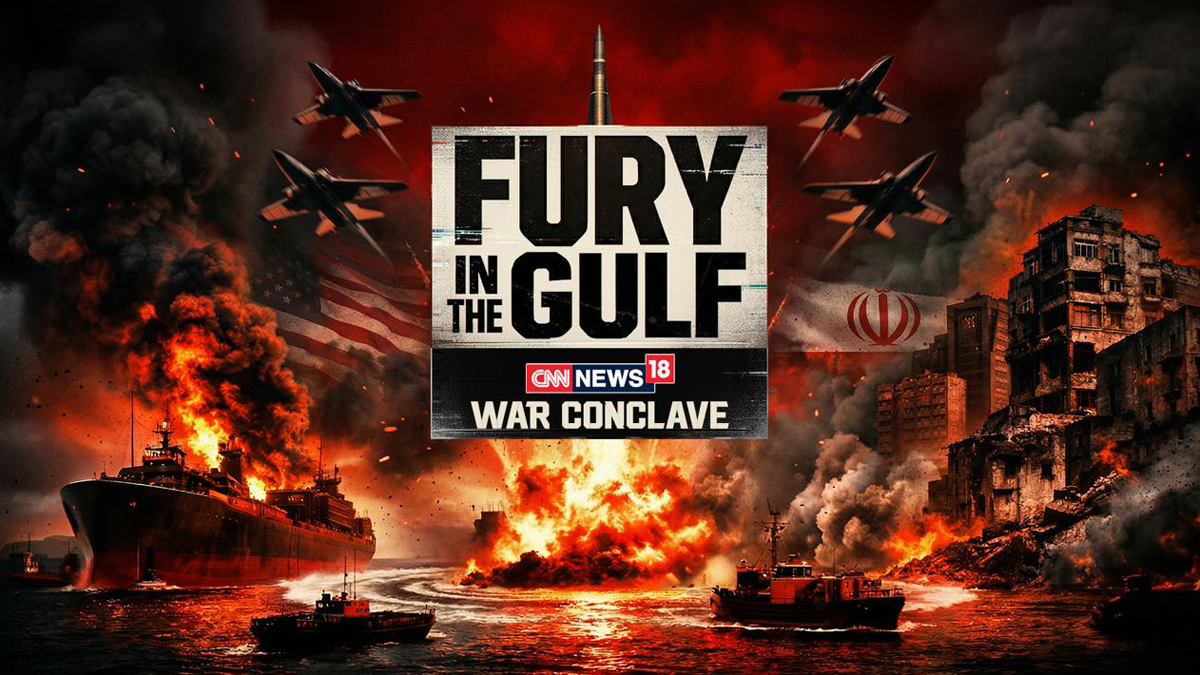
MUMBAI: CNN-News18 is set to host a special three-hour broadcast, Fury in the Gulf – War Conclave, on April 7, aiming to decode the escalating West Asia crisis and its far-reaching implications for India.
Scheduled from 4:00 PM to 7:00 PM, the conclave comes at a time when tensions between Iran and the United States are reshaping global geopolitics and triggering economic uncertainty. With India’s deep energy ties, trade links and large diaspora in the Gulf, the developments carry significant domestic relevance.
Built around the theme ‘Conflict, Consequences, and The Future,’ the programme will feature six curated sessions combining one-on-one interviews and panel discussions. The focus is to cut through the clutter and offer viewers a clearer understanding of the fast-evolving situation.
Key sessions include ‘Diplomacy in Times of War’ featuring Shashi Tharoor, and ‘World After the Iran Conflict’ with voices such as Ram Madhav, Reuven Azar, representatives from the European Union and the Iranian Deputy Envoy. Another session titled ‘Another Dunkirk?’ will bring together K. J. S. Dhillon and Jitin Prasada among others.
CNN-News18 editorial affairs director Rahul Shivshankar said, “In times of war, clarity becomes the most powerful tool. Fury in the Gulf – War Conclave brings together credible voices to address the questions and confusion that arise amid an overwhelming influx of information.”
He added that the initiative is aimed at delivering “facts, perspective, and insight” at a time when misinformation can easily cloud public understanding.
Echoing the sentiment, CNN-News18 CEO– English and business news Smriti Mehra said the conflict marks a defining global moment, with consequences that extend well beyond the region. She noted that the conclave seeks to present the crisis with “depth, nuance and responsibility” so audiences can better grasp its real-world impact.
As geopolitical tensions continue to dominate headlines, the conclave positions itself as an attempt to bring order to the noise, offering viewers a structured, insight-led look at a complex and rapidly shifting global situation.






