News Broadcasting
CNBC-TV18 launches “The Great Indian Freedom Fest” campaign to foster and encourage financial freedom in young Indians


Mumbai: CNBC-TV18, India’s leading English Business news brand launched ‘The Great Indian Freedom Fest’ campaign on Independence Day to promote the concept of financial freedom among young Indians. Through this initiative, CNBC-TV18 aims to foster a new generation of financially savvy individuals who understand the importance of not just savings but also investments and prudent money management. The Great Indian Freedom Fest kickstarted on 15 August and will continue well into September.
The campaign is aimed towards the country’s youth, especially students pursuing their post-graduation & management degrees, recent graduates, as well as first jobbers, to equip them with the knowledge, guidance and steps to take affirmative actions essential to achieve their financial goals in life. Under this initiative, CNBC-TV18 is collaborating with esteemed institutions such as NMIMS Bangalore, IBS Mumbai and more to extend its outreach and connect with the larger student community.
The Great Indian Freedom Fest will feature insightful discussions with visionary leaders who have achieved remarkable success in their fields while mastering the art of money management and wealth creation. For the Bengaluru chapter, startup mavens Jumbotail co-founder & CEO Karthik Venkateswaran and INSTAMOJO co-founder Akash Gehani along with CNBC-TV18’s Ritu Singh visited the NMIMS Bengaluru campus and interacted with the financially savvy generation of today. These luminaries shared their inspiring journeys, insights on success, and valuable advice on the steps towards financial freedom, as well as guided students through the intricacies of today’s investment landscape. Karthik Venkateswaran of Jumbotail emphasised the importance of investing in relationships to build successful ventures, whereas Akash Gehani of INSTAMOJO shared that discipline is the absolute key to success and it is about getting the small things right.

Commenting on the initiative, CNBC-TV18 managing editor Shereen Bhan said, “The concept of freedom has evolved significantly since the past few decades, extending beyond political liberation to encompass achieving personal goals and financial empowerment. Recognizing this shift, CNBC-TV18 as a trusted partner and investment ally is delighted to present ‘The Great Indian Freedom Fest.’ This interactive campaign aims to redefine freedom to align with the modern ambitions of achieving ‘Financial Freedom’, and guide the younger cohorts on their journey to successful money management, investments and overall financial independence.”
Network18 CEO business news Smriti Mehra said, “Empowering the young minds of India with financial knowledge is not just an initiative, it’s a commitment to shaping a more informed and prosperous future. Through ‘The Great Indian Freedom Fest,’ we’re lighting the path to financial literacy, guiding students towards economic independence one lesson at a time and ensuring that they all hold the torch of economic independence & informed decision-making.”
Catch the Bengaluru chapter on CNBC-TV18 & CNBC-TV18.com on Saturday, 26 August, 10.30 pm and Sunday, 27 August, 6.30 pm.





News Broadcasting
CNN-News18 to host Fury in the Gulf conclave on West Asia crisis
Three-hour summit to unpack geopolitical fallout and impact on India
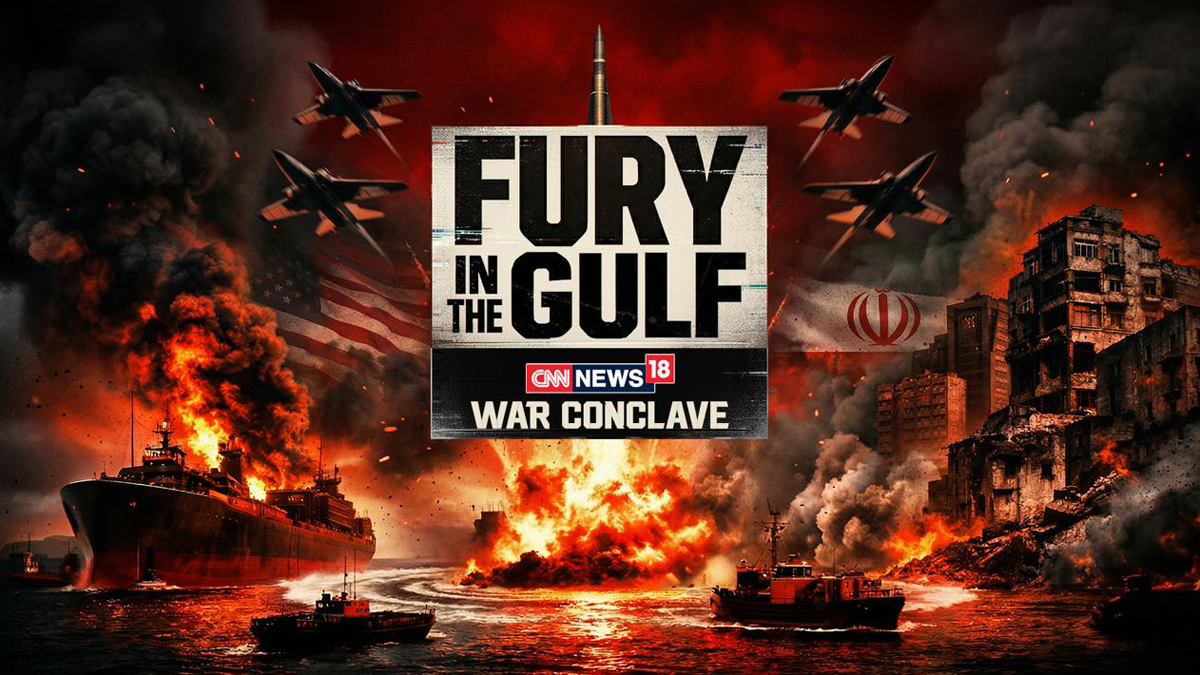
MUMBAI: CNN-News18 is set to host a special three-hour broadcast, Fury in the Gulf – War Conclave, on April 7, aiming to decode the escalating West Asia crisis and its far-reaching implications for India.
Scheduled from 4:00 PM to 7:00 PM, the conclave comes at a time when tensions between Iran and the United States are reshaping global geopolitics and triggering economic uncertainty. With India’s deep energy ties, trade links and large diaspora in the Gulf, the developments carry significant domestic relevance.
Built around the theme ‘Conflict, Consequences, and The Future,’ the programme will feature six curated sessions combining one-on-one interviews and panel discussions. The focus is to cut through the clutter and offer viewers a clearer understanding of the fast-evolving situation.
Key sessions include ‘Diplomacy in Times of War’ featuring Shashi Tharoor, and ‘World After the Iran Conflict’ with voices such as Ram Madhav, Reuven Azar, representatives from the European Union and the Iranian Deputy Envoy. Another session titled ‘Another Dunkirk?’ will bring together K. J. S. Dhillon and Jitin Prasada among others.
CNN-News18 editorial affairs director Rahul Shivshankar said, “In times of war, clarity becomes the most powerful tool. Fury in the Gulf – War Conclave brings together credible voices to address the questions and confusion that arise amid an overwhelming influx of information.”
He added that the initiative is aimed at delivering “facts, perspective, and insight” at a time when misinformation can easily cloud public understanding.
Echoing the sentiment, CNN-News18 CEO– English and business news Smriti Mehra said the conflict marks a defining global moment, with consequences that extend well beyond the region. She noted that the conclave seeks to present the crisis with “depth, nuance and responsibility” so audiences can better grasp its real-world impact.
As geopolitical tensions continue to dominate headlines, the conclave positions itself as an attempt to bring order to the noise, offering viewers a structured, insight-led look at a complex and rapidly shifting global situation.






