News Broadcasting
CNBC elevates CEO to chairman, names new president


MUMBAI: In two related executive announcements, CNBC has promted Pamela Thomas-Graham as the chairman of business news channel CNBC and Mark Hoffman has been named as the new president.
The announcements were made yesterday in New York by General Electric (NBC’s parent company) vice chairman and NBC Universal chairman and CEO Bob Wright along with NBC Universal Television Group president Jeff Zucker.
Thomas-Graham was earlier CNBC president and CEO and her appointment is effective immediately. In her new position, Thomas-Graham will be reporting to Wright and will be responsible for strategic planning for CNBC and for identifying major growth opportunities for the brand, including potential brand extensions. The appointment was made in recognition of the global scale, profitability and prominence of CNBC as the world leader in business news and its continued growth potential.

Hoffman, who was earlier NBC Universal-owned WVIT president and general manager, will hold the position of CNBC president and will report to both Zucker and Thomas-Graham.
“Pamela has driven profitable growth for CNBC in a very challenging economic environment. I have been impressed by her intellect and leadership capabilities and look forward to working with her on a number of important new strategic opportunities. During her tenure, CNBC built impressively upon its global prominence as the most important and profitable worldwide business news television brand. I welcome her in her new role as chairman,” Wright said.
“We have achieved a number of successes during my tenure as president,” said Thomas-Graham.”I look forward to being able to now focus on CNBC’s strategic planning challenges to generate continued growth for the company.”
Thomas-Graham was appointed CNBC president and CEO in July 2001. Previously, she was CNBC.com’s president and CEO. She joined NBC in 1999 from McKinsey & Company, where she was a partner.
As CNBC president, Hoffman will undertake day-to-day responsibility for the network’s operations, programming and technology. The appointment represents a homecoming for Hoffman, who served at CNBC as executive producer (1997-98), vice president/ managing editor (1999-2000) and vice president/ managing editor, business development (2001). In addition, Hoffman served as interim president of London-based CNBC Europe from September 2000 through January 2001.
“I am thrilled to be rejoining CNBC and teaming up with some of the brightest and most creative television professionals in the industry. I couldn’t be more optimistic about the future of CNBC,” Hoffman said.
Hoffman began his career in 1981 as a news associate at KNX Radio in Los Angeles. He moved to television a year later as a producer at KMGH-TV, the CBS affiliate in Denver. He ascended the ranks as a producer at WNEV-TV in Boston; executive producer and then managing editor at WLS-TV in Chicago; assistant news director at WABC-TV in New York; and news director at WAGA-TV in Atlanta and WBBM-TV in Chicago. In March 1993 Hoffman joined the NBC family as vice president, news at KNBC-TV in Los Angeles. He later served as vice president/general manager of KDNL-TV in St. Louis and executive producer/development at Warner Brothers/Telepictures before joining CNBC as executive producer in July 1997.






News Broadcasting
CNN-News18 to host Fury in the Gulf conclave on West Asia crisis
Three-hour summit to unpack geopolitical fallout and impact on India
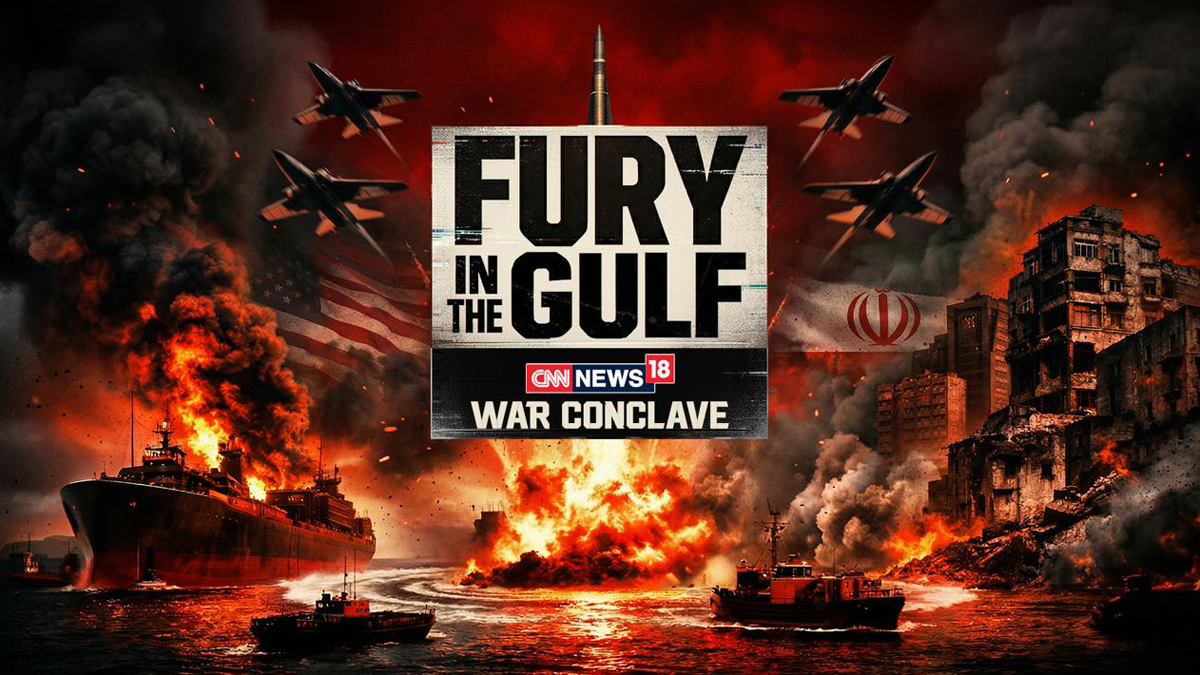
MUMBAI: CNN-News18 is set to host a special three-hour broadcast, Fury in the Gulf – War Conclave, on April 7, aiming to decode the escalating West Asia crisis and its far-reaching implications for India.
Scheduled from 4:00 PM to 7:00 PM, the conclave comes at a time when tensions between Iran and the United States are reshaping global geopolitics and triggering economic uncertainty. With India’s deep energy ties, trade links and large diaspora in the Gulf, the developments carry significant domestic relevance.
Built around the theme ‘Conflict, Consequences, and The Future,’ the programme will feature six curated sessions combining one-on-one interviews and panel discussions. The focus is to cut through the clutter and offer viewers a clearer understanding of the fast-evolving situation.
Key sessions include ‘Diplomacy in Times of War’ featuring Shashi Tharoor, and ‘World After the Iran Conflict’ with voices such as Ram Madhav, Reuven Azar, representatives from the European Union and the Iranian Deputy Envoy. Another session titled ‘Another Dunkirk?’ will bring together K. J. S. Dhillon and Jitin Prasada among others.
CNN-News18 editorial affairs director Rahul Shivshankar said, “In times of war, clarity becomes the most powerful tool. Fury in the Gulf – War Conclave brings together credible voices to address the questions and confusion that arise amid an overwhelming influx of information.”
He added that the initiative is aimed at delivering “facts, perspective, and insight” at a time when misinformation can easily cloud public understanding.
Echoing the sentiment, CNN-News18 CEO– English and business news Smriti Mehra said the conflict marks a defining global moment, with consequences that extend well beyond the region. She noted that the conclave seeks to present the crisis with “depth, nuance and responsibility” so audiences can better grasp its real-world impact.
As geopolitical tensions continue to dominate headlines, the conclave positions itself as an attempt to bring order to the noise, offering viewers a structured, insight-led look at a complex and rapidly shifting global situation.






