News Broadcasting
Cinema is fine; Television needs a censor

MUMBAI: With a panel as articulate, nothing short of an intriguing session was expected. Amongst the first sessions to start off on the last day at Frames 2004, “Sense, censor and sensibility” did open a can of worms, proverbially of course.
Issue about the cinema censorship has been a squeamish one and the panel did try and air film-makers’ grievances. Throughout the debate, all that the esteemed panel opined that cinema is fine since audience has a choice but it is television that needs a censor.
Vocalising the unfair and illogical treatment meted out to the filmmakers, the panel comprising director – producer Mahesh Bhatt, director-producer Ramesh Sippy, director Sudhir Mishra, actor-director Rahul Bose offered that the censor board – in its present structure is extremely redundant. “If you kiss a woman on screen, you get an A certificate. But if you kill her, you get a U,” said Bhatt.

The panel more or less did agree than any form of censor was unfair. Solutions ranging from moderate- ‘literate’ censor to body chosen by the film fraternity were discussed and subsequently shot down. What was agreed on was a semblance of a rating system like Western cinema.
Unarguably, what the panelists and the host – The Film Producers Guild of India president and Ficci entertainment committee president Amit Khanna urged has been screaming at our faces for long. Is the censorship really necessary and who decides what has should be censored especially in a ‘democratic’ country like ours? Bolstering their plea to completely do away with current high ‘politicised’, ‘bureaucratic and ‘humiliating’ system were views of the members in the audience, who had a tale or two about the unpleasantries meted out to them.
Although the panel didn’t deal with the issue in depth, both Bhatt and Khanna voiced their support for I&B minister R S Prasad and censor board chief’s views on television censorship. “Do something about television,” urged Bhatt which Khanna seconded.
Exactly like the title itself, censor seems like an odd ball between sense and sensibility, till of course it tries to ‘fit in’ and adapt.



News Broadcasting
CNN-News18 to host Fury in the Gulf conclave on West Asia crisis
Three-hour summit to unpack geopolitical fallout and impact on India
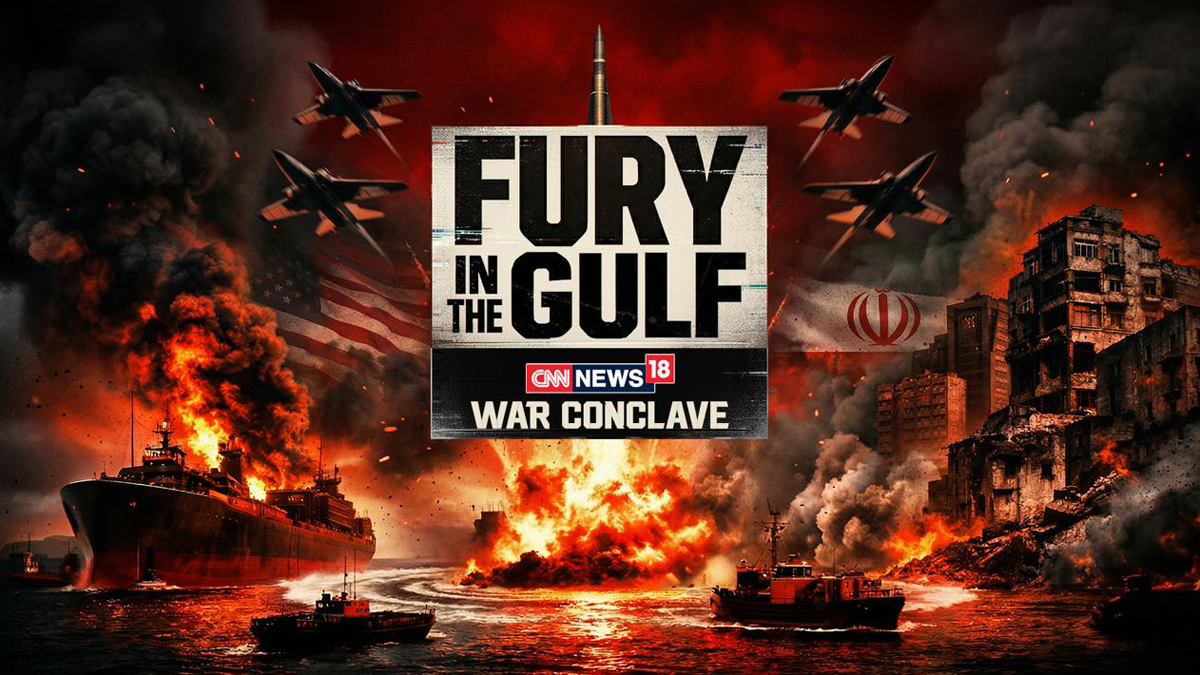
MUMBAI: CNN-News18 is set to host a special three-hour broadcast, Fury in the Gulf – War Conclave, on April 7, aiming to decode the escalating West Asia crisis and its far-reaching implications for India.
Scheduled from 4:00 PM to 7:00 PM, the conclave comes at a time when tensions between Iran and the United States are reshaping global geopolitics and triggering economic uncertainty. With India’s deep energy ties, trade links and large diaspora in the Gulf, the developments carry significant domestic relevance.
Built around the theme ‘Conflict, Consequences, and The Future,’ the programme will feature six curated sessions combining one-on-one interviews and panel discussions. The focus is to cut through the clutter and offer viewers a clearer understanding of the fast-evolving situation.
Key sessions include ‘Diplomacy in Times of War’ featuring Shashi Tharoor, and ‘World After the Iran Conflict’ with voices such as Ram Madhav, Reuven Azar, representatives from the European Union and the Iranian Deputy Envoy. Another session titled ‘Another Dunkirk?’ will bring together K. J. S. Dhillon and Jitin Prasada among others.
CNN-News18 editorial affairs director Rahul Shivshankar said, “In times of war, clarity becomes the most powerful tool. Fury in the Gulf – War Conclave brings together credible voices to address the questions and confusion that arise amid an overwhelming influx of information.”
He added that the initiative is aimed at delivering “facts, perspective, and insight” at a time when misinformation can easily cloud public understanding.
Echoing the sentiment, CNN-News18 CEO– English and business news Smriti Mehra said the conflict marks a defining global moment, with consequences that extend well beyond the region. She noted that the conclave seeks to present the crisis with “depth, nuance and responsibility” so audiences can better grasp its real-world impact.
As geopolitical tensions continue to dominate headlines, the conclave positions itself as an attempt to bring order to the noise, offering viewers a structured, insight-led look at a complex and rapidly shifting global situation.






