News Broadcasting
Cinema India Expo 2006 kicks off in Mumbai


MUMBAI: The sixth successive International Exhibition and India’s only established tradeshow and convention Cinema India 2006 began in Mumbai today. The three-day conference will take a look at Digital Cinema Technology, Film Production, Cinema Theatre Equipment and Multiplex Design and Solutions.
Global players in the film technology industry including Kodak, Real Image, Sim2, Projection Design, Panasonic and Kinoton will be present on the Cinema India exhibit floors. Valuable Media, E-City Digital and Real Image has set up digital cinema demos in their auditoriums o the floor of the expo.
The highlight of the opening day has been a panel discussion on FM Radio industry. The panel featuring India Today Group GM Commercial Uday Chawla, Radio Masti CEO Rajiv Mishra and BMG Deep Emotions Music Publisher Achille Forler discussed the opportunities and challenges of FM Radio. The session was moderated by Pro Sound Magazine editor Anil Chopra.

Explaining the challenges FM radio industry faces, Mishra highlighted the lack of effective government policies on the satellite radio sector. “FM radio is targeted at people on the move, while satellite radio is understood as a stationary medium. The repeater technology can change this scenario for satellite radio operators. So we need solid government policies on satellite radio,” opined Mishra.
On Internet Radio, Chopra said the technology was not feasible in India at the moment. “But the cost will surely come down in the near future once the technology gets cheaper.”
Speaking on the niche spaces for FM radio, Chawla said it depended on the intensity of competition. “If we have three or four players in a market, everybody would be targeting the same general audience segment. But once you have about ten players fighting out in a market, some of them would obviously go for niche segments such as western music and classic music,” he said.



News Broadcasting
News18 India launches Command Centre war explainer with Arya
New show shifts from debates to decoding global conflicts and impacts
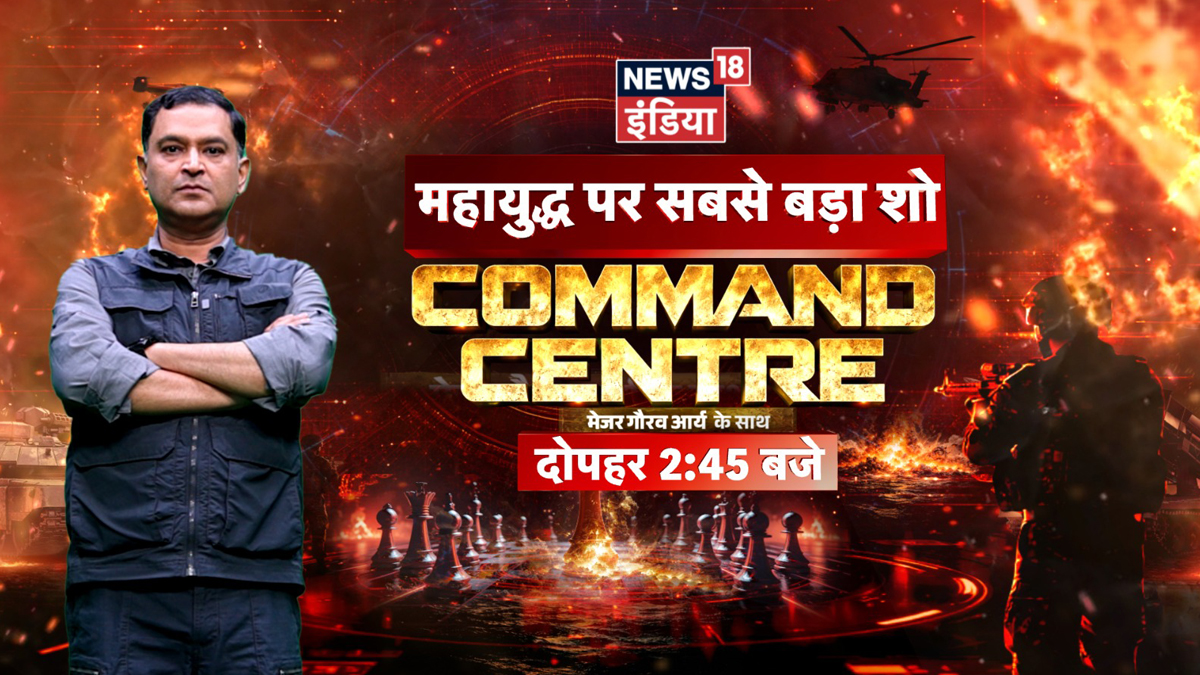
MUMBAI: News18 India has rolled out a new war-focused programme, Command Centre, featuring Gaurav Arya, as it looks to offer viewers a sharper, more grounded take on global conflicts amid rising tensions in West Asia.
Positioned as an “insider war room”, the show moves away from conventional panel debates and instead focuses on explaining military developments, decoding strategy and connecting global events to their everyday impact, from fuel prices to economic shifts.
The format leans heavily on visuals and data. The studio has been designed like a command hub, complete with large LED war maps, real-time graphics and an alert system to track developments as they unfold.
At the centre of it all is Arya, who brings his military background to simplify complex war strategies for viewers. His signature line, “Seedhi baat samjhiye”, anchors the show’s promise of clarity over noise.
News18 India managing editor Jyoti Kamal said, “Command Centre, featuring Major Gaurav Arya is designed to deliver accurate insights and a clear perspective on how evolving conflicts impact everyday life, from household budgets to national security. With expert voices analysing every development in real time, the show goes beyond headlines to decode what’s happening now, what it means, and what could come next.”
Echoing the intent, Gaurav Arya added, “In times of war, confusion is the biggest threat. With News18 India’s Command Centre, we are bringing viewers inside the war room, decoding strategies, tracking every escalation, and explaining, in the simplest terms, what it means for India and for every household. Seedhi baat samjhiye, this is where you understand not just what is happening, but what happens next.”
The weekday show will air in the afternoon slot and will also feature Gaurav Shukla, adding to its editorial depth.
With its mix of analysis, visuals and a clear focus on impact, the show reflects a broader shift in news consumption. Viewers are no longer just watching events unfold, they are looking to understand what those events mean for them.






