iWorld
Chingari’s explosive short format video journey

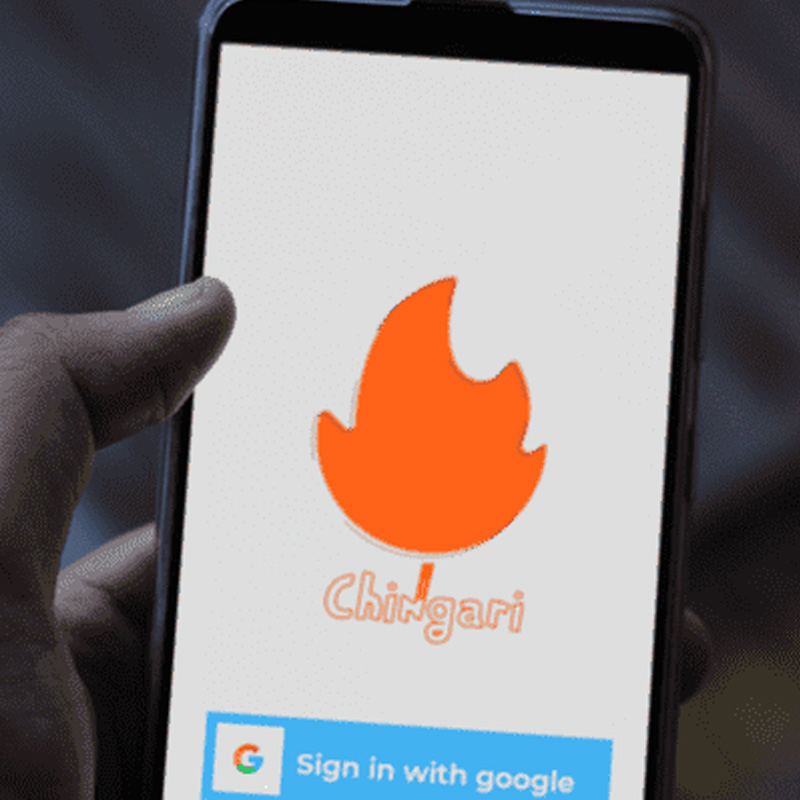
KOLKATA: Chingari is a Hindi word which means spark. But Chingari is also a homegrown short format video and user-generated content app which Is firing ahead on all cylinders, attracting millions of users. That too in a short period of time ever since the Indian government placed a ban on TikTok, which had 200 million users in India. Of course, other Indian apps – like Mitron and Roposo – have also stepped into the vacuum created by the Chinese platform’s banishment. However, Chingari has been getting some plaudits as well as funding from investors which have been more than pleased with its performance. It recently raised 1.4 million dollars in funding, even as it was rated as the Best App in the social category in the recently-held #Atmanirbhar Bharat Challenge.
“India is a land of myriad cultures and colours. Each has its own flavour. We have seen many through films and other media. Yet, there’s so much more to explore – The raw talent hidden in the remotest of alleys and quietest of villages,” says Chingari co-founder and COO Deepak Salvi. “The sheer potential of the masses. This makes ours a land of possibilities. All we needed was the right platform. One that was proudly ours.”
Media reports say that within 24 hours of TikTok’s ban, Chingari recorded 26 million video views, with three million videos swiped per hour and 10,000 users per minute. The app pays its users based on the virality of the video. For each video a user shares on the app, the content creator gets points per view, and these points can be redeemed for money.

Salvi says Chingari has attracted over 28 million users on the platform majorly in the 14 to 38 age bracket. The users span across tier-1, 2 and 3 cities. The app has also lured some major social media influencers and content creators, and more and more of them are hopping onto it by the hour.
Chingari is available in English, Hindi, Bangla, Gujarati, Marathi, Kannada, Punjabi, Malayalam, Tamil, and Telugu. The homegrown app recently partnered with Alt Balaji to further aid both the platforms in strengthening their reach and increase their audience base across ‘Bharat.’ The short format video platform will introduce a verified account/page of ALTBalaji through which Chingari users will be able to follow and receive the latest updates from the streaming platform.
Read more news on short video format category
“We are getting calls for brand integrations as Chingari gets more acknowledged over time. While it recently entered a partnership with ALTBalaji, the coming months will see many such strong partnerships with brands,” reveals Salvi.
Chingari is not just limited to video-sharing but allows users to read local and international news, check the city-specific weather forecast, play games, participate in quizzes, and win prizes. Media reports say that it has plans to foray into social commerce in the next six to nine months but with the core focus being, making it the best short-form video app platform.

“Believe it or not, but we haven’t spent a single penny on marketing or promotions yet. ‘word of mouth’ publicity has been our best way forward so far. However, as we expand, we have a lot of research-backed innovations and strategies in place which we are ready to roll out, in case the market dynamics require us to,” he added.
Interestingly, the app has investments from some of the biggest names such as Tinder CPO Brian Norgard and OLX founder Fabrice Grinda.
“Within a short span, we were able to raise $1.4 million, which only speaks of our head-strong growth plans and the investors’ faith in us. This list too is certain to see some big names in the months to come,” explains Salvi.

He accepts that the user-generated content platform space is getting red hot competitive as each day passes with Roposo and Moj scaling up steadily and many more pawing on the sidelines to launch. But his belief is that Chingari certainly holds an upper edge from a first and fast-mover perspective.
“Constant up-gradation of content and influencer data and maximum activities to keep them engaged on our platform will always hold top priority to us. Like mentioned earlier, this is just the beginning of a big revolution in entertainment. Soon you will see, not just the nation, but the entire world adopting short video formats of entertainment, at large,” he contends.
Media observers however, aver that it’s early days in the homegrown UGC short format space. “TikTok had finetuned its service over years and with hundreds of millions of dollars being invested in technology, research, and innovation,” says an industry veteran. “The platform was also managing scale operations with hundreds of millions of concurrent users and generating revenue worldwide. Indian short-form video platforms have to climb that learning curve, they have to make mistakes and learn. It’s not an easy space to be in, if one is not careful, cash can burn up pretty fast. Investors will have to have tough as nails stomachs until the platforms scale up and prove their business models and start generating cash. Chingari will have to keep its spark burning bright for some time to come.”





Gaming
Nodwin Gaming partners with Runestone for esports data and integrity solutions
South Asian esports leader joins forces with Czech tech firm to enhance tournament operations.
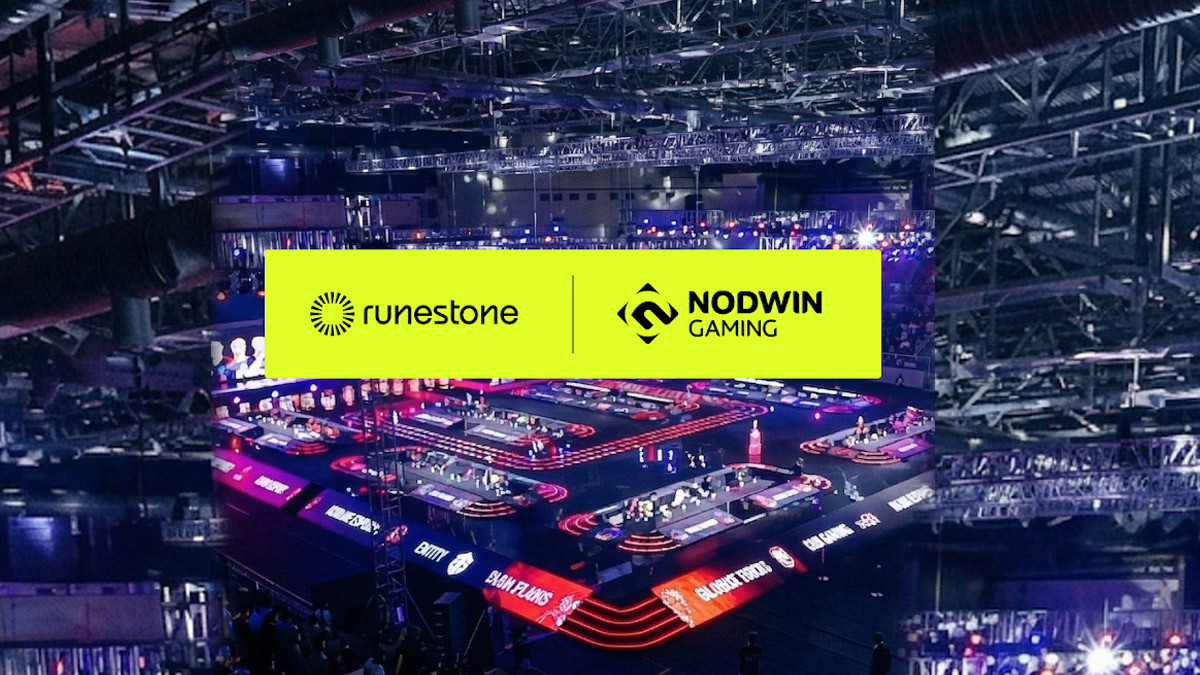
MUMBAI: Nodwin Gaming has just levelled up its game by bringing in a specialist to keep the scoreboard honest and the fans fully engaged. The leading South Asian esports and gaming company has announced a strategic partnership with Runestone, a Prague-headquartered esports technology firm specialising in real-time data and engagement solutions for tournament organisers and publishers.
The collaboration aims to strengthen competitive integrity, improve operational oversight, and deliver more interactive viewing experiences across Nodwin’s properties. It will initially focus on the Nodwin Clutch Series for Counter-Strike 2, a Tier 2 tournament that provides emerging teams with consistent competitive opportunities and helps build the talent pipeline.
The latest edition of the series recently concluded with Big defeating ECSTATIC 2–1 in the grand final of the $50,000 online event.
Nodwin Gaming chief business officer at MENA and global head of data monetization Teemu Koski said, “Integrity and transparency are fundamental to sustainable esports ecosystems, especially in Tier 2 competition where the next generation of talent emerges. Runestone’s expertise complements our experience in building scalable esports IPs.”
Runestone head of partnerships Michael Schwartz added, “Nodwin Gaming has built one of the most dynamic esports ecosystems across emerging markets. We’re thrilled to collaborate on supporting tournaments with greater transparency, deeper fan interaction, and scalable tools.”
Both companies are exploring opportunities to extend the partnership across additional titles, including mobile-first competitive ecosystems, and to develop new products for publishers, tournament operators, and event promoters.
In the rapidly growing world of esports, where fair play and fan excitement are equally crucial, Nodwin Gaming and Runestone are teaming up to ensure every match is not only competitive but also transparent and engaging. This alliance could well become a game-changer for Tier 2 tournaments across South Asia and beyond.







